

What is Brand Development and Why It Matters
When people discuss brand development, they’re referring to the strategic process of creating and refining a company’s identity, products, and services to stand out from competitors. Here’s what brand development involves:
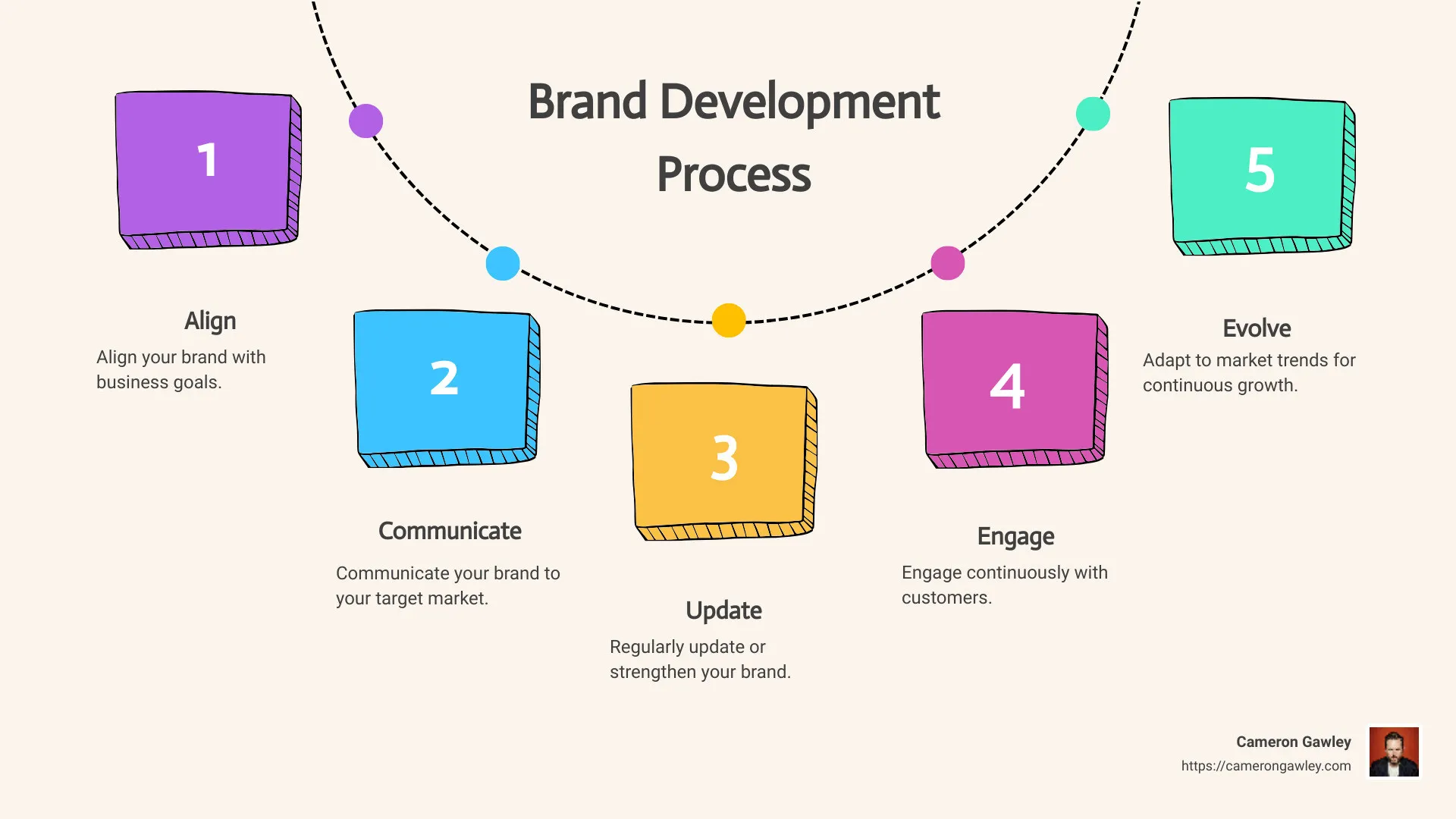
- Aligning your brand with business goals.
- Communicating your brand to your target market.
- Updating or strengthening your brand as needed.
Brand development isn't a one-time task; it's an ongoing journey.
Here's a quick summary if you're in a hurry:- Branding is about creating a unique identity.- Brand strategy involves planning how to communicate this identity to attract customers.- Brand development continuously refines and enhances this identity and strategy to ensure long-term success.
I'm Cameron Gawley, an entrepreneurial visionary and brand builder. With a rich background in championing successful brand strategies, I'm here to guide you through making your brand unforgettable.
What is Brand Development?
Difference Between Brand Development and Branding
Brand development is the ongoing process of defining, refining, and testing your brand's strategy. It's about maintaining the quality, distinctiveness, and consumer trust of a brand over time. This process involves understanding and promoting a brand's unique traits and continuously serving consumers to keep the brand relevant.
Branding, on the other hand, is the execution of the strategies and plans created during brand development. It includes the tangible application of communication methods to promote your brand, such as logos, taglines, and marketing assets.
Let's break down the key elements:
Concept vs. Execution:- Brand Development is the concept. It involves creating the overall strategy, values, and positioning of the brand.- Branding is the execution. It’s about implementing the strategy through marketing materials, communications, and design elements.
Brand Identity:- Brand Identity is the collection of all brand elements that a company creates to portray the right image to its consumer. This includes the brand’s name, logo, tone, tagline, typeface, and more.- Brand development helps in forming this identity by defining what the brand stands for and how it differentiates itself from competitors.
Brand Management:- Brand Management involves maintaining and improving the brand image over time. It includes monitoring market trends, consumer behaviors, and competitors to ensure the brand remains relevant and appealing.- Brand development plays a crucial role in brand management by providing a clear strategy and guidelines for how the brand should evolve.
Brand Strategy
A brand strategy is a long-term plan for the development of a successful brand to achieve specific goals. A well-defined and executed brand strategy affects all aspects of a business and is directly connected to consumer needs, emotions, and competitive environments.
In summary:- Brand Development is about creating and refining the strategy.- Branding is about applying this strategy in real-world scenarios.- Brand Identity is what the consumer sees and experiences.- Brand Management ensures the brand stays on track and evolves positively.
By understanding these differences, you can better navigate the complex world of brand building and ensure your brand remains strong and effective.
The 4 Steps in the Brand Development Process
Brand development is a continuous journey. Here’s a breakdown of the four essential steps to keep your brand on the right path:
Step 1: Know Your Business
First things first, know your business inside and out. This step involves defining your brand’s core message and understanding its position in the market.
- Core Message: What does your business stand for? What are its core values? Your core message should reflect your mission and vision.
- SWOT Analysis: Conduct a SWOT analysis to identify your business's Strengths, Weaknesses, Opportunities, and Threats. This helps you understand where you stand compared to your competitors.
- Positioning Statement: Develop a clear positioning statement. This is a brief description that differentiates your brand from others and highlights why customers should choose you.
Step 2: Know Your Audience
Understanding your audience is crucial for effective brand development.
- Target Customers: Identify who your ideal customers are. Be as specific as possible.
- Customer Feedback: Regularly collect and analyze customer feedback. This can provide valuable insights into what your audience likes or dislikes about your brand.
- Buyer Personas: Create detailed buyer personas. These are fictional characters that represent your ideal customers and help tailor your marketing efforts.
Step 3: Create Your Resources
Once you know your business and audience, it’s time to create the resources that will support your brand.
- Branding Materials: Develop all necessary branding materials, such as logos, taglines, and style guides. These should be consistent with your core message and appeal to your target audience.
- Content Strategy: Plan a content strategy that aligns with your brand’s voice and goals. Content should be valuable, relevant, and consistent.
- Brand Awareness: Use various marketing channels to build brand awareness. This can include social media, email marketing, and more.
Step 4: Manage Your Brand Growth
Managing your brand is an ongoing process that requires constant attention.
- Track Progress: Regularly monitor your brand’s performance using metrics like brand awareness, customer engagement, and sales.
- Adjust Strategy: Be prepared to adjust your strategy based on the data you collect. Flexibility is key to staying relevant.
- Brand Consistency: Maintain consistency across all touchpoints. This includes visual elements, messaging, and customer interactions.
By following these steps, you can ensure your brand remains strong and continues to grow. Now, let’s dive into the seven essential steps for building a successful brand.
The 7 Essential Steps for Building a Successful Brand
Step 1: Define Key Elements
To build a successful brand, start with the fundamentals. Define your brand mission, brand vision, and core values.
- Brand Mission: This is the "why" behind your brand. What problem do you solve? Why does your company exist? Think of Airbnb’s mission statement: "To create a world where anyone can belong anywhere."
- Brand Vision: Visualize the future of your brand. Where do you see it in 5, 10, or 15 years? This isn't about strategy; it's about setting a clear destination.
- Core Values: These are the guiding principles of your brand. They shape your company culture and decision-making processes. Examples include honesty, innovation, and sustainability.
Step 2: Identify Extended Vision Elements
Next, flesh out your brand with extended vision elements like brand personality, brand tone, and brand messaging.
- Brand Personality: Use adjectives to describe your brand. Is it fun, serious, innovative, or reliable? This will guide your visual and verbal identity.
- Brand Tone: Decide how you communicate with your audience. Are you formal or casual? Friendly or authoritative?
- Brand Messaging: Craft a clear message that tells your audience what you do, who you serve, and why they should care. Your messaging should be consistent across all channels.
Step 3: Customize the Model to Your Brand's Specifics
Tailor your brand model to fit your unique market position by focusing on your unique selling proposition (USP), brand differentiation, and conducting a competitive analysis.
- Unique Selling Proposition: What makes your brand different from the rest? This could be a unique feature, a specific benefit, or a special approach.
- Brand Differentiation: Look at your competitors and identify how you can stand out. This could be through product quality, customer service, or innovative features.
- Competitive Analysis: Study your competitors' strategies and identify gaps you can fill. This helps in creating a unique space for your brand.
Step 4: Prioritize Brand Associations
Focus on building strong brand associations, understanding customer perceptions, and fostering brand loyalty.
- Brand Associations: These are the attributes that customers think of when they hear your brand name. Ensure these are positive and align with your brand values.
- Customer Perceptions: Regularly gather feedback to understand how customers view your brand. This helps in making necessary adjustments.
- Brand Loyalty: Create programs and strategies to keep your customers coming back. Loyalty programs, excellent customer service, and consistent quality can help achieve this.
Step 5: Find Your Brand Essence
Distill your brand down to its core with your brand essence, brand promise, and brand experience.
- Brand Essence: This is the heart and soul of your brand. It’s a single concept that encapsulates what your brand stands for.
- Brand Promise: What can customers always expect from your brand? This should be clear and consistently delivered.
- Brand Experience: Ensure every interaction with your brand is positive and memorable. From website navigation to customer service, every touchpoint matters.
Step 6: Adapt Your Brand to Product-Market Contexts
Stay relevant by adapting to market trends, understanding customer needs, and allowing for brand evolution.
- Market Trends: Keep an eye on industry trends and adapt your strategies accordingly. This ensures your brand stays current.
- Customer Needs: Regularly gather and analyze customer feedback to understand their evolving needs and preferences.
- Brand Evolution: Be open to change. Your brand should grow and evolve with the market and your customers.
Step 7: Continual Improvement and Innovation
Finally, focus on brand innovation, gathering customer feedback, and ensuring market adaptation.
- Brand Innovation: Continuously look for ways to improve your products, services, and customer experiences.
- Customer Feedback: Actively seek out and act on customer feedback. This helps in making informed decisions.
- Market Adaptation: Stay flexible and ready to adapt your strategies based on market changes and new insights.
By following these seven essential steps, you’ll be well on your way to building a successful, enduring brand. Now, let's explore the different types of branding strategies you can employ.
The 5 Types of Branding Strategies
When it comes to brand development, there are several strategies you can use to build and grow your brand. Let's break down the five main types: Personal Branding, Product Branding, Service Branding, Corporate Branding, and Umbrella Branding.
Personal Branding
Personal branding is all about building an individual identity. This strategy is often used by entrepreneurs, influencers, and professionals to establish their personal brand. Think of it as marketing yourself the way a company would market a product.
- Individual Identity: Highlight your unique skills, experiences, and personality.
- Personal Brand: Create a consistent image across all platforms, whether it's LinkedIn, Twitter, or your personal website.
- Professional Growth: Use your brand to open up new career opportunities and grow your professional network.
Product Branding
Product branding focuses on creating a strong identity for a specific product. This helps differentiate your product from competitors and makes it more recognizable to consumers.
- Product Identity: Develop a unique name, logo, and packaging.
- Product Differentiation: Highlight what makes your product unique, whether it's a special feature or superior quality.
- Product Marketing: Use targeted marketing campaigns to promote your product and build brand awareness.
Service Branding
Service branding is all about the customer experience. This strategy is crucial for service-based businesses like hotels, airlines, and consulting firms.
- Service Quality: Ensure high standards of service to build trust and loyalty.
- Customer Experience: Focus on creating a memorable and positive experience for your customers.
- Service Differentiation: Highlight the unique aspects of your service that set you apart from competitors.
Corporate Branding
Corporate branding involves creating a strong identity for the entire company. This strategy helps build a positive reputation and fosters trust among consumers.
- Corporate Identity: Develop a consistent image and message across all company communications.
- Corporate Reputation: Build a reputation for reliability, quality, and ethical practices.
- Corporate Values: Clearly define and communicate your company's core values to both employees and customers.
Umbrella Branding
Umbrella branding (also known as family branding) involves marketing multiple related products under a single brand name. This strategy can help build brand consistency and leverage the reputation of your existing products.
- Brand Portfolio: Manage a collection of products under one unified brand.
- Brand Extension: Introduce new products that benefit from the established brand's reputation.
- Brand Consistency: Ensure all products under the umbrella brand maintain a consistent quality and image.

By understanding and implementing these different types of branding strategies, you can effectively build and grow your brand. Next, let's dive into the 3 C's of brand development: Clarity, Consistency, and Constancy.
The 3 C's of Brand Development
Clarity
Clarity is all about having a clear message that defines what your brand stands for. This means knowing your brand's mission, vision, and core values. When your message is clear, customers understand who you are and what you offer.
- Clear Messaging: Your brand message should be simple and direct. Avoid jargon and keep it easy to understand.
- Brand Transparency: Be open about your business practices and values. Transparency builds trust.
- Customer Understanding: Make sure your customers know what to expect from your brand. Clear communication helps in setting the right expectations.
Consistency
Consistency ensures that your brand always looks, feels, and sounds the same across all platforms. This builds trust and makes your brand memorable.
- Consistent Branding: Use the same colors, logos, and fonts in all your materials. This makes your brand instantly recognizable.
- Brand Guidelines: Create a style guide that outlines how your brand should be presented. This includes everything from tone of voice to visual elements.
- Brand Standards: Maintain high standards in all your communications and products. Consistency in quality is key to building a strong brand.
Constancy
Constancy is about continuous engagement with your audience. This keeps your brand top-of-mind and fosters brand loyalty.
- Continuous Engagement: Regularly interact with your customers through social media, email newsletters, and other channels. Keep the conversation going.
- Brand Loyalty: Reward loyal customers with special offers and exclusive content. Loyal customers are more likely to become brand advocates.
- Customer Retention: Focus on keeping existing customers happy. Retaining customers is often more cost-effective than acquiring new ones.
By mastering the 3 C's—Clarity, Consistency, and Constancy—you can build a strong, recognizable, and trustworthy brand.
Next, let's explore some frequently asked questions about brand development.
Frequently Asked Questions about Brand Development
What are the 7 steps in the brand development process?
- Define Key Elements: Start with your brand mission, vision, and core values. These elements set the foundation for everything else.
- Identify Extended Vision Elements: Determine your brand personality, tone, and messaging. This helps in creating a consistent voice across all platforms.
- Customize the Model to Your Brand's Specifics: Find your unique selling proposition (USP) and differentiate your brand from competitors.
- Prioritize Brand Associations: Focus on how you want your brand to be perceived by customers. Build strong, positive associations.
- Find Your Brand Essence: This is the heart of your brand—what it promises and the experience it offers.
- Adapt Your Brand to Product-Market Contexts: Stay updated with market trends and customer needs. Your brand should evolve accordingly.
- Continual Improvement and Innovation: Regularly seek feedback and innovate. Your brand should always be growing and adapting.
What are the four stages of brand development?
- Know Your Business: Define your brand’s core message and position. A SWOT analysis can help you understand your strengths, weaknesses, opportunities, and threats.
- Know Your Audience: Identify your target customers and gather feedback. Create detailed buyer personas to understand their needs.
- Create Your Resources: Develop branding materials and a content strategy. This helps in building brand awareness.
- Manage Your Brand Growth: Track your progress and adjust your strategy as needed. Ensure brand consistency across all channels.
What are the 5 strategies in brand development?
- Personal Branding: Focuses on building an individual's identity and reputation. Useful for entrepreneurs and professionals.
- Product Branding: Centers around creating a unique identity for a specific product. Helps in product differentiation and marketing.
- Service Branding: Emphasizes the quality and experience of a service. Aims to make the service memorable and distinct.
- Corporate Branding: Involves creating a strong identity and reputation for the entire company. Reflects the company’s values and culture.
- Umbrella Branding: Uses a single brand name for multiple products. Ensures brand consistency and leverages brand equity.
By understanding these FAQs, you’ll have a clearer picture of what brand development entails and how to approach it effectively.
Conclusion
Brand development is a journey, not a destination. It's about continually evolving and adapting to meet the needs of your audience while staying true to your core values and vision.
Cameron Gawley: Your Guide to Brand Building
Cameron Gawley has a wealth of experience in brand building and offers invaluable entrepreneurial guidance. His approach combines deep industry knowledge with practical strategies to help businesses grow and thrive. Whether you're a new business looking to establish your brand or an established company aiming to refine your brand strategy, Cameron's insights can be your roadmap to success.
Entrepreneurial Guidance
Building a brand requires more than just a catchy logo or a clever tagline. It involves understanding your audience, creating consistent messaging, and constantly innovating. Cameron emphasizes the importance of knowing your business inside out and using customer feedback to shape your brand.
For those looking to take their brand to the next level, Cameron offers a comprehensive guide on brand building strategies. This resource can help you navigate the complexities of brand development and ensure your brand stands out in a crowded market.
Final Thoughts
Brand development is an ongoing process. It requires dedication, consistency, and a willingness to adapt. By following the steps outlined in this guide and leveraging expert insights, you can create a strong, memorable brand that resonates with your audience and drives business growth.