

Why Understanding DTC Marketing Matters
DTC meaning marketing is more than just a buzzword. Direct-to-consumer (DTC) marketing allows brands to bypass traditional retailers and sell directly to the end-consumer through an online platform. This approach provides manufacturers and Consumer Packaged Goods (CPG) brands with opportunities to control their brand, engage better with customers, and experiment freely with products.
Here’s a quick breakdown:
- Definition: Direct-to-consumer (DTC) marketing involves selling products directly to customers online, without going through a retailer.
- Advantages: Brands can better control their prices, engage directly with their customers, and collect data for personalization.
- Challenges: Requires a robust strategy to be noticed in a crowded market; managing logistics and customer service are vital.
My name is Cameron Gawley. With decades of experience in digital strategy and brand building, I've guided numerous brands through successful DTC transitions. Let's explore how you, too, can harness the power of DTC marketing.
What is DTC Marketing?
Direct-to-consumer (DTC) marketing is a strategy where brands sell their products directly to customers, bypassing traditional intermediaries like retailers, wholesalers, and distributors. This approach allows brands to have more control over their pricing, branding, and customer relationships.
DTC Meaning Marketing
DTC stands for direct-to-consumer. In this model, brands use digital channels to reach customers directly, eliminating the need for middlemen. This means the manufacturer handles everything from marketing and sales to shipping and customer service.
Bypassing Intermediaries
By cutting out the middleman, DTC brands can offer competitive pricing and have direct interactions with their customers. This direct connection provides valuable insights into customer preferences and behaviors, which can be used to tailor marketing strategies and improve product offerings.
For example, Dollar Shave Club disrupted the shaving industry by offering subscription-based shaving products directly to consumers. This model not only provided convenience but also allowed the company to build a strong brand identity and customer loyalty.
Advantages of DTC Marketing
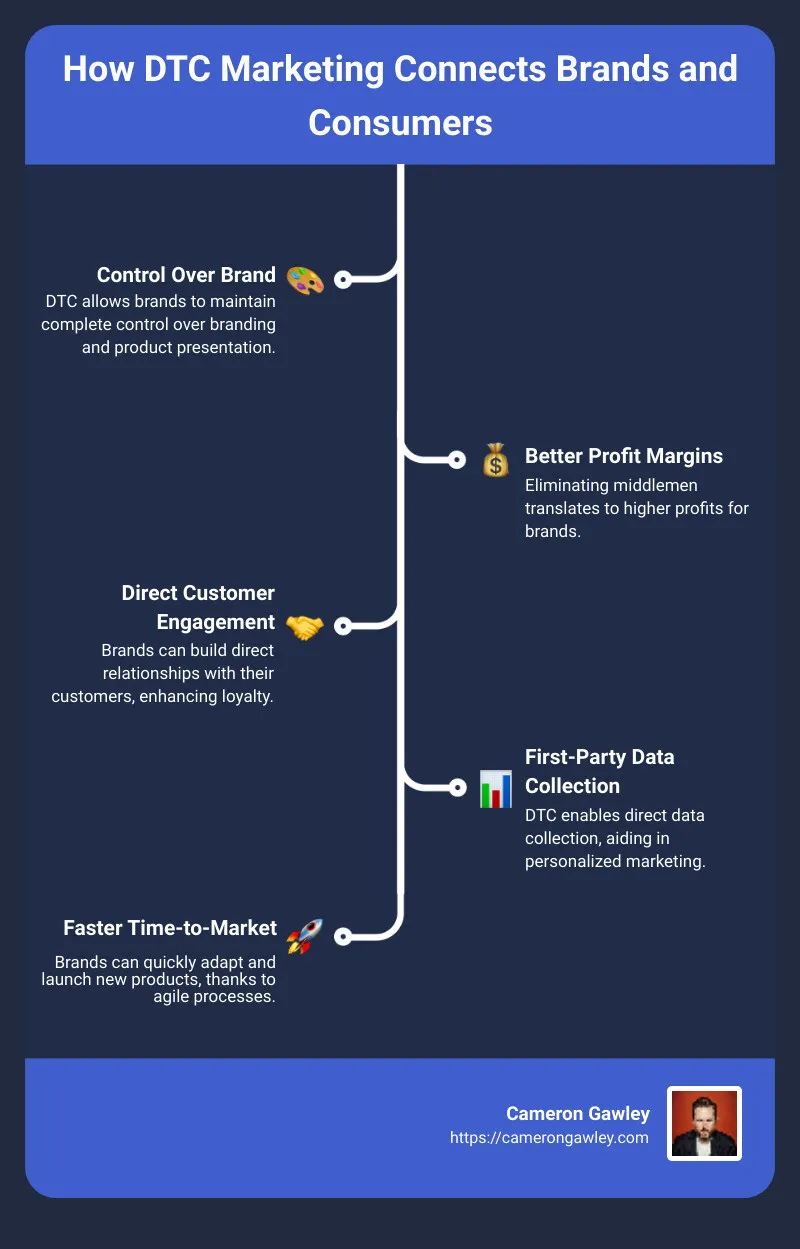
1. Control Over Brand and Product:
DTC brands have complete control over their branding, marketing, and distribution. They can position their products uniquely without competing for shelf space in stores.
2. Better Profit Margins:
Without intermediaries taking a cut, DTC brands can enjoy higher profit margins. This extra profit can be reinvested into the business for growth and innovation.
3. Direct Customer Relationship:
Engaging directly with customers allows brands to offer personalized experiences and gather first-party data. This data is crucial for understanding customer needs and improving products.
4. Faster Time-to-Market:
DTC brands can quickly bring new products to market without needing to negotiate with retailers or wholesalers. This agility allows them to stay ahead of trends and meet customer demands promptly.

Real-World Example: Barkbox
Barkbox is a great example of a successful DTC brand. They offer personalized subscription boxes for dogs, tailored to each pet's preferences and needs. By bypassing traditional pet stores, Barkbox can directly interact with dog owners, gather feedback, and continuously improve their offerings.
In the next section, we'll explore the benefits of DTC marketing in more detail, including how it can lead to greater control over your brand and improved profit margins.
Benefits of DTC Marketing
Greater Control Over Brand and Product
When you sell directly to consumers, you have complete control over how your brand and products are presented. You decide on the branding, marketing, and distribution channels. This is crucial for maintaining a consistent brand image.
Lexie Becker, a brand partnership specialist at Fifth & Cor, explains, "You can approach marketing in whatever way you choose and drive the most sales while creating a loyal customer base."
You’re not just another product on a retailer’s shelf. Instead, you stand alone, making your unique value proposition clear to customers. This control helps build a strong, recognizable brand.
Improved Profit Margins
One of the biggest advantages of DTC marketing is the potential for higher profit margins. By eliminating the middleman, you keep more of the profit.
Alex Song, founder of AI targeting solution Proxima, notes, "The DTC model advantages are primarily centered around highly measurable unit economics that can be scaled via digital channels to build brand awareness and acquire a high volume of customers."
This means you don’t have to sell your products at a discount to retailers. You can reinvest those extra profits into improving your product or marketing efforts.
Direct Customer Relationship
Selling directly to consumers allows you to build a closer relationship with your customers. You get access to first-party data, such as web browsing behavior, purchase information, and social media interactions. This data helps you understand the customer journey from start to finish.
Stephen Light, founder of DTC mattress retailer Nolah, emphasizes, "Data is king when it comes to the strongest marketing campaigns."
With this data, you can create personalized marketing campaigns that resonate with your audience. You can also offer better customer service, as you have direct communication with your customers.
Faster Time-to-Market
When you control your distribution channels, you can bring new products to market more quickly. There’s no need to wait for retailers to stock your product. You can launch and start selling immediately.
This agility allows you to respond to market trends and customer feedback faster. If you see a new trend emerging, you can quickly develop a product to meet that demand.
Conclusion
In the next section, we'll dive into the key strategies for successful DTC marketing, including building a strong brand identity and leveraging social media.
Key Strategies for Successful DTC Marketing
Building a Strong Brand Identity
A strong brand identity is crucial for DTC success. This means creating a recognizable logo, consistent colors, fonts, and a clear voice in all your messaging. A solid brand identity helps build trust and recognition among your customers.
For example, Fifth & Cor helped a shoe brand revamp its Instagram strategy, incorporating user-generated content and shoppable posts. This led to a 220% increase in conversions in just 90 days.
Key Elements:- Logo- Colors- Fonts- Voice and Messaging- Packaging
Collecting and Analyzing Marketing Data
Understanding your customers is essential. Collect first-party data to gain insights into their preferences and behaviors. This data allows for more personalized marketing and helps improve customer relationships.
With cookies disappearing, it's important to partner with digital marketing platforms to gather as much data as possible. Use marketing performance measurement solutions to turn generalized data into specific insights.
Benefits:- First-Party Data- Customer Insights
Authenticity in Actions
Your brand's mission and values should be more than just words. Authenticity builds trust and loyalty. State a clear mission and follow through on it. This makes customers feel they are part of something bigger than just a purchase.
Key Points:- Mission- Values
Leveraging Social Media
Social media is a powerful tool for DTC brands. It allows you to engage with your audience directly and grow your brand awareness. Share compelling content and interact with your customers to get feedback and ideas.
Benefits:- Engagement- Audience Growth
Enlisting Influencers
Influencer marketing can significantly boost your brand. When an influencer endorses your product, it acts as a trusted recommendation. Choose influencers who align with your brand values for the best results.
Key Points:- Influencer Marketing- Brand Endorsement
Personalizing the Shopper’s Experience
Personalization can set your brand apart. Use the data you collect to customize product recommendations and marketing messages. This makes customers feel valued and understood.
Strategies:- Customization- Targeted Messaging
Utilizing Email Marketing
Email marketing allows for direct outreach to your customers. Collect data on how they engage with your emails to improve future campaigns. This channel provides a way to communicate directly and personally.
Benefits:- Direct Outreach- Data Collection
Cultivating Customer Loyalty
Loyal customers are more valuable than new ones. Implement loyalty programs and provide personalized experiences to keep customers coming back.
Strategies:- Loyalty Programs- Repeat Customers
Offline Marketing Tactics
While DTC brands thrive online, offline marketing can help you reach a broader audience. Consider using posters, flyers, or brand representatives to spread awareness.
Benefits:- Brand Awareness- Offline Engagement
In the next section, we'll explore successful examples of DTC brands and how they've implemented these strategies.
Examples of Successful DTC Brands
Barkbox: Personalization for Pets
Barkbox has mastered the art of personalization, but with a twist—they focus on pets. Their strategy is centered around creating a unique experience for each dog, even though the dog isn't the one making the purchase.
How They Do It:- Customized Products: Barkbox offers over 120,000 different varieties of boxes each month, tailored to the unique preferences and needs of each dog. This includes considering allergies, playstyles, and sizes.- Customer Engagement: They engage directly with pet owners through surveys and direct conversations, ensuring the products meet the specific needs of each pet.
By taking a “dog's eye view,” Barkbox has successfully appealed to both pets and their owners, creating a loyal customer base.
Bombas: Authenticity and Social Mission
Bombas is a shining example of how authenticity and a strong social mission can drive success in the DTC space. They started with a simple yet powerful mission: to provide comfortable socks to the unhoused.
Key Elements:- Social Impact: For every pair of socks purchased, Bombas donates a pair to someone in need. This one-for-one model has led to over 40 million pairs of socks donated.- Customer Loyalty: Their mission resonates deeply with customers, making them feel part of a larger cause. This has helped Bombas build a loyal customer base that is proud to support the brand.
Bombas has expanded their socially conscious model to include underwear and t-shirts, proving that authenticity can drive both social impact and business growth.
Glossier: Community and Content
Glossier is often studied for its strong community and content-driven approach. What started as a beauty blog has grown into a billion-dollar DTC brand.
Strategies:- Customer Co-Creation: Glossier involves its community in the product development process. They listen to customer feedback and even co-create products with them.- Social Media Presence: Their engaging content and honest conversations have made them a hit on social media. They started as a blog, and their founder, Emily Weiss, used this platform to promote her own high-quality beauty products.
By putting the customer and community first, Glossier has created a cult following that many traditional brands envy.
In the next section, we'll look at the challenges DTC brands face and how they can overcome them.
Challenges and Considerations for DTC Brands
Building an Audience from Scratch
Starting a direct-to-consumer (DTC) brand means building brand awareness from the ground up. Unlike established brands that sell through well-known retailers, DTC brands can't rely on the foot traffic or credibility of a department store.
Marketing Strategies and Brand Awareness
To overcome this, DTC brands need innovative marketing strategies. Crowdfunding and working with investors can provide the initial capital needed for marketing. Alternatively, low-cost guerrilla marketing ideas can also be effective.
For example, the sustainable fashion brand Reformation partnered with Anthropologie after establishing itself. This kind of strategic partnership can help DTC brands reach a wider audience while maintaining their brand identity.
Managing Logistics and Fulfillment
In a DTC model, brands handle everything from marketing to shipping. This can be daunting, especially for new brands. Proper infrastructure is essential.
Inventory and Shipping
Brands must have a robust system for managing inventory and fulfilling orders. For those unable to handle this internally, partnering with third-party fulfillment providers like Amazon Fulfillment can be a practical solution.
Customer Support
Efficient customer support is also critical. DTC brands need to be responsive to customer inquiries and issues to maintain a positive reputation. This can be managed through various channels, including email, social media, and even direct messaging.
Ensuring Customer Loyalty
Building a loyal customer base is crucial for long-term success. DTC brands can't rely solely on one-time purchases; they need repeat customers.
Repeat Purchases and Customer Satisfaction
To encourage repeat purchases, brands can implement loyalty programs and personalized marketing. For instance, Bombas has built a loyal customer base by aligning their brand with a social mission—donating a pair of socks for every pair sold. This not only attracts customers but also keeps them coming back.
Offering personalized shopping experiences can also boost customer satisfaction. Collecting and analyzing first-party data helps brands tailor their marketing messages and product recommendations to individual customer preferences.
By addressing these challenges head-on, DTC brands can build a strong, loyal customer base and ensure long-term success.
In the next section, we'll answer some frequently asked questions about DTC marketing.
Frequently Asked Questions about DTC Marketing
What does DTC stand for in business?
DTC stands for direct-to-consumer. This is a sales strategy where brands sell their products directly to customers, bypassing traditional intermediaries like retailers or wholesalers. This model allows brands to have more control over their branding, pricing, and customer experience.
What is the difference between DTC and B2C?
Both DTC and B2C (business-to-consumer) involve selling products directly to consumers, but they differ in how they reach the end customer.
- DTC: Brands sell directly to consumers through their own online stores, physical stores, or other direct channels. They handle all aspects of the sales process, from marketing to fulfillment.
- B2C: Brands often sell their products through third-party retailers or wholesalers. They rely on these intermediaries to reach the end consumer.
In short, while both aim to reach the consumer, DTC cuts out the middleman, giving brands more control and often better profit margins.
What is the meaning of DTC advertising?
DTC advertising refers to marketing strategies aimed directly at consumers, especially in industries where a middleman is usually involved. The goal is to inform or remind consumers about a product, encouraging them to make a purchase or discuss it with a professional.
There are several types of DTC advertising:
- Product claim ads: These name a product and summarize its benefits and risks.
- Reminder ads: These mention a product name without making specific claims.
- Help-seeking ads: These provide information about a condition and encourage consumers to seek advice from a professional.
DTC advertising is common in industries like pharmaceuticals, where it aims to create a dialogue between patients and healthcare providers.
By understanding these key aspects of DTC marketing, brands can better navigate this direct sales strategy and connect more effectively with their customers.
Conclusion
In summary, DTC marketing—or direct-to-consumer marketing—offers a powerful way for brands to connect directly with their customers. By bypassing intermediaries, brands gain greater control over their products, enjoy improved profit margins, and build stronger customer relationships. Leveraging first-party data, brands can personalize their marketing efforts and respond more quickly to market changes.
However, DTC marketing isn't without its challenges. Building an audience from scratch, managing logistics, and ensuring customer loyalty require strategic planning and execution. Brands like Bombas and Glossier have shown that authenticity and community engagement are key to overcoming these hurdles and achieving long-term success.
At Cameron Gawley, we specialize in guiding entrepreneurs through the complexities of DTC marketing. Our expertise in brand building, digital advertising, and customer engagement can help you navigate this dynamic landscape. Whether you're just starting out or looking to refine your strategy, we're here to provide the insights and support you need to thrive.
For more information on how to elevate your DTC ecommerce strategy, visit our DTC Ecommerce blog.
By embracing the principles and strategies of DTC marketing, you can create a direct and meaningful connection with your customers, setting the stage for sustained growth and success.