

What is E-Commerce and Why It Matters
E-commerce, short for electronic commerce, is the buying and selling of goods and services over the internet. Conducted through devices like computers, tablets, and smartphones, it encompasses almost any product or service imaginable, from books and music to plane tickets and stock investing.
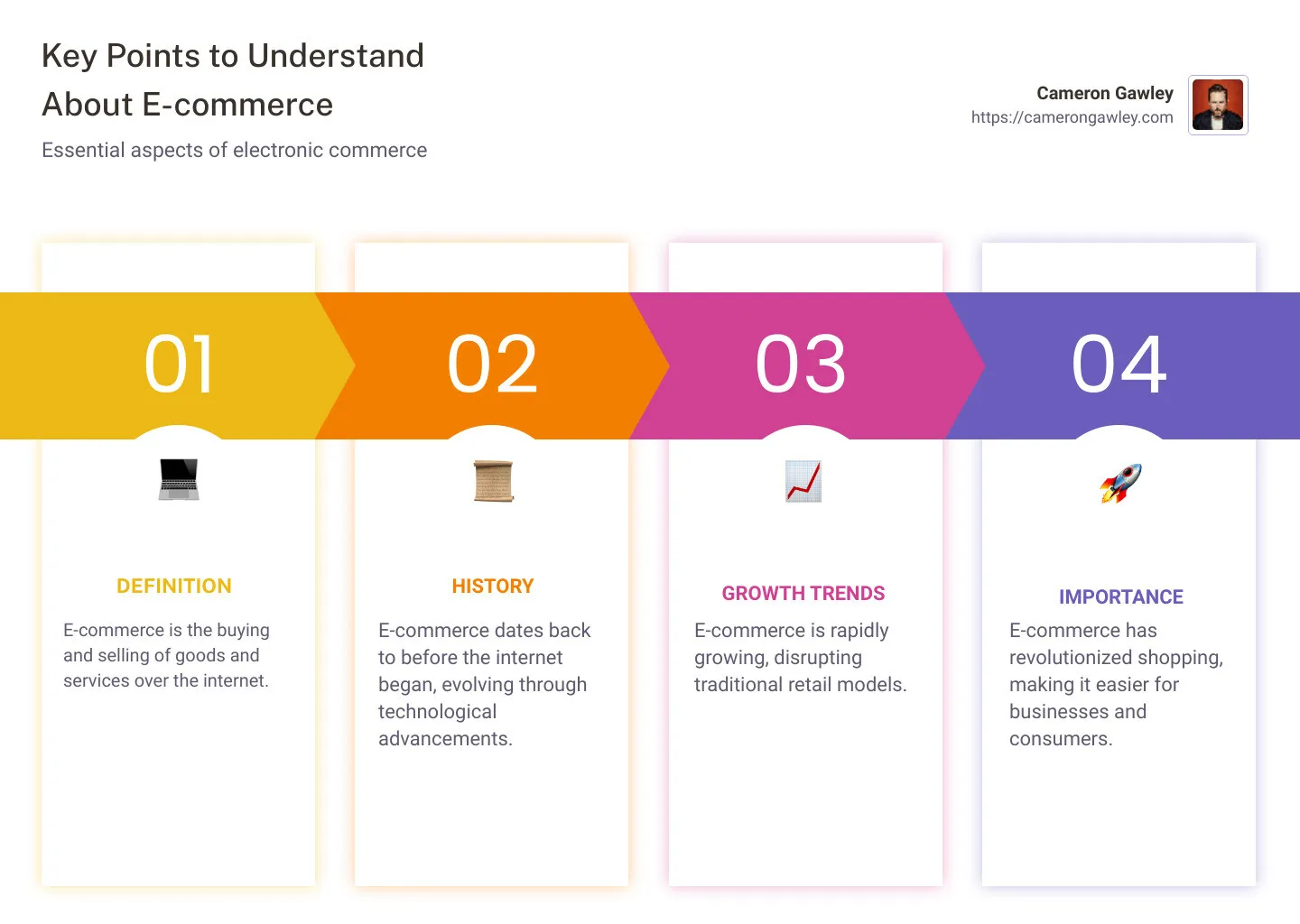
Key Points to Understand:- Definition: E-commerce is the buying and selling of goods and services over the internet.- History: E-commerce dates back to before the internet began, evolving through various technological advancements.- Growth Trends: E-commerce is a rapidly growing industry, with increasing reliance on online transactions disrupting traditional retail models.
E-commerce has revolutionized the way we shop, making it easier and more convenient for businesses and consumers to connect. Companies like Amazon and Alibaba have driven massive growth in this space, forcing changes in the retail landscape.
In this comprehensive guide, we'll dive deep into what e-commerce is, its various types, how it works, and the advantages and disadvantages it brings to businesses and consumers alike.
My name is Cameron Gawley—an experienced entrepreneur and brand builder. I've co-founded multiple successful digital and e-commerce ventures, including Texas's fastest-growing digital strategy agency. Let's explore the exciting world of e-commerce together.
What is E-commerce?
E-commerce, short for electronic commerce, is the buying and selling of goods and services over the internet. It also involves the transfer of money and data to complete these transactions. Essentially, e-commerce allows businesses and consumers to conduct transactions online, bypassing the need for physical stores.
Types of E-commerce
E-commerce transactions can be categorized into several types, each with its own unique characteristics:
1. Business-to-Business (B2B):
In B2B e-commerce, transactions occur between businesses. For example, a manufacturer selling products to a wholesaler or a wholesaler selling to a retailer. These transactions often involve bulk orders and long-term contracts.
2. Business-to-Consumer (B2C):
B2C is the most common form of e-commerce, where businesses sell products or services directly to consumers. This includes online shopping sites where you can buy anything from electronics to clothing.
3. Consumer-to-Consumer (C2C):
In C2C e-commerce, consumers sell directly to other consumers. Online marketplaces facilitate C2C transactions.
4. Consumer-to-Business (C2B):
C2B e-commerce occurs when individuals sell products or services to businesses. This includes freelancers offering services like graphic design or writing to companies through various platforms.
5. Business-to-Government (B2G):
B2G involves transactions between businesses and government entities. This can include supplying government agencies with products or services through online portals.
6. Consumer-to-Government (C2G):
C2G transactions occur when individuals interact with the government online. Examples include paying taxes or renewing licenses through government websites.
7. Government-to-Business (G2B):
In G2B, government entities sell products or services to businesses. This can include providing data services or offering business licenses.
8. Government-to-Consumer (G2C):
G2C e-commerce involves transactions between government and consumers. For instance, a government may provide online portals for citizens to apply for benefits or pay fines.
How E-commerce Works
E-commerce is powered by the internet and involves several key components to facilitate transactions:
1. Online Selling Channels:
Businesses can sell their products through various online channels such as websites, social media platforms, and online marketplaces. Each channel offers unique advantages in terms of reach and user experience.
2. Payment Processors:
Payment processors enable secure transactions between buyers and sellers. They handle the transfer of funds and ensure that payments are processed efficiently.
3. Order Management:
When a customer places an order, the details are sent to an order management system. This system checks inventory levels, processes payments, and updates stock.
4. Fulfillment:
Once the order is confirmed, the fulfillment process begins. This involves picking, packing, and shipping the product to the customer. For digital products, fulfillment may involve providing download links or access codes.
5. Logistics:
Logistics plays a crucial role in e-commerce. It includes everything from warehousing and inventory management to shipping and delivery. Efficient logistics ensure that products reach customers on time and in good condition.
Advantages of E-commerce
Accessibility and Convenience
One of the biggest advantages of e-commerce is its 24/7 availability. Unlike traditional stores with fixed hours, e-commerce sites are always open. This means customers can shop anytime, whether it's 3 PM or 3 AM.
E-commerce also offers a broad selection of products. For example, Amazon's first slogan was "Earth's Biggest Bookstore" because it could offer more books than any physical store. Online stores don’t have the same shelf space limitations, allowing them to provide a wider array of products.
Finding products is easier online. Customers can use search features to locate specific items quickly, avoiding the hassle of wandering through aisles in a physical store. This ease of access makes shopping faster and more efficient.
Lower Operating Costs
E-commerce businesses generally have lower operating costs than brick-and-mortar stores. They don’t need to worry about renting retail space, paying for utilities, or hiring as many staff members. This means lower overhead costs.
Digital marketing is also cheaper and more targeted than traditional advertising. Online ads, social media promotions, and email marketing can reach a wide audience at a fraction of the cost of TV or print ads. This helps businesses save money while still attracting customers.
Without the need for physical stores, e-commerce businesses can operate from anywhere, even a home office. This reduced overhead allows new businesses to start with less capital.
Global Marketing Reach
E-commerce breaks down geographical barriers. As long as customers can access the internet and the business can ship products to their location, there are no limits to where a business can sell. This international sales potential allows businesses to reach a global audience.
Digital advertising helps businesses target specific demographics and regions. With tools like Google Ads and Facebook Ads, businesses can create campaigns custom to different customer segments. This customer segmentation ensures that marketing efforts are more effective.
Online stores can also gather data on customer behavior, such as browsing and purchase history. This data helps businesses tailor their marketing strategies and improve customer experiences. For example, Amazon uses this data to recommend products to users, increasing the likelihood of a sale.
In summary, the advantages of e-commerce include its global reach, lower operating costs, and convenience. These benefits make it an attractive option for both new and established businesses looking to expand their market presence.
Next, we'll discuss the disadvantages of e-commerce, including limited customer interaction and technical challenges.
Disadvantages of E-commerce
While e-commerce offers many benefits, it also comes with several disadvantages that businesses need to consider.
Limited Face-to-Face Interaction
One of the main drawbacks of e-commerce is the limited face-to-face interaction between businesses and customers. This can affect:
- Product Experience: Customers can't touch, feel, or try products before buying. This can lead to dissatisfaction if the product doesn't meet their expectations.
- Customer Service Limitations: Online stores often rely on digital communication methods like email or chat, which may not be as effective as in-person interactions. Some customers prefer talking to a real person when they have issues or questions.
Technical Challenges
Running an e-commerce business requires a strong reliance on technology, which can present several challenges:
- Website Crashes: If your website goes down, your business is effectively closed. High traffic or technical issues can cause your site to crash, leading to lost sales.
- Cybersecurity: E-commerce sites are prime targets for hackers. Protecting customer data from breaches is crucial, but it can be costly and complex.
- Reliance on Technology: Any technical glitch, whether it's due to internet issues or software problems, can disrupt your business operations.
Data Security Concerns
Data security is a major concern for e-commerce businesses:
- Customer Data: Online transactions require customers to enter sensitive information like credit card details. If this data is compromised, it can lead to fraud and identity theft.
- Reputation Damage: A data breach can severely damage your brand's reputation. Customers need to trust that their information is safe, and a security lapse can erode that trust quickly.
High Competition
The low barrier to entry in e-commerce means high competition:
- Market Saturation: Many businesses vie for the same customers, making it hard to stand out. Effective marketing strategies and SEO are essential to maintain a digital presence.
- Counterfeit Products: Successful products often attract counterfeiters. This not only affects sales but can also harm your brand's reputation.
In the next section, we'll explore the different types of e-commerce business models and how they operate.
Types of E-commerce Business Models
E-commerce comes in various shapes and sizes. Let's break down the primary types of e-commerce business models and see how each operates.
Business-to-Consumer (B2C)
Business-to-Consumer (B2C) is the most common e-commerce model. Here, businesses sell products or services directly to the end customer. Think of your favorite online retailer where you buy clothes or electronics.
Examples:
- Amazon: Offers a wide range of products directly to consumers.
- Netflix: Provides streaming services directly to subscribers.
Business-to-Business (B2B)
In Business-to-Business (B2B) e-commerce, transactions occur between businesses. This model often involves bulk transactions and recurring orders. Businesses sell products or services to other businesses, such as raw materials, software, or machinery.
Examples:
- Alibaba: A marketplace where businesses can buy bulk products from manufacturers.
- Salesforce: Provides CRM software to other companies.
Consumer-to-Consumer (C2C)
Consumer-to-Consumer (C2C) e-commerce connects consumers to trade products or services with each other. Digital marketplaces and auction sites are common in this model.
Examples:
- eBay: Allows consumers to auction and sell items to other consumers.
- Craigslist: A platform for listing and selling goods or services locally.
Consumer-to-Business (C2B)
Consumer-to-Business (C2B) flips the traditional model. Here, consumers offer products or services to businesses. This is common in freelance services and job boards.
Examples:
- Upwork: Freelancers offer their skills to companies looking for specific projects.
- iStock: Photographers sell their images to businesses for marketing use.
Business-to-Government (B2G)
Business-to-Government (B2G) involves businesses providing goods or services to government entities. This often includes fulfilling government contracts or providing specialized products.
Examples:
- Defense contractors: Companies that supply military equipment to the government.
- IT services: Firms that manage government digital infrastructure.
Consumer-to-Government (C2G)
Consumer-to-Government (C2G) e-commerce allows consumers to interact with government agencies. This typically involves transactions like paying taxes or submitting documents online.
Examples:
- IRS e-File: Allows taxpayers to submit their tax returns electronically.
- DMV online services: Enable citizens to renew their driver's licenses or pay fines online.
Understanding these types of e-commerce business models can help you identify where your business fits and how to best reach your target audience. Next, we'll dive into the essential steps to start your own e-commerce business.
Steps to Starting an E-commerce Business
Starting an e-commerce business can feel overwhelming, but breaking it down into manageable steps makes the process smoother. Here’s a simple guide to get you started.
Research and Planning
1. Research Business Ideas
Begin by identifying a product or service you’re passionate about. Look for gaps in the market or untapped audiences. For example, Karen Blackwell, the founder of Kanda Chocolates, found success by offering a unique story and high-quality product in a crowded market.
2. Conduct Market Research
Assess the demand for your product. Use tools like Google Trends, surveys, or social media to gauge interest. Thoroughly research your competition to understand their strengths and weaknesses.
3. Define Your Business Structure
Choose a business structure that suits your needs, such as a sole proprietorship, partnership, or LLC. This will affect your legal and tax obligations.
4. Handle Legal Documentation
Register your business, obtain necessary licenses, and ensure you comply with local laws. This might include getting a sales tax permit or a business license.
Building Your Online Store
1. Design Your Website
Select an e-commerce platform like Shopify or Squarespace. Customize your site to reflect your brand. Make sure it’s user-friendly and mobile-optimized, as m-commerce is rapidly growing.
2. Set Up Payment Gateways
Integrate secure payment options like PayPal, Stripe, or credit card processing. Ensure your site is SSL certified to protect customer data.
3. List Your Products
Create detailed product listings with high-quality images and descriptions. Highlight key features and benefits to make your products stand out.
Marketing and Sales Strategies
1. SEO (Search Engine Optimization)
Optimize your website for search engines to attract organic traffic. Use relevant keywords, create quality content, and ensure your site loads quickly.
2. Digital Advertising
Invest in digital ads like Google Ads or Facebook Ads to reach a wider audience. Use Sponsored Products on platforms like Amazon to boost visibility.
3. Customer Loyalty Programs
Encourage repeat business by offering loyalty programs or discounts. Personalized experiences can significantly boost customer retention, with 56% of consumers becoming repeat buyers after a personalized shopping experience.
4. Social Media and Email Marketing
Use social media channels to engage with your audience and promote your products. Build an email list to send newsletters, special offers, and updates.
Fulfillment Strategy
1. Determine Your Fulfillment Method
Decide whether you’ll handle fulfillment in-house or use third-party logistics (3PL). Each option has its pros and cons, so choose what best fits your business model.
2. Find Reliable Suppliers
Partner with reputable suppliers and manufacturers to ensure product quality and timely delivery. This is crucial for maintaining customer satisfaction.
3. Plan Your Shipping Strategy
Offer various shipping options, including standard, expedited, and international shipping. Use a shipping calculator to provide accurate shipping costs to your customers.
4. Attract Customers with Promotions
Launch your store with special promotions to attract initial customers. Use discounts, limited-time offers, or free shipping to entice buyers.
By following these steps, you’ll be well on your way to launching a successful e-commerce business. Next, let’s explore the top e-commerce platforms to help you build your online store.
Top E-commerce Platforms
Choosing the right e-commerce platform is crucial for your online store's success. Let's dive into some of the most popular options available today.
Shopify
Shopify is a powerful e-commerce platform designed to help businesses of all sizes. Here are some key features:
- Features: Shopify offers unlimited storage and bandwidth, multiple staff accounts, point-of-sale (POS) access, abandoned cart recovery, shipping discounts, free SSL certificate, and shipping label printing. You can sell as many products as you want.
- Integration: Shopify integrates smoothly with a wide range of apps, making it easy to add functionalities like email marketing, inventory management, and social media advertising.
- Pricing: Shopify’s plans start at $29 per month. Higher plans offer advanced features such as detailed analytics and reports, and you’ll pay lower fees on transactions, credit card processing, and shipping. You can start with a three-day trial to test the waters.
Squarespace
Squarespace is known for its beautiful design templates and ease of use. Here are its highlights:
- Templates: Squarespace offers a wide range of free template designs that are visually appealing and easy to customize.
- Customization: You can further customize your website using CSS or JavaScript. Squarespace also allows you to sell unlimited products and tag your products on Instagram.
- Analytics: The platform offers built-in analytics to help you track your sales and understand customer behavior.
- Pricing: Squarespace’s e-commerce builder starts at $23 per month. Only the Commerce plans exempt businesses from the additional 3% fee on each transaction.
Wix
Wix is a versatile website builder that is also great for e-commerce. Here’s what you get:
- SEO Tools: Wix comes with built-in SEO tools to improve your site’s ranking, making it easier for customers to find you online.
- App Integration: Wix integrates with hundreds of apps, allowing you to add features to your website without any coding knowledge.
- Features: Depending on your plan, you can sell unlimited products, recover abandoned carts, manage inventory, and complete payments. You’ll also get priority customer support, unlimited dropshipping, customized reports, and a customer loyalty program.
- Pricing: Wix offers a free version, but for unlimited storage suitable for a content-heavy e-commerce store, you’ll need to pay $59 per month.
By understanding the features, integration capabilities, and pricing of these top e-commerce platforms, you can make an informed decision on which one best suits your business needs.
Frequently Asked Questions about E-commerce
What is E-commerce?
E-commerce is short for electronic commerce. It's the buying and selling of goods and services over the internet. This involves the online exchange of money and data to complete these transactions. E-commerce can take place through various digital platforms like websites, mobile apps, and social media channels.
How to Make Money Doing E-commerce?
There are several ways to make money in e-commerce:
- Print-on-Demand: This model allows you to sell custom products like t-shirts, mugs, and phone cases. You design the products, and a third-party company prints and ships them when a customer places an order.
- Digital Products: Selling digital items like e-books, online courses, or software can be highly profitable. These products can be delivered instantly and have no inventory costs.
- Affiliate Marketing: This involves promoting other companies' products on your website or social media. You earn a commission for each sale made through your referral links.
What are the Advantages and Disadvantages of E-commerce?
Advantages:
- Accessibility and Convenience: E-commerce stores are open 24/7. Customers can shop from anywhere, anytime. This is especially useful for those with busy schedules or those living in different time zones.
- Lower Operating Costs: Running an online store is generally cheaper than a physical one. You save on rent, utilities, and staffing. Plus, digital marketing is often more cost-effective than traditional advertising.
- Global Marketing Reach: You can reach customers worldwide. Digital advertising options like cost-per-click (CPC) ads can help target specific audiences.
Disadvantages:
- Limited Customer Interaction: Unlike physical stores, e-commerce lacks face-to-face interaction. This can make it hard to build personal relationships with customers and address their concerns immediately.
- Technical Challenges: E-commerce relies heavily on technology. Website crashes, cybersecurity issues, and glitches can disrupt your business and frustrate customers.
- Data Security Concerns: Storing customer data online comes with risks. If your site gets hacked, sensitive information like credit card numbers can be compromised, damaging your reputation and leading to financial losses.
Understanding these aspects will help you steer the e-commerce landscape more effectively and make informed decisions for your business.
Conclusion
E-commerce has transformed the way we buy and sell, offering unparalleled convenience and global reach. We've explored the definition of e-commerce, its various types, and how it works. We've also looked at the advantages like lower operating costs and global marketing reach, as well as the challenges such as data security concerns and technical issues.
Cameron Gawley: Your Partner in E-commerce Success
At Cameron Gawley, we specialize in providing entrepreneurial guidance custom to your unique business needs. Whether you're just starting or looking to scale, our expertise can help you steer the complexities of e-commerce.
Entrepreneurial Guidance
Starting an e-commerce business can be daunting, but you don't have to do it alone. We offer comprehensive support, from market research to building your online store. Our goal is to equip you with the knowledge and tools you need to succeed.
Brand Building
Your brand is more than just a logo—it's your story, your mission, and your promise to customers. We help you create a compelling brand identity that stands out in a crowded market. From designing your website to crafting your marketing message, we cover it all.
Growth Strategies
Sustainable growth requires a well-thought-out strategy. We provide insights into the latest trends and technologies to help you stay ahead of the competition. Our growth strategies include everything from digital advertising to customer loyalty programs, ensuring your business not only survives but thrives.
By partnering with Cameron Gawley, you're not just getting a service; you're gaining a dedicated ally committed to your success.
Ready to take your e-commerce business to the next level? Learn more about how we can help you build and grow your brand.
With this guide, you’re now equipped with the essential knowledge to understand and excel in e-commerce. Whether you’re a budding entrepreneur or an established business looking to expand online, the opportunities are endless. Let’s make your e-commerce journey a successful one!