
Introduction
When we talk about the types of branding, we're diving into the various ways businesses can make a memorable impression. Here's a quick list if you're in a hurry:
- Corporate Branding
- Personal Branding
- Product Branding
- Service Branding
- Ingredient Branding
- Conscious Branding
- Retail Branding
- Geographic Branding
- Online Branding
- Offline Branding
- Debranding
- Rebranding
- Co-Branding
Branding is about much more than just a logo. It's about how your business presents itself to the world. Think of it as the personality of your company.
Brand identity is how you want the world to see you. It includes your logo, colors, and website design. Brand strategy is your plan to achieve that perception, involving goals and actions. Brand values are the beliefs that guide your brand, like honesty or innovation.
I'm Cameron Gawley, an expert brand builder with a track record of helping businesses, from startups to established firms, grow their brand presence. My experience spans co-founding several successful ventures and guiding well-known brands like Takis and Jack Black Men's Skincare.
What is Branding?
Brand Definition
Branding is how a business or product presents itself to the world. It's not just a logo or a catchy slogan. It's the overall impression that a company leaves on its customers. Think of it as the personality of a business. From the colors used in marketing materials to the tone of voice in advertisements, every detail contributes to the brand.
Brand Equity
Brand equity refers to the value a brand adds to a product. Imagine two identical products: one is a generic version, and the other is branded with a well-known name like Apple or Nike. The branded product often sells for more and is perceived as higher quality. This added value is brand equity. A strong brand can lead to customer loyalty, higher sales, and even the ability to charge premium prices.
Brand Elements
Several elements make up a brand, including:
- Logo: The visual symbol representing the brand.
- Slogan: A memorable phrase that captures the essence of the brand.
- Color Scheme: Specific colors associated with the brand.
- Typography: The style of text used in branding materials.
- Voice and Tone: The way a brand communicates with its audience.
For example, Allstate's slogan, "You're in good hands with Allstate," suggests reliability and trustworthiness, reinforcing its brand identity.
Brand History
Branding has been around for centuries. Ancient merchants would mark their products with symbols to indicate their origin. The term "branding" itself comes from the practice of ranchers marking their cattle to show ownership. Over time, branding evolved into a sophisticated marketing tool.
In the 19th century, as mass marketing took off, companies began to use branding to distinguish their products from competitors. Flour sellers, for instance, started using unique packaging and logos to stand out.
Today, branding is more important than ever. With the rise of digital media, brands must be consistent across various platforms to maintain a cohesive identity. Companies like Coca-Cola and Apple have mastered this, creating brands that are instantly recognizable and deeply trusted by consumers.
Branding has come a long way from simple marks on products to complex strategies involving multiple elements. Understanding these basics is crucial for any business looking to make a lasting impression.
Next, we'll dive into the 13 Types of Branding and how they can elevate your business.
The 13 Types of Branding
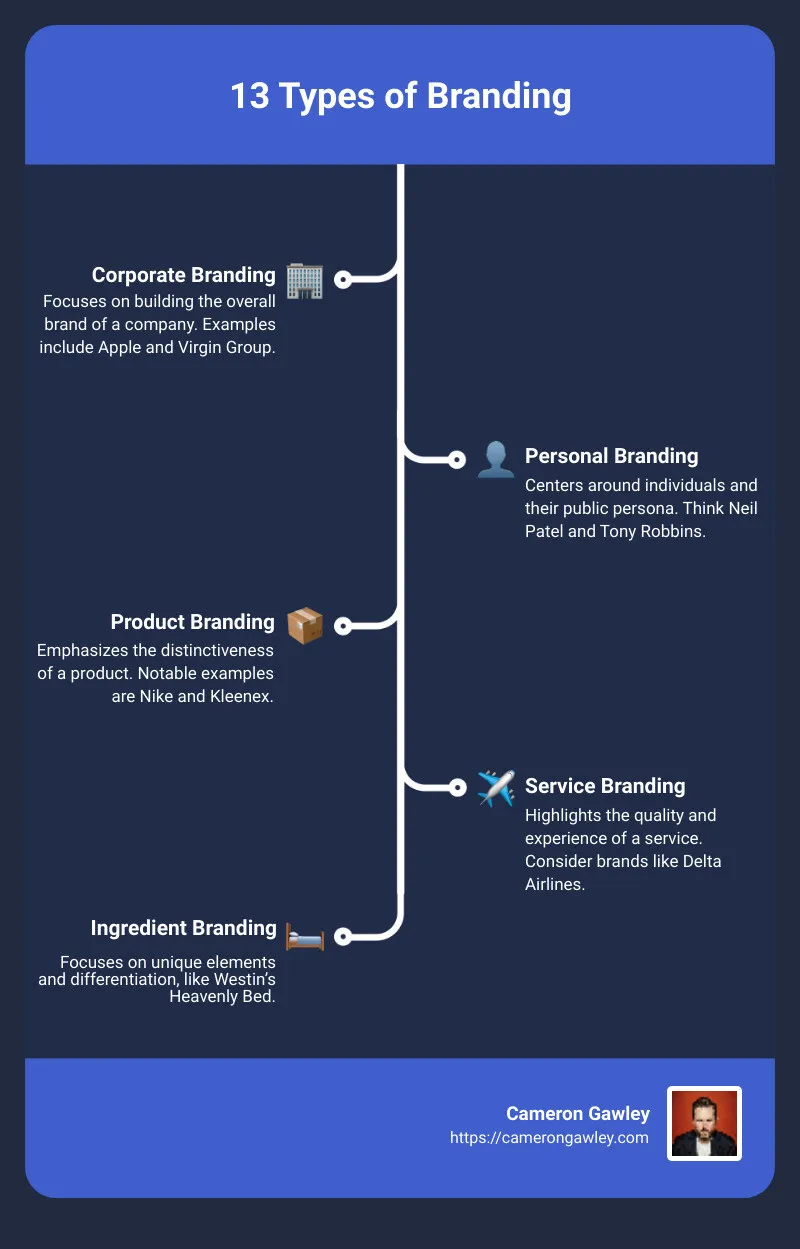
Corporate Branding
Corporate branding is all about creating a unified look and feel for a company. It encompasses the company's logo, color schemes, and overall visual identity. This type of branding aims to build a strong reputation and trust among consumers.
Apple is a perfect example. Their sleek design and innovative products have made them a household name. The Apple logo alone is enough to evoke thoughts of quality and cutting-edge technology.
Another great example is the Virgin Group. Founded by Richard Branson, Virgin encompasses everything from airlines to telecommunications, yet all sub-brands share the master Virgin identity. This consistency helps build trust and recognition across various industries.
Personal Branding
Personal branding focuses on individual identity. It's about establishing yourself as an expert in your field and creating a unique persona that people can trust.
Neil Patel, a renowned SEO expert, has mastered personal branding. Through his blog and social media presence, he shares valuable digital marketing tips, making him a go-to resource for marketers.
Similarly, Tony Robbins has built a personal brand around motivational speaking and self-improvement. His online presence and events draw millions, creating a strong, recognizable personal brand.
Product Branding
Product branding is about making a specific product stand out in the market. It involves product differentiation and market research to identify the right target audience.
Nike is a leader in product branding. Their "Just Do It" slogan and iconic swoosh logo make their footwear instantly recognizable.
Another example is Kleenex. The brand name has become synonymous with tissues, showcasing the power of effective product branding.
Service Branding
Service branding focuses on the customer experience and service quality. It's about making your service memorable and reliable.
Delta Airlines excels in service branding. They offer comfortable seats and reliable service, making them a preferred choice for many travelers.
Ingredient Branding
Ingredient branding involves highlighting a unique element within a product to differentiate it from competitors.
Westin’s Heavenly Bed is a great example. By branding their beds as "Heavenly," Westin hotels offer a unique selling point that attracts guests looking for comfort and luxury.
Conscious Branding
Conscious branding focuses on ethical branding, sustainability, and social impact. Brands that adopt this approach aim to reflect their values in their products and practices.
Gillette's campaigns, like "The Best Men Can Be," address social issues and promote positive change, making them a leader in conscious branding.
Retail Branding
Retail branding is all about the in-store experience and effective merchandising.
IKEA is a perfect example. Known for its affordable, modern furniture and unique store layout, IKEA creates a shopping experience that's hard to forget.
The Apple Store also excels in retail branding. Their minimalist design and hands-on product displays create an inviting atmosphere for customers.
Geographic Branding
Geographic branding uses cultural symbols and regional identity to attract visitors and promote tourism.
London often features Big Ben in advertisements to draw tourists. Similarly, Amsterdam's "I Amsterdam" campaign showcases the city's cultural diversity, moving the focus away from its Red Light District.
Online Branding
Online branding is about establishing a strong digital presence through social media, website design, and SEO.
Creating a user-friendly website and engaging social media profiles can significantly boost a brand's online visibility and credibility.
Offline Branding
Offline branding involves traditional marketing techniques like print advertising and TV commercials. This type of branding is crucial for reaching audiences who may not be online.
Debranding
Debranding takes a minimalist approach to branding, focusing on simplicity and universal appeal.
Apple and Samsung are leaders in debranding. Their products often feature minimalistic design and branding, making them universally appealing.
Rebranding
Rebranding involves a brand refresh or creating a new identity. This is often done during mergers or to modernize a brand's image.
Co-Branding
Co-branding involves brand partnerships and strategic alliances to create a stronger market presence.
A notable example is the partnership between Uber and Spotify, allowing riders to control the music during their trip, enhancing the user experience for both brands.
Next, we'll explore Frequently Asked Questions about Types of Branding to help you understand the nuances of each type.
Frequently Asked Questions about Types of Branding
What are the main types of branding?
The main types of branding that businesses often utilize include corporate branding, personal branding, and product branding.
- Corporate Branding: This type focuses on creating a unified look and feel across a company's entire presence, from its website to its marketing materials. Think of brands like Apple and Virgin Group, which have a consistent identity that reflects their mission, target market, and values.
- Personal Branding: Individuals, especially influencers and entrepreneurs, use personal branding to establish themselves as experts in their fields. For example, Neil Patel has built a strong personal brand in SEO and digital marketing.
- Product Branding: This type of branding is all about differentiating a specific product from others in the market. Nike is a prime example, with its iconic "Just Do It" slogan and recognizable logo.
What are the main types of branding strategies?
To effectively build and maintain a brand, businesses often employ several key branding strategies:
- Rebranding: This involves refreshing or completely changing a brand's identity. Companies often rebrand to modernize their image or during mergers. For instance, when Dunkin' Donuts rebranded to just Dunkin' to emphasize their coffee offerings.
- Co-Branding: This strategy involves partnering with another brand to leverage each other's strengths. A notable example is the collaboration between Uber and Spotify, which allowed Uber riders to control the music during their trips.
- Influencer Marketing: Leveraging influencers who align with your brand can help build credibility and reach a broader audience. Companies like Glossier have successfully used influencer marketing to grow their brand.
What are the three types of brands?
There are three main types of brands:
- Corporate Brands: These identify a company or organization as a whole. Corporate brands encompass the company's mission, values, and overall reputation. Examples include Microsoft and Coca-Cola.
- Product Brands: These focus on individual products or services offered by a company. Each product brand has its own identity, separate from the corporate brand. For example, the iPhone is a product brand under Apple's corporate brand.
- Personal Brands: This type of branding is centered around individuals. Personal brands are built through social media, public speaking, and other personal branding activities. Influencers and thought leaders like Tony Robbins are excellent examples of strong personal brands.
Understanding these different types of branding can help you create a more effective brand strategy tailored to your business needs. Next, we'll explore more about the different types of branding to help you choose the best approach for your company.
Conclusion
Branding isn't just about a logo or a catchy slogan. It's about creating a lasting impression and building a relationship with your audience. By understanding the different types of branding, you can choose the strategies that best align with your business goals and values.
At Cameron Gawley, we specialize in guiding entrepreneurs and businesses through the complex world of brand building. Our approach is holistic, combining elements of corporate, personal, and product branding to create a cohesive and compelling brand identity. Whether you're a startup looking to make your mark or an established business seeking to refresh your brand, our expertise can help you navigate these waters effectively.
Entrepreneurial Guidance and Mentorship
Building a brand is a journey, and having the right guidance can make all the difference. Cameron Gawley offers entrepreneurial guidance and mentorship to help you understand not just the "how" but also the "why" behind effective branding. Our goal is to empower you with the knowledge and tools you need to build a brand that resonates with your audience and stands the test of time.
Why Choose Us?
- Expertise: With years of experience in branding and marketing, we bring a wealth of knowledge to the table.
- Holistic Approach: We integrate various types of branding to create a well-rounded strategy.
- Personalized Service: We tailor our services to meet your unique needs and goals.
Ready to take your brand to the next level? Learn more about our branding services and let us help you craft a brand that truly stands out.
By focusing on the right types of branding and leveraging expert guidance, you can build a strong, memorable brand that connects with your audience and drives business success.