
Understanding Direct-to-Consumer (DTC) Fulfillment
DTC fulfillment refers to the method of managing and executing the delivery of your products directly to your customers, bypassing traditional retail channels and wholesalers. This growing trend has become crucial for online stores looking to increase their control, cost savings, and, above all, improve the customer experience.
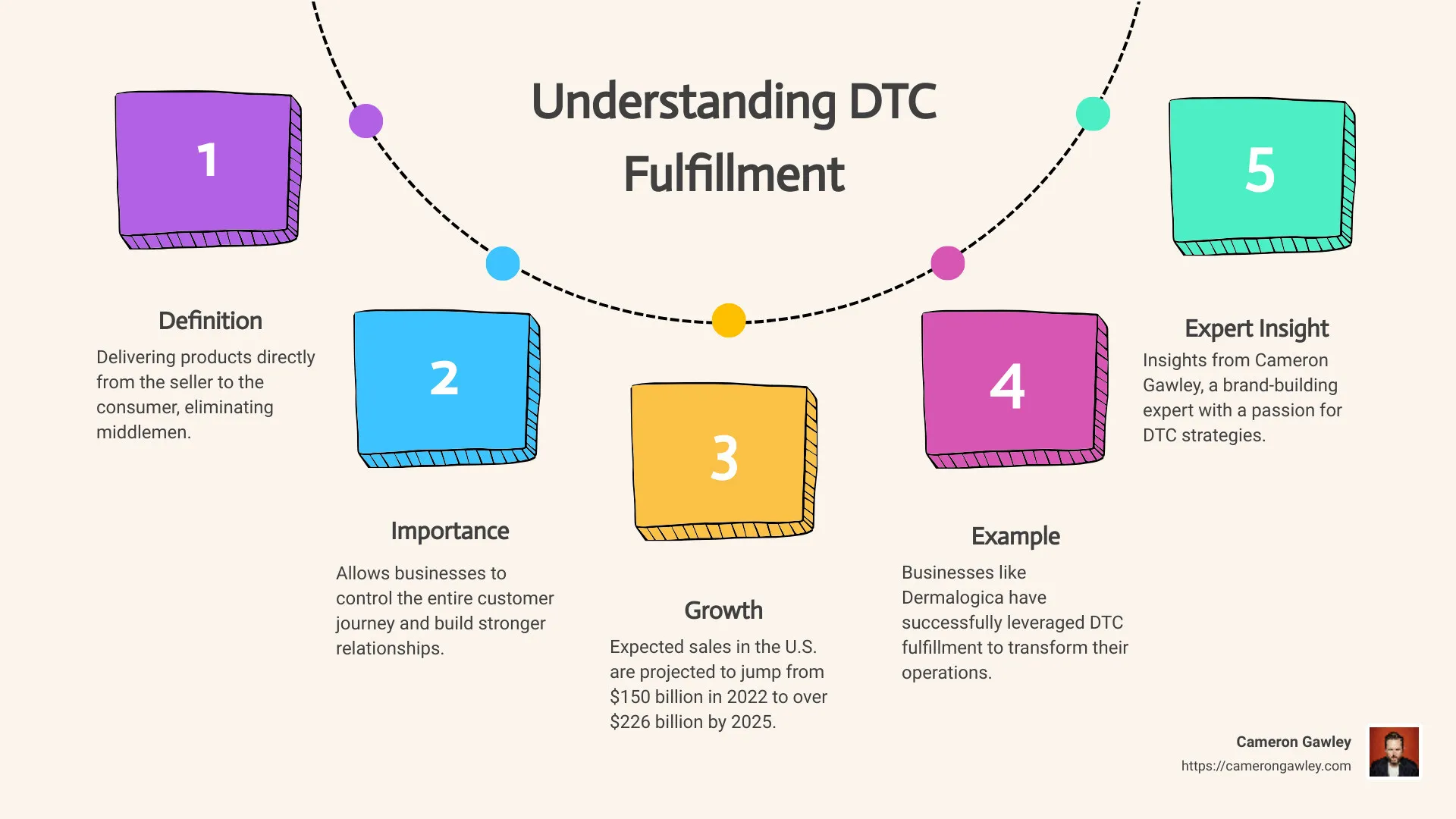
If you're looking for a quick overview:* Definition: DTC fulfillment means delivering products directly from the seller to the consumer, eliminating middlemen.* Importance: It allows businesses to control the entire customer journey and build stronger relationships.* Growth: Expected sales in the U.S. are projected to jump from $150 billion in 2022 to over $226 billion by 2025.
Businesses like Dermalogica have successfully leveraged DTC fulfillment to transform their operations, meeting the soaring demand for direct sales while managing traditional channels effectively.
My name is Cameron Gawley, a brand-building expert with a passion for helping businesses thrive in the DTC space. Having founded multiple successful ventures and aided brands like Everlane and Jack Black Men's Skincare, I'm here to share how you can optimize your DTC strategy.
What is Direct-to-Consumer (DTC) Fulfillment?
Direct-to-consumer (DTC) fulfillment is the process of delivering products directly from your business to your customers, skipping traditional retail channels and middlemen like wholesalers or distributors.
In DTC fulfillment, you control every step from the moment an order is placed on your online store to when it reaches the customer's doorstep. This includes managing inventory, processing orders, warehousing, shipping, and handling returns.
DTC vs. B2B Fulfillment
DTC Fulfillment:- Sales Channels: Direct sales from brands to consumers through brand-owned channels.- Customer Relationship: Direct relationship with consumers, focusing on brand loyalty and personalized experiences.- Control Over Customer Experience: High control over branding, packaging, and overall customer experience.- Supply Chain Management: Streamlined supply chain custom to brand-specific requirements.- Flexibility in Packaging: High flexibility to customize packaging for brand improvement.- Data Collection and Usage: Direct data collection from consumers for targeted marketing and product development.- Delivery and Logistics: Custom logistics for direct delivery to consumers, often with a focus on speed and presentation.
B2B Fulfillment:- Sales Channels: Sales through various online channels, including brand-owned and third-party marketplaces.- Customer Relationship: Broader focus, catering to customers from various channels without necessarily building a direct brand relationship.- Control Over Customer Experience: Control varies depending on the channel; less direct influence in third-party marketplaces.- Supply Chain Management: More complex supply chain to cater to diverse sales channels and customer demands.- Flexibility in Packaging: Packaging standards often dictated by the requirements of different sales channels.- Data Collection and Usage: Data collection can be less direct, especially through third-party channels, impacting targeted strategies.- Delivery and Logistics: Logistics managed to optimize delivery across various sales channels, focusing on efficiency and cost-effectiveness.
DTC Fulfillment in the Ecommerce Landscape
The DTC market in the US is booming, with sales projected to rise from $150 billion in 2022 to over $226 billion by 2025, according to a November 2023 Statista study. This growth highlights the increasing importance of optimizing DTC fulfillment strategies for businesses aiming to capture a slice of this expanding market.
Supply Chain Management in DTC Fulfillment
In DTC fulfillment, the supply chain is streamlined and highly integrated with the brand’s marketing and customer service strategies. This allows for more agile responses to consumer trends and preferences, often leading to higher customer satisfaction due to personalized service and direct communication.
For instance, brands like Warby Parker and Dollar Shave Club have successfully leveraged DTC fulfillment to transform their operations, meeting the soaring demand for direct sales while managing traditional channels effectively.
Key Components of DTC Fulfillment:- Inventory Management: Procuring, storing, and managing product inventory strategically to meet customer demand while avoiding overstocking.- Order Processing: Verifying payment, picking and packing ordered items, and generating shipping labels efficiently.- Warehousing and Fulfillment: Managing warehouse space or utilizing third-party logistics (3PL) providers to facilitate order fulfillment.- Shipping and Delivery: Selecting reliable carriers, negotiating competitive shipping rates, and ensuring timely delivery.- Returns and Exchanges: Managing returns and exchanges efficiently, including outlining return policies and providing easy return options.
By understanding and optimizing these components, businesses can create a seamless and positive experience for their customers, from the moment they place an order until they receive their product and potentially return it.
Benefits of DTC Fulfillment
Direct-to-consumer (DTC) fulfillment offers numerous advantages for online stores. Let's explore the key benefits that make DTC fulfillment a game-changer for eCommerce businesses:
Improved Customer Satisfaction
DTC fulfillment allows businesses to control the entire customer journey, from order placement to delivery. This control enables fast and reliable shipping, which increases customer satisfaction. By eliminating intermediaries, businesses can optimize picking and packing processes to ensure accuracy and speed.
Increased Operational Efficiency and Cost Savings
By bypassing traditional retail channels, DTC fulfillment eliminates associated fees, allowing better negotiation of shipping rates and reducing overall costs. Centralized control over inventory management, order processing, and shipping streamlines operations, leading to significant cost savings.
Improved Brand Control and Building
With DTC fulfillment, you have full control over your brand's image and customer experience. This direct interaction with customers helps build brand loyalty and advocacy. You can also gather valuable feedback to improve your products and services.
Higher Profit Margins
Eliminating middlemen means you can set your own prices and potentially increase profit margins. This is especially beneficial for online stores looking to improve their financial performance and reinvest in growth initiatives.
Greater Flexibility and Agility
DTC models offer greater flexibility and agility compared to traditional retail models. You can quickly adapt to market trends, customer preferences, and seasonal fluctuations by adjusting inventory levels and fulfillment strategies as needed.
Better Inventory Management
DTC fulfillment gives you complete control over your inventory, enabling you to optimize stock levels and reduce the risk of stockouts or overstocking. This improves efficiency and helps manage financial resources better.
Streamlined Product Launches and Testing
DTC models allow for faster product launches and testing. You can directly gauge customer response to new products without relying on external retailers. This enables quicker iteration and adaptation based on market feedback.
Improved Data Collection and Customer Insights
DTC fulfillment allows you to collect rich customer data throughout the buying journey. By analyzing this data, you can gain valuable insights into customer preferences and behaviors, enabling personalized marketing efforts and improved customer satisfaction.
Stronger Customer Relationships
Direct communication and interaction foster strong relationships with customers. You can address their concerns, gather feedback, and personalize their experience, leading to increased loyalty and advocacy.
Potential for International Expansion
DTC models offer the potential for international expansion. By partnering with international shipping carriers and utilizing global fulfillment solutions, you can tap into new markets and expand your customer base.
By leveraging these diverse benefits, eCommerce stores can open up significant growth potential, improve customer satisfaction, build a stronger brand, and achieve lasting success.
Key Components of DTC Fulfillment
Direct-to-Consumer (DTC) fulfillment is a multifaceted process. It involves several key components that need to work seamlessly together to ensure customer satisfaction and operational efficiency. Let's dive into each of these components:
Inventory Management
Effective inventory management is crucial for DTC fulfillment. Keeping track of stock levels helps prevent overstocking and understocking, both of which can be costly. Overstocking leads to high storage costs, while understocking can result in missed sales opportunities.
Strategies to manage inventory efficiently:
- Use a Warehouse Management System (WMS): This system can help you track inventory in real-time, optimize storage space, and streamline the picking and packing process.
- Analyze Sales Trends: Historical sales data can help you forecast demand and plan inventory levels accordingly. This is especially important for managing seasonal fluctuations.
Order Processing
Order processing involves several steps from payment verification to picking and packing the products. Efficient order processing ensures that customers receive their orders accurately and on time.
Key steps in order processing:
- Payment Verification: Ensure that payments are processed securely and efficiently.
- Picking and Packing: Use technology to optimize the picking routes and packing process. This can reduce errors and speed up order fulfillment.
- Shipping Labels: Automate the generation of shipping labels to save time and reduce errors.
Warehousing and Fulfillment
Choosing the right warehousing and fulfillment model is critical for DTC success. You can opt for an in-house warehouse, a third-party logistics provider (3PL), or a hybrid model.
Options for warehousing and fulfillment:
- Own Warehouse: This gives you full control over the inventory and fulfillment process but requires a significant investment in infrastructure and personnel.
- 3PL: Outsourcing to a 3PL can be cost-effective and flexible, especially for businesses with fluctuating demand. Companies like Drive Fulfillment have shown how partnering with 3PLs can improve efficiency and customer service.
- Hybrid Model: Combines the best of both worlds by keeping critical aspects in-house while outsourcing non-core functions to a 3PL.
Shipping and Delivery
Shipping and delivery are the final steps in the DTC fulfillment process. The focus here is on speed, reliability, and cost-efficiency.
Factors to consider in shipping and delivery:
- Carriers: Partner with reliable carriers that offer competitive rates and services that align with your needs. Consider delivery speed, shipping costs, tracking options, and international coverage.
- Shipping Rates: Use shipping software to compare carrier rates and choose the most cost-effective options.
- Delivery Times: Aim for fast and reliable delivery to meet customer expectations. Offering options like expedited shipping can improve the customer experience.
Returns and Exchanges
A smooth return and exchange process is essential for maintaining customer trust and loyalty. Clearly outline your return policy and make the process as hassle-free as possible.
Key elements of a returns and exchanges process:
- Return Policy: Make sure your return policy is clear and easy to understand. This helps set customer expectations and reduces confusion.
- Refund Process: Process refunds quickly to maintain customer satisfaction.
- Customer Service: Provide accessible and efficient customer service to handle any issues related to returns and exchanges.
By focusing on these key components, you can build a robust DTC fulfillment strategy that improves customer satisfaction, improves operational efficiency, and supports business growth.

Next, let's explore the role of technology in DTC fulfillment.
Technology in DTC Fulfillment
Technology is the backbone of a successful DTC fulfillment strategy. It helps streamline operations, improve efficiency, and improve customer satisfaction. Let's dive into three critical technologies: Warehouse Management System (WMS), Order Management System (OMS), and Shipping Software.
Warehouse Management System (WMS)
A Warehouse Management System (WMS) is essential for inventory management and warehouse efficiency. It helps track stock levels, manage storage locations, and optimize picking and packing processes.
Benefits of WMS:- Real-time Inventory Tracking: Know exactly what you have in stock at any given time.- Optimized Picking Paths: Reduce the time it takes to pick items for orders.- Error Reduction: Minimize mistakes in order fulfillment.
A good WMS can help you manage your warehouse like a well-oiled machine. By optimizing processes, you can reduce costs and improve customer satisfaction.
Order Management System (OMS)
An Order Management System (OMS) centralizes and automates the entire order processing workflow. From order placement to fulfillment and delivery, an OMS keeps everything running smoothly.
Benefits of OMS:- Centralized Platform: Manage all orders from one place, whether they come from your website, marketplaces, or other channels.- Automated Workflows: Speed up order processing with automation.- Real-time Updates: Keep customers informed with real-time order status and tracking information.
With an OMS, you can handle more orders with less effort, ensuring a seamless experience for your customers.
Shipping Software
Shipping Software simplifies the shipping process by generating labels, comparing carrier rates, and managing shipments in real-time.
Benefits of Shipping Software:- Label Generation: Quickly produce shipping labels for all your orders.- Carrier Rate Comparison: Find the best shipping rates from different carriers.- Real-time Management: Track shipments and provide customers with real-time updates.
This software ensures that your packages get to your customers quickly and cost-effectively. It also helps you manage returns more efficiently, which is crucial for maintaining customer satisfaction.
Automation and Integration
Automation and integration are key to maximizing the benefits of WMS, OMS, and shipping software. By integrating these systems, you can create a seamless flow of information that reduces manual tasks and improves accuracy.
Benefits of Automation and Integration:- Reduced Manual Work: Automate repetitive tasks to save time and reduce errors.- Improved Data Accuracy: Ensure that data flows seamlessly between systems.- Improved Efficiency: Streamline operations and improve overall efficiency.
For example, integrating your WMS with your OMS can help ensure that inventory levels are always up-to-date, reducing the risk of stockouts or overstocking.
By investing in the right technology and integrating your systems, you can build a robust and efficient DTC fulfillment operation that supports your business growth.
Next, let's discuss the challenges you may face in DTC fulfillment and how to overcome them.
Challenges in DTC Fulfillment
Technical Challenges
ERP Limitations: Many businesses rely on legacy ERP systems that weren't designed for modern DTC fulfillment. These systems can struggle with high order volumes and complex workflows, leading to inefficiencies and errors.
Manual Workflows: Without automation, order processing can be slow and prone to mistakes. Manual workflows are time-consuming and can limit the number of orders you can handle.
Integration Issues: Integrating various systems like your WMS, OMS, and shipping software can be difficult. Poor integration can lead to data discrepancies and delays in order fulfillment.
Financial Challenges
High Costs: DTC fulfillment can be expensive, especially if you're handling it in-house. Costs include warehousing, staffing, technology, and shipping. Without careful management, these costs can quickly eat into your margins.
Hiring Skilled Staff: Finding and retaining skilled staff for your fulfillment operations can be challenging. The need for specialized knowledge in logistics and technology adds to the complexity and cost.
Maintaining Margins
Cost Control: Keeping costs in check is critical for maintaining healthy profit margins. This includes managing warehousing costs, shipping rates, and labor expenses.
Efficiency: Inefficient processes can lead to higher operational costs and slower order fulfillment. Streamlining your workflows and investing in automation can help improve efficiency and reduce costs.
System Functionality: As your business grows, you'll need to add new functionalities to your fulfillment system. Legacy systems often struggle with scalability and may require costly custom projects to integrate new features.
Overcoming These Challenges
To tackle these challenges, consider the following strategies:
- Invest in Modern Technology: Upgrade to systems that are designed for DTC fulfillment. Look for solutions that offer seamless integration and automation.
- Outsource to 3PLs: If in-house fulfillment is too costly or complex, consider outsourcing to a third-party logistics provider. They can offer the expertise and scalability you need.
- Continuous Improvement: Regularly evaluate your processes and look for ways to improve efficiency and reduce costs. This could include adopting new technologies or refining your workflows.
By addressing these challenges head-on, you can build a more resilient and efficient DTC fulfillment operation.
Next, let's explore strategies for creating an effective DTC fulfillment strategy.
Strategies for Effective DTC Fulfillment
Creating an effective DTC fulfillment strategy is crucial for optimizing operations and ensuring customer satisfaction. This section will guide you through key strategies to help your business thrive.
Evaluate Your Needs
Start by understanding your specific needs:
- Product Volume and Complexity: Assess the size, weight, and complexity of your products. This helps determine storage and shipping requirements. For example, fragile items need special packaging, while perishable goods require climate control.
- Sales Trends and Seasonality: Analyze historical sales data to identify peak periods and seasonal trends. This helps in forecasting inventory needs and planning for fluctuating order volumes.
- Target Market Location: Identify where your primary customers are located. This influences warehouse locations, shipping options, and the choice of fulfillment partners.
Choose the Right Fulfillment Model
Selecting the right fulfillment model depends on your business needs and resources:
- In-House Fulfillment: Ideal for businesses that need high control over their operations and have consistent demand. It requires significant investment in infrastructure and personnel but offers total control.
- 3PL Fulfillment: Perfect for businesses with limited resources or fluctuating demand. Outsourcing to a third-party logistics (3PL) provider offers flexibility and expertise. Evaluate potential partners based on their capabilities, pricing, and services.
- Hybrid Model: Combines in-house control for specific aspects like quality control with outsourcing non-core functions to 3PL providers. This balance can be cost-effective while maintaining some control.
Invest in the Right Technology
Technology is a game-changer in DTC fulfillment:
- Warehouse Management System (WMS): A WMS helps streamline inventory management and warehouse operations, ensuring efficiency and accuracy.
- Order Management System (OMS): An OMS centralizes and automates order processing, from placement to delivery. It ensures seamless coordination between different stages of fulfillment.
- Shipping Software: Simplifies the generation of shipping labels, compares carrier rates, and manages shipments in real-time. This can drastically reduce shipping errors and improve delivery times.
Prioritize Reliable Partnerships
Building strong partnerships is essential:
- Carriers: Partner with reliable carriers that offer competitive rates and services that align with your needs. Consider delivery speed, shipping costs, and tracking options.
- Packaging Suppliers: Choose suppliers that provide high-quality, durable packaging solutions. This ensures your products are protected during transit and can also be a branding opportunity.
Focus on Customer Communication
Clear and consistent communication improves customer satisfaction:
- Order Updates: Provide clear order confirmations with estimated delivery times and tracking information. Keep customers informed about their order status and any potential delays.
- Returns and Exchanges: Clearly outline your return policy and make the return process easy. Efficiently managing returns builds trust and encourages repeat business.
- Customer Service: Ensure accessible and efficient customer service to address any questions or issues related to orders, fulfillment, and delivery.
By implementing these strategies, you can build a robust DTC fulfillment system that not only optimizes operations but also improves customer satisfaction and drives business growth.
Frequently Asked Questions about DTC Fulfillment
What is DTC fulfillment?
DTC fulfillment stands for Direct-to-Consumer fulfillment. It's a process where brands sell and ship products directly to customers without involving traditional retailers or middlemen. This model includes managing online orders, warehousing, picking and packing, and shipping products straight to the customer's doorstep.
What is the difference between DTC and B2B fulfillment?
The main difference between DTC (Direct-to-Consumer) and B2B (Business-to-Business) fulfillment lies in the nature of the orders and the end customers:
- DTC Fulfillment: Involves shipping smaller, individual orders directly to consumers. For example, if a brand sells 8,000 pencils directly to 8,000 customers, each order is picked, packed, and shipped separately. This process is more labor-intensive and requires efficient handling of numerous small orders.
- B2B Fulfillment: Involves shipping larger quantities of products to other businesses. For instance, shipping 10,000 pencils on a few pallets to a retailer. This process is simpler and involves fewer, larger shipments.
How can technology improve DTC fulfillment?
Technology plays a crucial role in optimizing DTC fulfillment. Here are some ways it helps:
- Warehouse Management System (WMS): Improves inventory management and warehouse efficiency. It helps track stock levels, manage storage, and streamline the picking and packing process.
- Order Management System (OMS): Centralizes order processing, making it easier to manage orders from multiple sales channels. It ensures smooth order verification, processing, and tracking.
- Shipping Software: Automates label generation, calculates carrier rates, and provides real-time tracking. It helps find the best shipping options and speeds up the delivery process.
By integrating these technologies, brands can handle high volumes of small orders efficiently, reduce errors, and improve customer satisfaction. For more detailed insights, check out our DTC Fulfillment Playbook.
Conclusion
Direct-to-Consumer (DTC) fulfillment is changing the retail landscape, offering brands unparalleled control over their customer experience. By selling directly to consumers, companies can build stronger relationships, gather valuable feedback, and improve customer loyalty. The ability to manage every aspect of the customer journey—from inventory management to shipping and returns—empowers brands to provide a seamless and personalized shopping experience.
At Cameron Gawley, we specialize in helping brands steer the complexities of DTC fulfillment. Our expertise in growth marketing and eCommerce strategies ensures that you can optimize your supply chain, reduce costs, and deliver exceptional service to your customers.
Ready to take your DTC fulfillment to the next level? Explore our DTC eCommerce services and see how we can help you achieve lasting success.
For personalized advice or to learn more about our services, reach out. We’re here to help you every step of the way.
Thank you for reading The Ultimate Guide to DTC Fulfillment. Let's transform your DTC operations together!
For more insights and expert advice, visit our DTC eCommerce blog.
Contact Information:Cameron Gawley | Growth Marketing Consultant & AdvisorEmail: [email protected]Website: Cameron Gawley