

How DTC is Changing Retail
When we talk about the DTC meaning, we're referring to the "Direct to Consumer" model. This innovative approach lets brands sell their products straight to customers, skipping middlemen like wholesalers and retailers. DTC has become a game-changer in the retail space, thanks to the power of the internet and changing consumer behaviors.
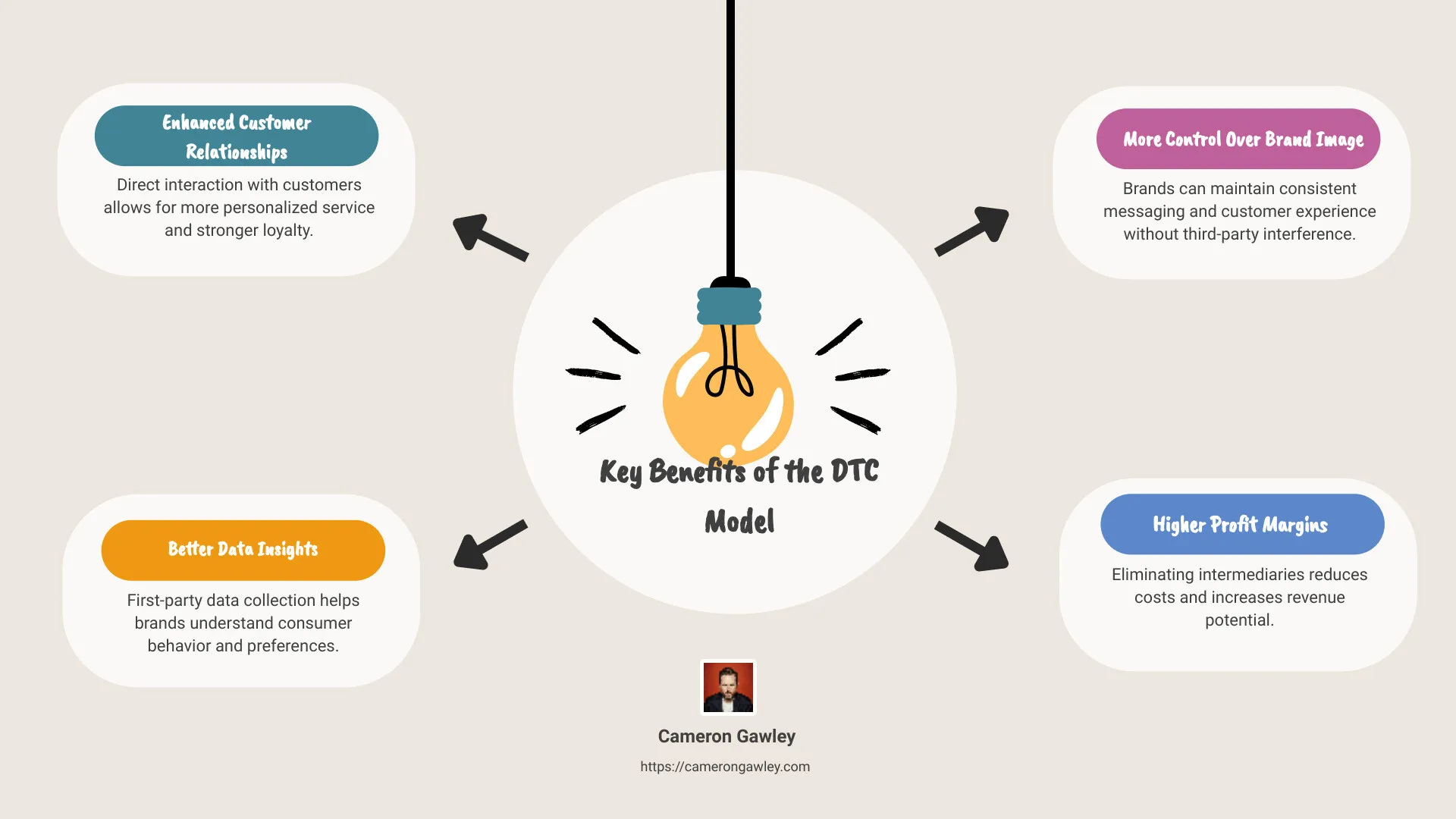
Quick Overview:- DTC Meaning: Stands for "Direct to Consumer," a retail model where brands sell directly to customers.- Benefits: Enhanced customer relationships, better data insights, and more control over brand image.
In traditional retail, brands depended on third-party sellers like Walmart or Amazon. Now, with DTC, they can communicate and sell directly to you. This shift offers more personalized shopping and often better prices.
I'm Cameron Gawley, an expert in helping brands grow through innovative strategies like DTC. With years of experience in brand building and digital marketing, I've guided numerous companies to embrace this transformative model effectively.
What is DTC?
Direct to consumer (DTC) is a sales strategy where brands sell their products directly to customers, bypassing traditional intermediaries like retailers and wholesalers. This approach gives brands more control over their customer relationships, data, and overall brand image.
The Evolution of DTC
Historically, brands relied on traditional retail channels to reach customers. Products were sold through third-party distributors and big department stores. This system worked well for decades, but with the rise of the internet, consumer behavior began to change.
In the early days of e-commerce, companies revolutionized how we shop online. As consumers spent more time researching and purchasing products online, brands recognized the potential of selling directly to their customers. This shift marked the beginning of the DTC revolution.
Key Characteristics of DTC
Customer Relationship: One of the most significant advantages of the DTC model is that brands own the entire customer relationship. From marketing and sales to customer service, everything is managed by the brand itself. This direct interaction allows for a more personalized experience, which can lead to higher customer satisfaction and loyalty.
First-Party Data: When brands sell directly to consumers, they collect valuable first-party data. This data includes purchase history, browsing behavior, and direct feedback, which can be used to improve products and marketing strategies.
Brand Control: Selling directly to consumers also means brands have full control over their image and how their products are presented. Unlike traditional retail, where products may be displayed alongside competitors, DTC brands can create a unique and consistent brand experience across all touchpoints.
In summary, the DTC model has evolved from traditional retail and e-commerce, offering brands a direct line to their customers. This approach enhances customer relationships, provides valuable data, and allows for greater brand control.
Benefits of the DTC Model
When brands adopt a direct-to-consumer (DTC) model, they unlock numerous benefits that can transform their business operations and customer relationships. Let's dive into two key advantages: enhanced customer experience and increased profit margins.
Enhanced Customer Experience
Personalization: One of the standout benefits of the DTC model is the ability to offer a personalized shopping experience. Brands can tailor their offerings based on customer preferences and behavior, enhancing customer satisfaction.
Direct Feedback: Selling directly to consumers allows brands to gather immediate feedback. This direct line to the customer helps in refining products and services quickly.
Customer Loyalty: By owning the entire customer experience, brands can build stronger relationships and foster loyalty. Regular interactions, such as through subscription models, keep customers engaged and coming back for more.
Increased Profit Margins
Eliminating Intermediaries: A significant advantage of the DTC model is cutting out the middlemen. Without retailers or distributors taking a cut, brands can enjoy higher profit margins. This also allows them to offer competitive pricing to consumers.
Direct Sales: Selling directly means that brands keep all the profits from each sale. This is a stark contrast to traditional retail, where a portion of the revenue goes to third-party sellers.
Higher Revenue: With more control over pricing and customer relationships, DTC brands can drive higher revenue. They can quickly adapt to market demands and roll out new products faster, keeping their offerings fresh and appealing.
In summary, the DTC model not only enhances the customer experience through personalization and direct feedback but also boosts profit margins by eliminating intermediaries and enabling direct sales. This dual advantage makes the DTC approach a powerful strategy for modern brands.
Challenges in the DTC Landscape
While the direct-to-consumer (DTC) model offers many benefits, it also presents several challenges. Let's dive into two key areas: managing logistics and fulfillment, and overcoming customer acquisition costs.
Managing Logistics and Fulfillment
Logistics and fulfillment are critical components of the DTC model. Unlike traditional retail, where third-party distributors handle much of the supply chain, DTC brands must manage these processes in-house. This includes supply chain management, warehousing, and shipping.
- Supply Chain Management: DTC brands need a robust supply chain to ensure products are available when customers want them. Any disruption can lead to delays and unhappy customers.
- Warehousing: Efficient warehousing is essential. Brands must balance having enough inventory to meet demand without overstocking, which can tie up capital and space.
- Shipping: Fast and reliable shipping is a customer expectation. Brands must partner with dependable carriers and sometimes offer free shipping to stay competitive.
Overcoming Customer Acquisition Costs
Another significant challenge in the DTC model is the cost of acquiring customers. Without traditional retail partners, DTC brands must invest heavily in marketing strategies to attract and retain customers.
- Marketing Strategies: Effective marketing is crucial. Brands often use a mix of social media, search engine optimization (SEO), and email marketing to reach potential customers.
Competition is another challenge. As the DTC model grows in popularity, more brands are entering the market. This increased competition can drive up marketing costs and make it harder to stand out.
In summary, managing logistics and fulfillment and overcoming customer acquisition costs are significant challenges for DTC brands. However, with the right strategies and investments, these challenges can be managed effectively, paving the way for success in the DTC landscape.
How DTC is Transforming Retail
The direct-to-consumer (DTC) model is changing the way we shop. It's not just a trend; it's a retail revolution. Let's dive into how DTC is transforming retail through market disruption, shifting consumer behavior, and new retail trends.
Case Studies of Successful DTC Brands
These brands show how DTC can disrupt traditional markets by offering unique value propositions and building strong customer relationships.
The Role of Technology in DTC
Technology is at the heart of the DTC revolution. Here are some key ways technology is driving this change:
E-commerce Platforms
E-commerce platforms like Shopify and WooCommerce make it easy for brands to set up online stores. These platforms handle everything from payment processing to inventory management, allowing brands to focus on marketing and customer service.
Data Analytics
Data analytics helps DTC brands understand their customers better. By analyzing purchase history and browsing behavior, brands can create personalized experiences and targeted marketing campaigns. This leads to higher customer satisfaction and loyalty.
Digital Marketing
Digital marketing is crucial for DTC brands. Social media, email marketing, and influencer partnerships are just a few strategies used to reach and engage customers. These channels allow brands to build direct relationships with their audience, gather feedback, and make data-driven decisions.
In summary, technology enables DTC brands to operate efficiently and connect with customers in ways that weren't possible before. As a result, DTC is not just a business model; it's a transformative force in retail.
Frequently Asked Questions about DTC Meaning
What does DTC stand for?
DTC can stand for two different things, depending on the context.
Direct to Consumer (DTC) refers to a business model where brands sell their products directly to consumers, bypassing traditional intermediaries like retailers and wholesalers. This model allows brands to control the customer experience, gather first-party data, and often increase profit margins. Examples of successful DTC brands include Warby Parker, Glossier, and Dollar Shave Club.
On the other hand, Diagnostic Trouble Code (DTC) is a term used in the automotive industry. It refers to codes generated by a vehicle's on-board diagnostic system when it detects a problem. These codes help in pinpointing issues related to the vehicle's engine, transmission, or other systems.
How does DTC differ from traditional retail?
Direct to Consumer (DTC) and traditional retail differ primarily in how products reach the end consumer.
- Intermediaries: Traditional retail relies on intermediaries like wholesalers and retailers to sell products. In contrast, DTC brands sell directly to consumers through their own websites or physical stores.
- Customer Relationship: In traditional retail, the retailer owns the customer relationship. If there's an issue, consumers often deal with the retailer, not the brand. DTC brands own the entire customer relationship, from marketing to sales to customer service.
- Sales Channels: Traditional retail uses multiple sales channels, including physical stores and third-party online platforms. DTC brands primarily sell through their own websites, though some may have physical stores or pop-up shops.
What are common challenges faced by DTC brands?
While the DTC model offers many benefits, it also comes with its own set of challenges:
- Logistics: Managing supply chains, warehousing, and shipping can be complex and costly. Brands must ensure timely delivery and handle returns efficiently.
- Customer Acquisition: Acquiring customers can be expensive. DTC brands often rely on digital marketing, social media, and influencer partnerships, which can drive up costs.
- Competition: The DTC space is increasingly crowded. Brands must differentiate themselves through unique value propositions, exceptional customer service, and innovative products.
Understanding these challenges is crucial for any brand considering the DTC route. Balancing these factors can lead to a successful and sustainable business model.
Conclusion
Navigating the Direct to Consumer (DTC) landscape can be complex, but it offers incredible opportunities for brands to build direct relationships with their customers and control their brand narrative.
At Cameron Gawley, we specialize in brand building and offer entrepreneurial guidance to help you succeed in the DTC space. Whether you're a startup or an established brand looking to pivot, we provide the strategies and insights you need to thrive.
We've seen how powerful a well-executed DTC strategy can be. For example, brands like Nike have steadily increased their DTC sales, accounting for 33% of their revenues in 2020, up from 13% a decade ago. This shift didn't happen overnight; it was the result of a well-planned and executed strategy.
By focusing on customer relationships, first-party data, and brand control, you can create a more personalized and engaging customer experience. This not only improves customer loyalty but also drives higher profit margins by eliminating intermediaries.
Ready to explore how a DTC strategy can transform your brand?
Discover more about DTC Ecommerce and how we can help you build a successful DTC brand.
Let's build something great together!