

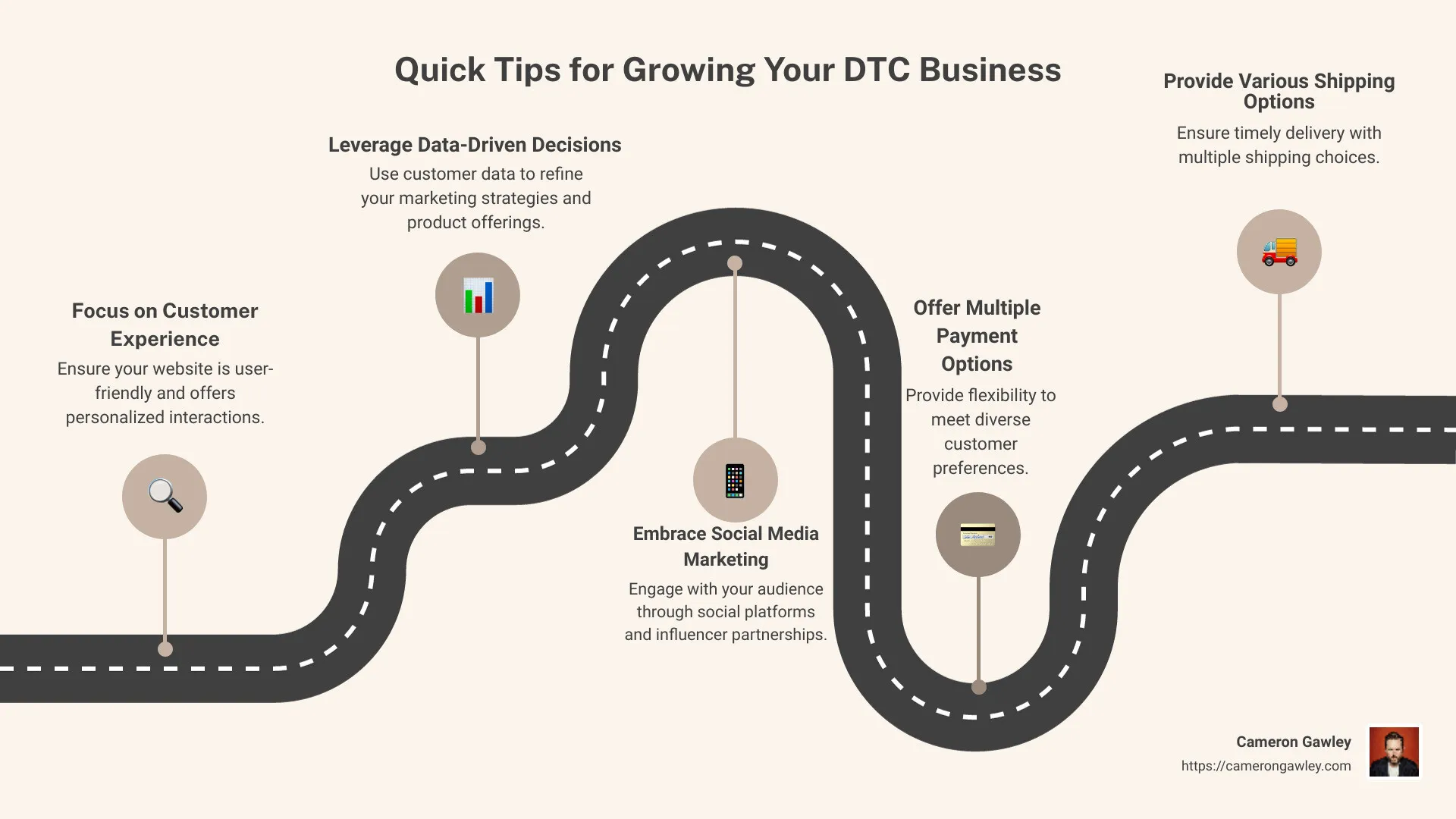
DTC ecommerce strategy has become a transformative force in the business world, allowing brands to sell directly to their customers and bypass traditional retail channels. If you want to grow your DTC business, here are some quick tips to get started:
- Focus on Customer Experience: Ensure your website is user-friendly and offers personalized interactions.
- Leverage Data-Driven Decisions: Use customer data to refine your marketing strategies and product offerings.
- Accept Social Media Marketing: Engage with your audience through social platforms and influencer partnerships.
- Offer Multiple Payment and Shipping Options: Provide flexibility to meet diverse customer preferences.
Why Mastering DTC Ecommerce is Crucial
Direct-to-consumer (DTC) ecommerce is no longer just a trend; it's a powerful business model reshaping traditional retail. Brands that accept DTC strategies can engage directly with their customers, offering personalized experiences and gaining valuable insights from customer data. This approach doesn't just boost sales; it also helps build brand loyalty and long-term customer relationships.
Consider the rapid growth of brands like Glossier and Allbirds, which have leveraged DTC to create strong, community-driven ecosystems around their products. These examples highlight how effective DTC strategies can propel businesses to new heights.
I’m Cameron Gawley, an experienced entrepreneurial visionary and brand builder. Throughout my career, I've helped many brands succeed by implementing strong DTC ecommerce strategies.
Now, let's dig into the components of a successful DTC ecommerce strategy and how you can apply them to your business.
Understanding DTC Ecommerce
Direct-to-consumer (DTC) ecommerce means selling products directly to your customers without using any intermediaries like retailers or wholesalers. This approach allows brands to have full control over their sales process, customer experience, and brand messaging.
DTC vs. B2C
While DTC and business-to-consumer (B2C) both involve selling directly to consumers, there are some key differences:
- DTC: Brands sell exclusively through their own channels (like their website) and handle everything from marketing to shipping.
- B2C: Brands may sell through various channels, including third-party retailers, marketplaces, and their own stores.
Benefits of DTC Ecommerce
1. Increased Profit Margins:
By skipping intermediaries, brands can keep more of the revenue from each sale. According to McKinsey, DTC brands typically enjoy 10-20% higher profit margins compared to those using traditional retail channels. This extra profit can be reinvested into product development, marketing, and customer support.
2. Deeper Customer Relationships:
DTC ecommerce allows brands to connect directly with their customers. This direct interaction helps brands gather valuable feedback, understand customer needs, and offer personalized experiences. Forrester Research found that DTC brands have 1.7 times higher customer retention rates compared to traditional retailers.
3. Improved Customizability and Personalization:
With DTC, brands can tailor their products and services to individual customer preferences. A survey by Epsilon revealed that 80% of consumers are more likely to make a purchase when brands offer personalized experiences.
4. Valuable Data Insights:
Direct interactions with customers provide a wealth of data on preferences, purchase patterns, and demographics. Brands can analyze this data to make informed decisions, optimize marketing strategies, and stay agile in a rapidly changing market.
5. Disruption of Traditional Industries:
DTC brands often introduce innovative business models that challenge established players. For example, Warby Parker disrupted the eyewear industry by offering affordable and stylish glasses directly to consumers, bypassing traditional optical stores.
By understanding these benefits and leveraging them effectively, brands can build strong DTC strategies that drive growth and success.
Next, let's explore the key components of a successful DTC ecommerce strategy and how you can implement them in your business.
Key Components of a Successful DTC Ecommerce Strategy
Focus on Customer Experience
Customer experience is the cornerstone of a successful DTC ecommerce strategy. Your website should be user-friendly, load quickly, and offer a seamless purchasing process. Even a one-second delay in page load time can reduce conversions by 7%.
Personalization is also key. Use data to tailor product recommendations and marketing messages. According to a report by Epsilon, 80% of consumers are more likely to make a purchase when brands offer personalized experiences. Gather customer feedback through surveys and social media to refine your products and services.
Build a Seamless Ecommerce Platform
Your ecommerce platform should be robust and user-friendly. It should offer secure payment options and a smooth purchasing process. Statista reports that the global ecommerce market is expected to reach $5.8 trillion in 2023, highlighting the importance of a well-designed platform.
Ensure your platform supports multiple payment methods like Google Pay, Apple Pay, and PayPal, as well as Buy Now Pay Later options like Klarna and Affirm. This flexibility will cater to different customer preferences and increase conversion rates.
Leverage Compelling Brand Storytelling
Brand storytelling helps you connect with customers on an emotional level. Share authentic stories that highlight your brand’s mission and values. According to a survey, 91% of consumers are more likely to engage with brands that share authentic stories.
For instance, Glossier uses user-generated content to build a loyal community. This approach not only boosts engagement but also builds trust and credibility.
Implement Effective Digital Marketing
Digital marketing is crucial for driving brand awareness and customer acquisition. Use a mix of SEO, social media marketing, content marketing, and influencer collaborations to reach your target audience.
Data suggests that digital advertising spend is projected to reach $836 billion worldwide by 2026. This underscores the importance of a well-rounded digital marketing strategy.
Adopt a Customer-Centric Approach
Understanding your customers’ needs and preferences is essential. Use data to provide personalized recommendations and relevant offers. According to research, 91% of consumers are more likely to shop with brands that recognize and remember them.
Implement loyalty programs and personalized email marketing campaigns to build long-term relationships. Starbucks, for example, has over 28.7 million users in its loyalty program, contributing to a 16% year-over-year growth.
Strengthen Supply Chain Management
Efficient supply chain management ensures timely delivery and customer satisfaction. Partner with reliable logistics providers and optimize your inventory management. A survey revealed that 80% of consumers expect same-day shipping, and 61% are likely to abandon their purchase if their preferred delivery option is not available.
Consider using third-party fulfillment (3PL) companies to scale operations and meet delivery expectations.
Use Data-Driven Decision Making
Data is invaluable for making informed decisions. Analyze customer data to gain actionable insights and drive continuous improvement. Companies that adopt data-driven marketing strategies are six times more likely to be profitable year-over-year, according to a study by Forbes.
Use real-time data to identify trends, optimize marketing strategies, and personalize customer experiences. Implement A/B testing to see what resonates most with your audience.
By incorporating these key components, you can build a robust DTC ecommerce strategy that drives growth and success.
Next, let's explore different DTC business models and how they can benefit your brand.
Exploring Different DTC Business Models
Vertical Integration
Vertical integration means owning and managing every part of your supply chain—from manufacturing to distribution.
Why it works: Brands like Warby Parker and Dollar Shave Club have nailed it. They control product quality, set their own prices, and ensure a great customer experience. By cutting out the middlemen, they can offer high-quality products at lower prices. This model can lead to gross margins of up to 75%.
Example: Warby Parker controls everything from design to delivery, ensuring their eyewear is high quality and affordable.
Subscription Services
Subscription-based DTC models have exploded in popularity. These businesses offer curated boxes or regular deliveries of specific items.
Why it works: Subscriptions offer convenience and personalization, two things customers love. Plus, they create a steady stream of recurring revenue. According to McKinsey, the subscription e-commerce market has grown by over 100% annually in the past five years.
Example: Birchbox sends personalized beauty boxes to subscribers, making it easy for them to find new products.
Online Marketplaces
Selling on platforms like Amazon, eBay, and Etsy can help you reach a larger audience.
Why it works: These marketplaces have vast customer bases and established infrastructures. The challenge? Standing out among other sellers. According to Statista, third-party sellers made up 61% of Amazon’s gross merchandise sales in 2020.
Example: Many DTC brands use Amazon to boost their visibility and sales, but they also work hard to build a strong brand identity to differentiate themselves.
Brick-and-Click
This hybrid model combines online shopping with physical stores.
Why it works: It offers the convenience of online shopping and the tangible experience of a physical store. Brands like Glossier and Nike have successfully transitioned from online to offline, recognizing that in-person engagement builds brand loyalty. Research from Harvard Business Review shows that omnichannel customers spend 4% more in-store and 10% more online than single-channel shoppers.
Example: Glossier started online but now has flagship stores where customers can try products in person.
Social Commerce
Social media platforms are becoming key sales channels for DTC brands.
Why it works: Platforms like Instagram, Facebook, and TikTok offer massive user bases and advanced targeting options. By showcasing products and partnering with influencers, brands can create seamless shopping experiences.
Example: Glossier leverages Instagram to engage with its community, share user-generated content, and drive sales directly from the platform.
Each of these DTC business models has its own set of advantages. Choose the one that aligns best with your product, target audience, and operational capabilities to maximize your success.
Overcoming Challenges in DTC Ecommerce
Navigating the DTC ecommerce landscape involves overcoming several challenges. Let's explore key areas and strategies to tackle them effectively.
Increased Competition
The DTC space is crowded. To stand out, you need brand differentiation. This means creating a unique value proposition that resonates with your target audience.
Targeted marketing is crucial. Use data to understand your audience's preferences and tailor your campaigns accordingly.
Strong brand positioning also helps. Develop a compelling brand story and message that connects emotionally with customers.
Tip: Invest in compelling storytelling and targeted ads to capture your audience's attention.
Fulfillment and Logistics
Efficient fulfillment and logistics are vital. Customers expect fast and reliable delivery.
Building an efficient supply chain is essential. Partner with reliable logistics providers to ensure timely deliveries.
Transparent shipping options can also improve customer trust. Clearly communicate shipping costs and delivery times.
Fact: A survey by 3PL Central found that 43% of consumers abandon purchases due to slow delivery times or high shipping costs.
Scaling Operations
As your DTC brand grows, scaling operations can be challenging.
Scalable infrastructure is key. Invest in technology and systems that can grow with your business.
Automation helps streamline processes. From inventory management to customer service, automation can reduce costs and improve efficiency.
Process optimization is ongoing. Continuously evaluate and refine your operations to handle increased demand.
Stat: Only about 13% of DTC companies achieve over $10 million in revenue. Careful planning and scalable solutions are essential for growth.
Customer Acquisition Costs
Acquiring new customers can be expensive. Focus on organic growth to reduce costs.
Social media is a powerful tool. Leverage platforms like Instagram and TikTok to engage with your audience and attract new customers.
Customer referrals are also valuable. Encourage satisfied customers to refer friends and family through referral programs.
Insight: The average cost per acquisition increased by 60% from 2019 to 2020. Focusing on retention and organic growth can help manage these costs.
Data Privacy and Security
With increasing reliance on customer data, data privacy and security are critical.
Ensure compliance with regulations like GDPR and CCPA. Stay updated on legal requirements to protect customer data.
Implement secure payment gateways to safeguard transactions.
Invest in robust cybersecurity measures to prevent data breaches and maintain customer trust.
Stat: 64% of Americans have experienced a major data breach. Prioritizing data security can prevent reputational damage and legal issues.
By addressing these challenges with strategic planning and execution, you can build a strong foundation for your DTC brand. Leading into the next section, let's explore some inspiring case studies of successful DTC brands.
Case Studies of Successful DTC Brands
Casper
Casper, a pioneer in the mattress-in-a-box industry, transformed how people buy mattresses. They eliminated the hassle of visiting brick-and-mortar stores by offering a seamless online purchasing experience.
Key Strategies:- Hassle-Free Purchasing: Casper offers a 100-night trial period, free shipping, and easy returns. This builds customer trust and satisfaction.- Customer Satisfaction: Their focus on high-quality products and excellent customer service has fueled their growth from $1 million in revenue in 2014 to $275 million in 2017.
Stat: Casper’s revenue skyrocketed from $1 million in 2014 to $275 million in 2017.
Glossier
Glossier redefined beauty and skincare with its community-driven brand approach. They leveraged social media and user-generated content to engage customers and build a loyal following.
Key Strategies:- Community-Driven Brand: Glossier built a sense of inclusivity and authenticity that resonates with their audience.- User-Generated Content: By incorporating customer feedback and content, Glossier created products that their community loves.
Fact: Glossier reached a valuation of $1.2 billion in 2019, showcasing the power of community-building in DTC growth.
Allbirds
Allbirds focuses on creating sustainable footwear using renewable materials like merino wool and eucalyptus tree fiber. Their eco-friendly approach has struck a chord with consumers.
Key Strategies:- Sustainable Footwear: Allbirds' commitment to environmental sustainability sets them apart in the market.- Renewable Materials: Their innovative use of eco-friendly materials appeals to consumers looking for sustainable alternatives.
Stat: Allbirds achieved over $100 million in revenue in 2018, demonstrating the potential of combining sustainability with a customer-centric approach.
Dollar Shave Club
Dollar Shave Club disrupted the razor industry with their subscription model, offering affordable, high-quality razors delivered directly to customers.
Key Strategies:- Subscription Model: Their innovative subscription service provides convenience and affordability.- Witty Marketing: Dollar Shave Club’s humorous and relatable marketing campaigns have resonated with a wide audience.
Fact: Unilever acquired Dollar Shave Club for $1 billion in 2016, illustrating the power of subscription-based models and effective marketing.
Warby Parker
Warby Parker revolutionized the eyewear industry by offering stylish, affordable glasses directly to consumers. They cut out the middlemen and designed their products in-house.
Key Strategies:- Affordable Eyewear: By selling directly to consumers, Warby Parker offers high-quality glasses at lower prices.- Social Mission: Their "buy a pair, give a pair" program appeals to socially conscious consumers.
Stat: Warby Parker reached a valuation of $1.75 billion in 2018, showcasing the success of a customer-centric approach coupled with a social mission.
These case studies highlight diverse strategies that have led to the success of these DTC brands. By focusing on customer satisfaction, leveraging community engagement, and prioritizing sustainability, they have each carved out a unique place in the market.
Next, let’s explore the different DTC business models that can help you succeed in this competitive landscape.
Frequently Asked Questions about DTC Ecommerce Strategy
What is DTC in ecommerce?
Direct-to-consumer (DTC) in ecommerce refers to brands selling their products directly to customers, bypassing traditional retail channels like department stores or third-party online marketplaces. This model allows brands to have more control over their product presentation, pricing, and customer experience.
Benefits of DTC:
- Increased Profit Margins: By cutting out the middleman, brands can retain more of the revenue from each sale.
- Direct Customer Relationships: Brands gain valuable insights into customer behavior and preferences, which can be used to improve products and marketing strategies.
- Faster Time to Market: DTC brands can quickly launch new products without waiting for retail partners to stock them.
- Improved Brand Control: Companies can ensure their brand messaging and product presentation are consistent across all touchpoints.
What is a DTC strategy?
A DTC strategy involves creating a business model that focuses on selling products directly to consumers through online platforms. This strategy skips traditional retail channels, allowing brands to control every aspect of the customer journey, from marketing to delivery.
Key Elements of a DTC Strategy:
- Direct Sales Channels: Utilizing ecommerce websites and mobile apps to sell products directly to consumers.
- Effective Digital Marketing: Leveraging SEO, social media, content marketing, and influencer collaborations to reach the target audience.
- Customer-Centric Approach: Understanding and meeting customer needs through personalized recommendations and custom experiences.
- Strong Supply Chain Management: Ensuring timely and reliable delivery to maintain customer satisfaction.
How can data collection impact a DTC marketing strategy?
Data collection is crucial for optimizing a DTC marketing strategy. By gathering and analyzing customer data, brands can make informed decisions that improve their marketing efforts, improve customer experiences, and drive sales.
Impact of Data Collection:
- Customer Insights: By analyzing data from various sources like web browsing behavior, purchase history, and social media interactions, brands can gain a deeper understanding of their customers' preferences and pain points.
- Personalized Marketing: Data-driven insights allow brands to create personalized marketing campaigns, product recommendations, and special offers that resonate with individual customers. For instance, 91% of consumers are more likely to shop with brands that provide relevant offers and recommendations.
- Data-Driven Decisions: Companies that adopt data-driven marketing strategies are six times more likely to be profitable year-over-year. By using data to identify trends and measure performance, brands can continuously optimize their marketing strategies and product offerings.
By incorporating these elements into your DTC ecommerce strategy, you can build stronger customer relationships, drive innovation, and gain a competitive edge in the market.
Conclusion
In summary, mastering DTC ecommerce involves several key components:
- Customer Experience: Focus on personalized experiences and customer satisfaction.
- Seamless Ecommerce Platform: Ensure a user-friendly interface and secure payment options.
- Brand Storytelling: Leverage compelling narratives to create emotional connections.
- Digital Marketing: Implement effective SEO, social media, and content marketing strategies.
- Customer-Centric Approach: Understand and meet customer needs with personalized recommendations.
- Supply Chain Management: Maintain reliable logistics and timely delivery.
- Data-Driven Decisions: Use customer data to make informed and actionable decisions.
These elements work together to create a successful DTC ecommerce strategy that can drive growth and build lasting customer relationships.
At Cameron Gawley, we specialize in helping brands steer the complexities of DTC ecommerce. Our expertise in brand building, marketing strategy, and customer engagement can guide you to success. Whether you're looking to improve your DTC marketing game, grow online sales, or expand to new channels, we have the proven experience to help you achieve your goals.
Ready to take your DTC strategy to the next level? Contact us for expert guidance and custom growth strategies.
By leveraging our insights and expertise, your brand can thrive in the competitive DTC ecommerce landscape. Let's build a customer-centric, data-driven strategy together.
For more information and to stay updated with the latest trends, visit our DTC ecommerce blog.