

Why Digital Marketing Strategy is Crucial for Your Business
A digital marketing plan is essential for any business that wants to connect with customers, boost brand awareness, and stay competitive. Here's what you need to know if you're looking for a quick understanding:
- Importance: Helps connect you to customers via online channels.
- Goals: Increases brand awareness and consumer engagement.
- Strategy: Outlines how to use digital channels to promote products.
Digital marketing has become indispensable, but strategic planning is often overlooked. A Smart Insights report reveals that only 17 percent of companies clearly define their digital marketing strategies. Without a solid plan, you may waste resources and miss out on growth opportunities.
“One of these aspects is the importance of developing a plan to effectively use your marketing resources,” says Harvard Business School Professor Sunil Gupta. Planning ensures adaptability, which is crucial as market conditions change.
I’m Cameron Gawley, a serial founder and digital marketing expert. I've built one of Texas's fastest-growing digital strategy agencies, helping brands like Everlane and Jack Black Men's Skincare achieve remarkable growth. Let’s dive into why a structured digital marketing plan is your key to success.
What is a Digital Marketing Plan?
A digital marketing plan is a comprehensive strategy outlining how your company will use digital channels to promote its products and services. Unlike traditional marketing tactics, it focuses on identifying your target audience and connecting with consumers via online platforms and channels.
Your plan’s significance can’t be overstated. It provides a strategic focus while optimizing your marketing efforts and budget. More importantly, it ensures your company remains agile and responsive to market dynamics and maintains a competitive edge.
Adaptability is particularly crucial in times of uncertainty. According to HubSpot, 20 percent of marketers pivoted their established marketing plans last year due to the potential for a recession.
Traditional vs. Digital Marketing
Traditional marketing methods like TV ads, billboards, and print media still have their place. However, they often lack the precision and adaptability offered by digital marketing. Traditional methods have broad reach but can be costly and difficult to measure.
Digital marketing, on the other hand, allows for targeted campaigns. You can focus your efforts on specific demographics and track the effectiveness of your strategies in real-time. This adaptability is crucial for making quick adjustments based on performance metrics.
Strategic Focus
A well-defined digital marketing plan helps you allocate your resources effectively. According to Smart Insights, only 17 percent of businesses clearly define their digital marketing strategies. This lack of planning can lead to wasted resources and missed opportunities.
Sunil Gupta, a Harvard Business School Professor, emphasizes the importance of strategic planning:
"One of these aspects is the importance of developing a plan to effectively use your marketing resources."
By having a clear strategic focus, you can ensure that every marketing dollar is spent wisely, contributing to your overall business goals.
Key Benefits
- Targeted Audience: Digital marketing allows you to reach the right people at the right time.
- Measurable Results: You can track metrics like engagement, conversion rates, and ROI.
- Cost-Effective: Digital marketing often requires less investment than traditional methods.
- Flexibility: Easily adjust your strategies based on performance data.
Conclusion
A digital marketing plan is not just a document; it’s a roadmap guiding your marketing efforts. It helps you stay focused, measure success, and adapt to changing market conditions. In the next section, we will dig into the steps to creating an effective digital marketing plan.

Steps to Creating a Digital Marketing Plan
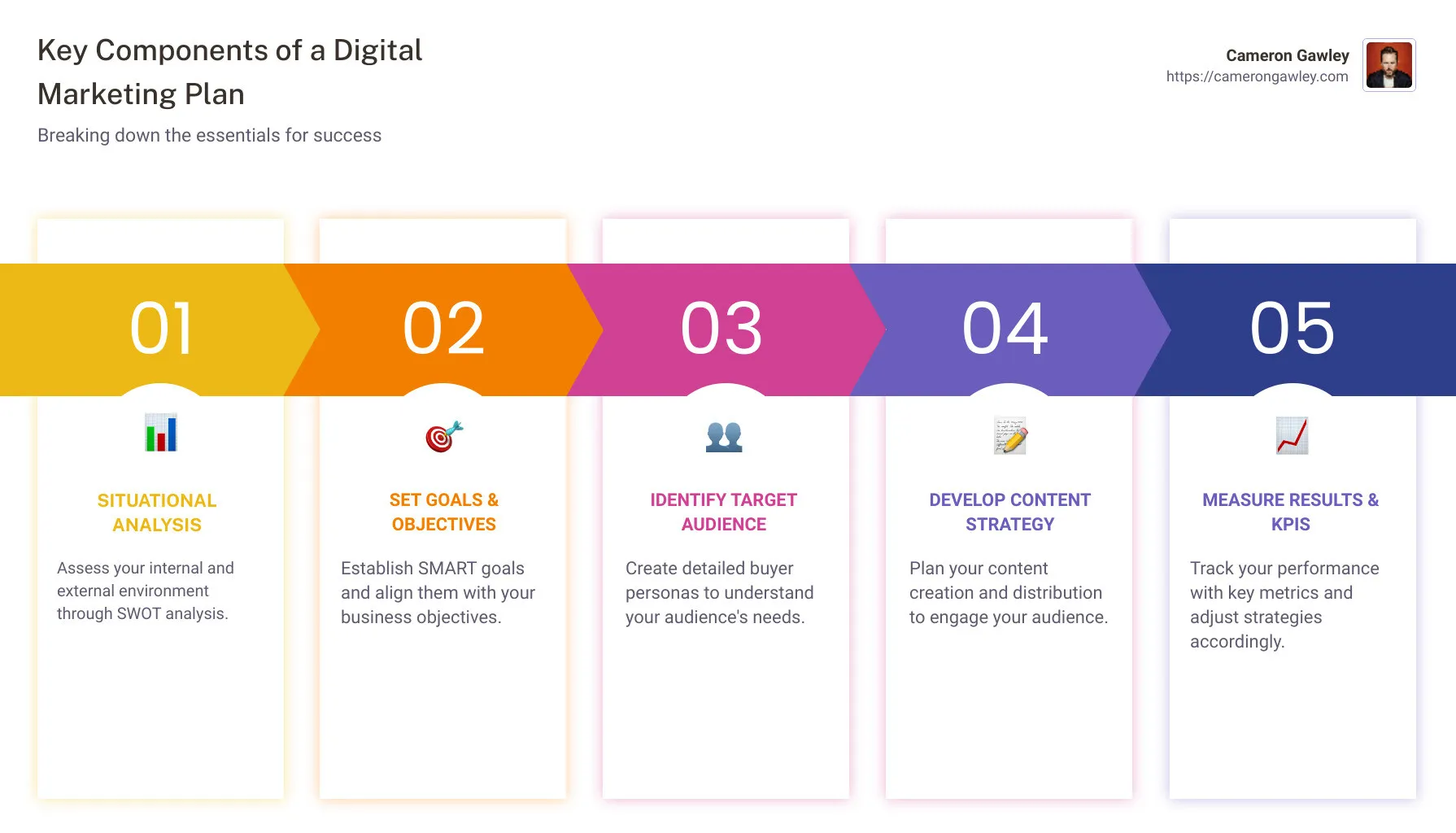
Step 1: Situational Analysis
Before diving into your digital marketing plan, you need a clear picture of where your company stands. Begin with a SWOT analysis to identify your Strengths, Weaknesses, Opportunities, and Threats. This helps you understand both internal and external factors that can impact your strategy.
- Internal Analysis: Assess your company's current digital presence. What are your strengths and weaknesses in areas like website performance, social media engagement, and content quality?
- External Analysis: Look at market conditions, customer needs, and competitor activities. Use benchmarking techniques to compare your performance with industry leaders. This will help you identify best practices and areas for improvement.
Step 2: Set Goals & Objectives
Setting clear, actionable goals is crucial. Use the SMART framework: Specific, Measurable, Attainable, Realistic, and Time-bound. Instead of vague goals like "increase sales," aim for precise targets like "gain 1,000 new leads in 90 days."
- Business Objectives: Align your marketing goals with broader business objectives. Whether it's increasing brand awareness or boosting sales, your goals should support your company's mission.
- Customer Journey Stages: Define objectives for each stage of the customer journey—awareness, consideration, conversion, and loyalty. Tailor your strategies to guide customers through these stages effectively.
Step 3: Identify Your Target Audience
Understanding who you are marketing to is essential. Create detailed buyer personas to represent your ideal customers. These personas should include:
- Demographics: Age, gender, income, education level.
- Customer Behavior: Online habits, purchasing behavior, preferred communication channels.
- Consumer Motivations: What drives them to make a purchase? What problems are they trying to solve?
Step 4: Define Your Value Proposition
Your value proposition is what sets you apart from the competition. Craft a compelling value positioning statement that clearly communicates the unique benefits of your product or service.
- Consumer Analysis: Understand what your customers value most. What are their pain points?
- Competitor Analysis: Identify what your competitors are offering and find gaps you can fill.
- Company Analysis: Highlight your strengths and unique capabilities.
Step 5: Choose Digital Marketing Channels
Select the digital marketing channels that best align with your goals and audience. Options include:
- Social Media: Platforms like Facebook, Instagram, and LinkedIn.
- Email Marketing: Personalized email campaigns.
- SEO: Improve your search engine rankings with keyword optimization.
- Paid Media Advertising: Use Google Ads, social media ads, and other paid channels for wider reach.
Step 6: Develop Content Strategy
Content is king in digital marketing. Develop a robust content strategy that includes:
- Content Creation: Blog posts, videos, infographics, and more.
- Keyword Research: Identify relevant keywords to improve SEO.
- Content Calendar: Plan your content in advance. Include publication dates, authors, and topics.
- Social Posting: Schedule posts across your social media platforms. Tailor content to each platform's audience.
Step 7: Implement Digital Strategies and Tactics
Put your plan into action with targeted strategies and tactics:
- Email Marketing: Segment your email list and personalize messages.
- CRM: Use Customer Relationship Management tools to manage interactions.
- Web Optimization: Ensure your website is user-friendly and mobile-optimized.
- Marketing Automation: Automate repetitive tasks to save time and increase efficiency.
Step 8: Measure Results & KPIs
Finally, measure the success of your digital marketing efforts using Key Performance Indicators (KPIs):
- Analytics: Use tools like Google Analytics to track performance.
- KPIs: Monitor metrics such as click-through rates, conversion rates, and ROI.
- Data Visualization: Use dashboards to visualize data and make informed decisions.
By following these steps, you can create a comprehensive digital marketing plan that drives results and supports your business goals. Next, we'll explore the key elements that make up an effective digital marketing plan.
Key Elements of a Digital Marketing Plan
Creating an effective digital marketing plan involves several key elements. Let's break them down:
Business Goals
Your business goals are the backbone of your digital marketing plan. These goals should align with your company's overall objectives. For example, if your business aims to increase sales by 20% in the next year, your digital marketing goals should support this target.
Marketing Strategies
Your marketing strategies outline how you will achieve your business goals. This involves selecting the right tactics and channels to reach your target audience. Strategies might include content marketing, social media campaigns, email marketing, and paid advertising.
Channels
Choosing the right channels is crucial. Different platforms attract different audiences. For instance, if you're targeting Gen Z, platforms like TikTok and Instagram might be more effective. For a B2B audience, LinkedIn could be the best choice.
Action Plans
An action plan details the specific steps you will take to implement your marketing strategies. This includes tasks, deadlines, and the team members responsible. For example, if your strategy involves content marketing, your action plan might include blog post creation, social media sharing, and email newsletters.
Budget
Your budget should allocate funds to each part of your digital marketing plan. This includes ad spend, content creation, software tools, and any outsourced services. It's essential to track spending to ensure you're getting a good return on investment (ROI).
Timing
Timing is everything. A well-timed campaign can significantly increase its effectiveness. Use a content calendar to schedule your activities. This helps ensure that your marketing efforts are consistent and timely.
By understanding and implementing these key elements, you can create a digital marketing plan that not only meets your business goals but also engages your target audience effectively. Next, we'll dive into frequently asked questions about digital marketing plans.
Frequently Asked Questions about Digital Marketing Plans
What is included in a digital marketing plan?
A digital marketing plan is a comprehensive document that outlines your marketing goals and the strategies you will use to achieve them. Here's what it typically includes:
- SEO (Search Engine Optimization): Techniques to improve your website’s visibility on search engines.
- Analytics: Tools to measure your marketing performance and understand user behavior.
- Web Positioning: Strategies to improve your online presence and make your website more findable.
- Strategies: A roadmap of actions to achieve your marketing goals.
- Social Media: Plans for leveraging platforms like Facebook, Instagram, and LinkedIn to engage your audience.
- Goals: Clear, measurable objectives that guide your marketing efforts.
- Metrics: Key Performance Indicators (KPIs) to track the success of your campaigns.
How to write a digital marketing plan?
Writing an effective digital marketing plan involves several key steps:
- Set Goals & Objectives: Define what you want to achieve. Use SMART goals (Specific, Measurable, Achievable, Relevant, Time-bound).
- Identify Your Target Audience: Create detailed buyer personas. Understand their demographics, behaviors, and motivations.
- Define Your Value Proposition: Explain why customers should choose your product or service over competitors.
- Choose Digital Marketing Channels: Decide which platforms to use, such as social media, email, SEO, and paid advertising.
- Develop Content Strategy: Plan your content creation, keyword research, and social media posts.
- Implement Digital Strategies and Tactics: Use tools like email marketing, CRM, and web optimization.
- Measure Results & KPIs: Track performance using analytics tools to measure ROI and adjust strategies as needed.
What are the 7 P's of digital marketing?
The 7 P’s of digital marketing help structure your digital marketing plan effectively:
- Product: What are you selling? Understand your product’s benefits and features.
- Price: Determine your pricing strategy. Consider factors like competition and customer willingness to pay.
- Place: Where will you sell your product? Choose the right platforms and distribution channels.
- Promotion: How will you promote your product? Use a mix of digital channels like social media, email, and SEO.
- People: Who is involved in your marketing efforts? This includes your team and your target audience.
- Packaging: How will you present your product? Focus on branding and design.
- Process: What steps will you take to deliver your product? Ensure a smooth customer experience from start to finish.
By addressing these frequently asked questions, you can build a digital marketing plan that is both effective and comprehensive. Next, let's explore the key elements of a digital marketing plan in more detail.
Conclusion
Creating a digital marketing plan is crucial for any business aiming to thrive in today's online-centric world. It serves as your roadmap, guiding your marketing efforts and ensuring you connect with your target audience effectively.
A well-crafted plan helps you stay focused and organized. It allows you to allocate resources wisely, measure results accurately, and adapt quickly to market changes. This strategic guidance is invaluable in maintaining a competitive edge and achieving long-term success.
At Cameron Gawley, we understand the importance of a solid digital marketing strategy. Our expertise in brand building and strategic planning can help you steer the complexities of the digital landscape. Whether you're an entrepreneur just starting out or a seasoned business owner, having a comprehensive digital marketing plan is key to building a strong brand and achieving entrepreneurial success.
Accept the power of digital marketing today, and let us guide you on your journey to creating a lasting impact.
For more information on how we can help you build an effective digital marketing plan, visit our service page.