

Introduction
Building a strong brand in today's digital world is not just an option—it's a necessity. With over 4.57 billion active internet users worldwide, the potential reach of digital brand building strategies is immense.
Here's a quick overview of key strategies for effective digital brand building:
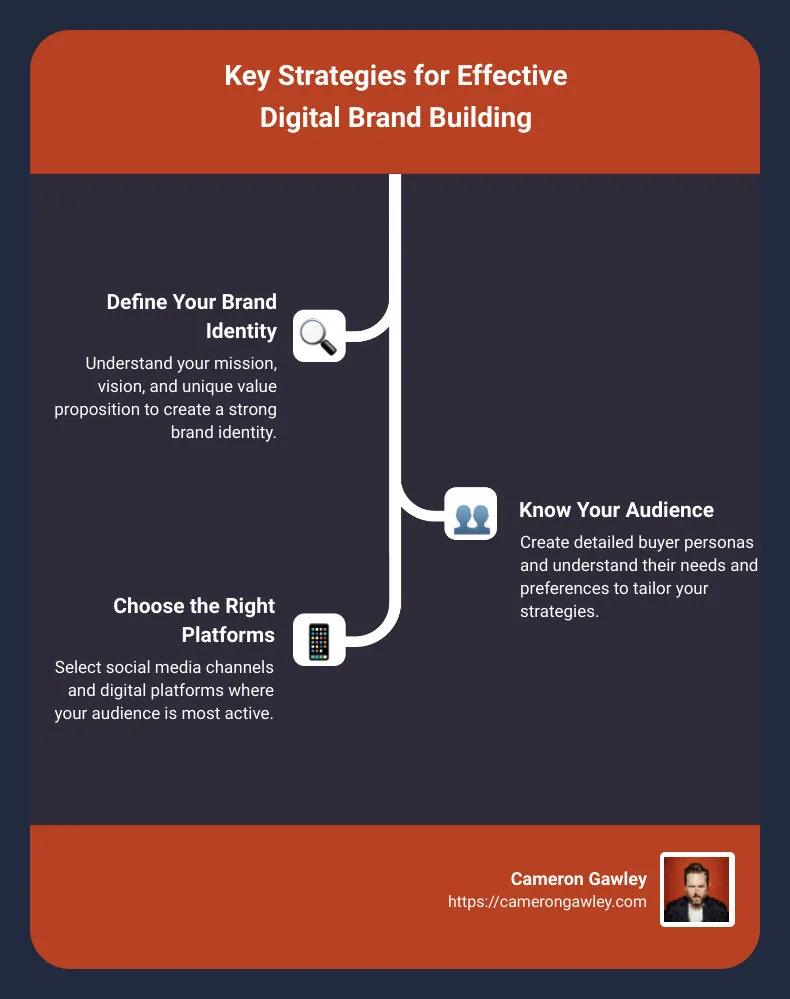
- Define Your Brand Identity: Understand your mission, vision, and unique value proposition.
- Know Your Audience: Create detailed buyer personas and understand their needs and preferences.
- Choose the Right Platforms: Select the social media channels and digital platforms where your audience is most active.
- Create Consistent and Engaging Content: Share valuable content that resonates with your audience.
Digital branding is the art of communicating your brand's identity online to build customer loyalty and drive sales. Without a strong brand identity, your business can seem dull and uninspiring. Conversely, a well-defined digital brand can foster trust and loyalty among consumers.
In this guide, we'll explore effective strategies for mastering digital brand building. From defining your brand's mission to creating engaging content, we'll cover everything you need to know to boost your online presence and credibility.
What is a Digital Branding Strategy?
A digital branding strategy is how you communicate your brand's identity to consumers online. The goal is to build customer loyalty and drive sales. Think of your brand as a person. This person has a name, appearance, personality, values, and a way of speaking. A digital branding strategy takes these elements and strategically positions them in the online market.
Brand Identity
Your brand identity is the unique fingerprint of your business. It includes your logo, color scheme, typography, and even the tone of voice you use in your communications. A strong brand identity makes your business memorable and distinct.
- Logo: Your logo should be simple and recognizable. For example, the bitten apple immediately brings Apple Inc. to mind.
- Color Scheme: Colors evoke emotions. For instance, blue often signifies trust and reliability.
- Typography: Choose fonts that represent your brand's personality. Serif fonts are traditional, while sans-serif fonts are modern and clean.
Customer Loyalty
Building customer loyalty is about creating a lasting relationship with your audience. According to research, 81% of consumers say that trust is the leading factor in their purchasing decisions. Consistent branding can increase customer loyalty by 33%.
- Consistency: Use the same colors, fonts, and tone of voice across all platforms. This builds familiarity and trust.
- Engagement: Interact with your customers through social media, email newsletters, and other digital platforms.
- Quality Content: Publish content that is valuable to your audience. This can be blog posts, videos, or social media updates.
Sales
An effective digital branding strategy can significantly boost your sales. When customers trust your brand, they are more likely to make a purchase.
- Call to Action (CTA): Use strong CTAs in your content to guide customers towards making a purchase.
- Customer Reviews: Showcase positive reviews and testimonials on your website and social media.
- Promotions: Offer special deals and discounts to encourage purchases.
Brand Personality
Your brand personality is the human traits that your brand embodies. Is your brand fun and playful, or serious and professional? Defining your brand personality helps you connect with your audience on an emotional level.
- Voice: How does your brand "speak"? Is it formal or casual?
- Values: What does your brand stand for? Sustainability, innovation, community?
- Storytelling: Share stories that reflect your brand's values and mission.
By developing a clear and consistent digital branding strategy, you can build a strong online presence that fosters customer loyalty and drives sales. Next, we'll dive into the importance of digital brand building strategies and why they are crucial for your business's success.
Importance of Digital Brand Building Strategies
Building a digital brand isn't just a trendy buzzword; it's a crucial component for business success. Let's break down why digital brand building strategies are essential:
Brand Trust
Trust is the foundation of any relationship, and the same goes for the relationship between your brand and your customers. A consistent digital brand presence helps build this trust. According to a study, 81% of consumers say that trust is a key factor in their purchasing decisions. When customers see a brand consistently delivering on its promises online, their confidence in that brand grows.
Company Value
A strong digital brand enhances your company's overall value. This isn't just about immediate sales; it's about long-term equity. Brands with a strong digital presence are perceived as more credible and reliable. This perception can lead to higher company valuations. Think of it as a long-term investment in your company's future.
Sales Boost
Digital branding directly impacts sales. When customers recognize and trust your brand, they're more likely to make a purchase. A well-executed digital branding strategy can lead to a significant sales boost. For example, IKEA's "Oddly IKEA" campaign tapped into the ASMR trend, resulting in increased engagement and sales among younger demographics.
Brand Quality
Perceived quality is another critical aspect. A cohesive digital brand signals to consumers that your products or services are of high quality. This perception can justify higher prices and foster brand loyalty. Apple's "Share Your Gifts" campaign is a perfect example. By focusing on storytelling rather than just products, Apple enhances the perceived quality of its brand.
Employee Turnover
A strong digital brand doesn't just attract customers; it attracts talent. Employees want to work for brands they believe in. When your digital presence reflects a positive and engaging company culture, it can reduce employee turnover. Happy employees are more likely to stay, reducing the costs and disruptions associated with high turnover rates.
In summary, investing in digital brand building strategies can significantly impact your business's success. From building trust and boosting sales to enhancing perceived quality and reducing employee turnover, the benefits are substantial. Next, we'll explore the key components of a digital branding strategy and how you can implement them effectively.
Key Components of a Digital Branding Strategy
Determine Your Brand’s Mission and Vision
To build a strong digital brand, start by defining your mission and vision. Your mission statement should clearly state who your company is and what it does. For example, "We provide eco-friendly home cleaning solutions that are safe for your family and the planet."
Your vision statement explains why you do what you do, your goals, and how you plan to achieve them. Think of it as a roadmap. For instance, "Our vision is to create a cleaner, healthier world by making eco-friendly cleaning products accessible to everyone."
Values are also essential. They guide your brand’s behavior and decision-making. Do you prioritize sustainability? Community involvement? Innovation? Make sure your values are clear and align with your mission and vision.
Understand Your Audience
Knowing your audience is crucial. Start with audience segmentation—dividing your audience into distinct groups based on demographics, psychographics, and behavior.
Buyer personas can help. These are fictional characters that represent your ideal customers. For example, "Eco-conscious Emily," a 35-year-old mother who values sustainable products and is willing to pay a premium for them.
Consider your audience's needs, consumer habits, and pain points. What problems are they facing that your brand can solve? How do they prefer to shop—online or in-store? Use this information to tailor your marketing efforts.
Know Your Brand Funnel
A well-structured brand funnel guides potential customers from awareness to advocacy. Here’s a simple breakdown:
- Awareness: Get your brand noticed. Use social media, SEO, and paid ads to reach a broad audience.
- Consideration: Provide valuable content like blog posts, product demos, and reviews to help potential customers evaluate your offerings.
- Preference: Show why you're better than the competition. Highlight unique features and benefits.
- Usage: Make the purchasing process smooth and enjoyable. Offer excellent customer service.
- Advocacy: Encourage satisfied customers to leave reviews and share their experiences on social media.
Leverage Market Opportunities and Competitive Positioning
Conduct a competitive analysis to understand your market landscape. Identify your direct competitors (those who offer similar products), indirect competitors (those who offer different products that fulfill the same need), and tertiary competitors (those who could pivot to become direct competitors).
Identify market opportunities by looking for gaps your competitors aren’t filling. Maybe they overlook a specific demographic or fail to offer eco-friendly options. Position your brand to fill these gaps and stand out.
Create a Cohesive Design for Your Brand
Your brand’s visual identity should be consistent across all platforms. This includes your color palette, logo, font, and photography style. For example, a brand focused on eco-friendly products might use earthy tones, a simple and clean logo, and natural imagery.
Consistency helps build recognition and trust. Make sure all your visual elements align with your brand’s mission, vision, and values.
Publish Quality Content
Quality content is key to engaging your audience. Consider different content types like blog posts, videos, infographics, and social media updates. Each type should have a consistent tone and style that reflects your brand’s personality.
Engagement is critical. Ask questions, respond to comments, and encourage user-generated content. Quality content not only attracts but also retains your audience, turning them into loyal customers.
By focusing on these key components, you can create a strong and effective digital branding strategy. Next, we’ll dive into the top digital brand building strategies to put these components into action.
Top Digital Brand Building Strategies
Create Digital Brand Guidelines
Digital brand guidelines ensure that your brand is cohesive across all platforms. These guidelines should cover your brand voice, tone, vocabulary, and style. By clearly defining these elements, you help your team communicate consistently, which builds trust with your audience.
For example, if your brand is fun and informal, your guidelines might include using casual language and emojis. On the other hand, a professional brand might focus on formal language and industry-specific terminology. Consistency is key.
Design a Memorable Logo
Your logo is often the first thing people notice about your brand. It should be simple yet memorable, staying true to your brand values and color palette. A well-designed logo can convey a lot about your brand at a glance.
Think of Apple’s iconic logo. It’s simple, easily recognizable, and perfectly aligned with their brand identity of innovation and quality. Aim for a logo that your customers can easily identify, even without the brand name.
Create a Website
An up-to-date, mobile-friendly, and intuitive website is crucial. Your website should be easy to navigate, with plenty of white space and readable text. Use simple language and avoid industry jargon to make it accessible to a wider audience.
Your website is your digital storefront. Make sure it reflects your brand’s identity and provides a seamless user experience. According to research, 53% of web traffic comes from organic search, so investing in a good website can significantly boost your visibility.
Invest in SEO
Search Engine Optimization (SEO) is essential for making your website visible to potential customers. Start with keyword research to understand what your target market is searching for. Use these keywords in your website’s headings, content, and meta descriptions to improve your search engine rankings.
SEO is not a one-time effort. Continuously update your content and optimize your website to maintain and improve your organic traffic. The higher you rank on search engines, the more likely potential customers will find you.
Create Social Media Campaigns
Social media is a powerful tool for reaching your target market. Create engaging content that resonates with your audience and encourages interaction. Use paid ads to boost visibility and reach a larger audience.
Platforms like Instagram, TikTok, and Facebook offer various features to help you engage with your audience. Use stories, live videos, and polls to make your content more interactive. The goal is to build a community around your brand.
Build an Email List
Email marketing is an effective way to directly reach your audience. Build an email list through calls to action on your website and social media. Segment your list to send personalized content that meets the needs of different audience groups.
Emails should be engaging and provide value to the reader. Whether it’s a newsletter, a special offer, or a blog update, the aim is to convert leads into loyal customers.
Produce Engaging Content
Content is king. Focus on creating relevant topics that provide value to your audience. Use various types of visual media like videos, infographics, and images to make your content more engaging.
Quality content helps build trust and establishes your brand as an authority in your industry. Regularly update your blog, social media, and other platforms with new content to keep your audience engaged and coming back for more.
Invest in Paid Ads
Paid ads can significantly boost your brand visibility. Use social media ads and Google ads to reach a larger audience. Target your ads based on demographics, interests, and behavior to ensure they reach the right people.
Paid ads are especially useful for promoting new products, special offers, or events. They can drive traffic to your website, increase sales, and help you achieve your marketing goals more quickly.
By implementing these digital brand building strategies, you can create a strong and effective online presence. Next, let’s explore some frequently asked questions about digital brand building strategies.
Frequently Asked Questions about Digital Brand Building Strategies
What are digital brand strategies?
Digital brand strategies are the plans and actions you take to build your brand's presence online. They include:
- Brainstorming and Planning: Before diving into any digital branding efforts, it's crucial to brainstorm ideas and create a comprehensive plan. This involves identifying your brand's mission, vision, and unique selling proposition (USP).
- Social Media Channels: Choosing the right social media platforms to engage with your audience. Each platform has its strengths. For instance, Instagram is great for visual content, while LinkedIn is ideal for B2B interactions.
- Creating Relevant Content: Content is king in the digital world. Your content should be relevant, engaging, and valuable to your audience. This can include blog posts, videos, infographics, and more.
How to build a brand digitally?
Building a brand digitally involves several key steps:
- SEO Strategy: Search Engine Optimization (SEO) is essential for improving your website's visibility on search engines. This includes keyword research, optimizing on-page content, and building backlinks.
- Content Marketing: Create and share valuable content to attract and retain a clearly defined audience. This can be blog posts, eBooks, videos, etc. Quality content helps establish your brand as an authority in your industry.
- Social Media Marketing: Use social media platforms to promote your brand, engage with your audience, and build a loyal following. Share content that resonates with your audience and encourages interaction.
- Email Marketing: Build an email list to communicate directly with your audience. Send newsletters, promotional offers, and personalized content to nurture leads and drive conversions.
What are the four digital marketing strategies?
The four digital marketing strategies are:
- Company Understanding: Know your brand inside and out. Understand your mission, values, and what sets you apart from competitors.
- Audience Learning: Research and understand your target audience. Create detailed buyer personas to tailor your marketing efforts effectively.
- Brand Message: Develop a clear and consistent brand message. This includes your brand voice, tone, and the core values you want to communicate.
- Brand Growth Tracking: Monitor and measure the effectiveness of your digital marketing efforts. Use analytics tools to track key performance indicators (KPIs) and adjust your strategies as needed.
By understanding and implementing these digital brand building strategies, you can create a strong online presence and connect with your audience effectively.
Conclusion
In conclusion, mastering digital brand building strategies is essential for any business aiming to thrive in today's digital landscape. By focusing on crafting a clear brand message, understanding your audience, and leveraging various digital tools, you can create a strong and memorable online presence.
At Cameron Gawley, we specialize in helping brands build and grow their digital identity. With our expertise in brand building, we provide entrepreneurial guidance and actionable growth strategies tailored to your business needs.
Key Takeaways:
- Brand Building: Establish a clear and consistent brand message that resonates with your target audience.
- Entrepreneurial Guidance: Leverage expert advice to navigate the complexities of digital branding.
- Growth Strategies: Implement effective strategies to boost your brand's online presence and drive business growth.
By partnering with us, you can ensure your brand stands out in the crowded digital space. Ready to take your brand to the next level? Visit our service page to learn more about how we can help you succeed.

Remember: The journey to a successful digital brand is ongoing. Stay adaptable, keep learning, and always strive to connect with your audience in meaningful ways.