

Importance of Brand Awareness
Building brand awareness is crucial for any business. High brand awareness means consumers are familiar with your brand and are more likely to trust you. This trust translates into a loyal customer base that's easier to retain. Without the right strategies to build brand awareness, your efforts in creating great products and services may go unnoticed.
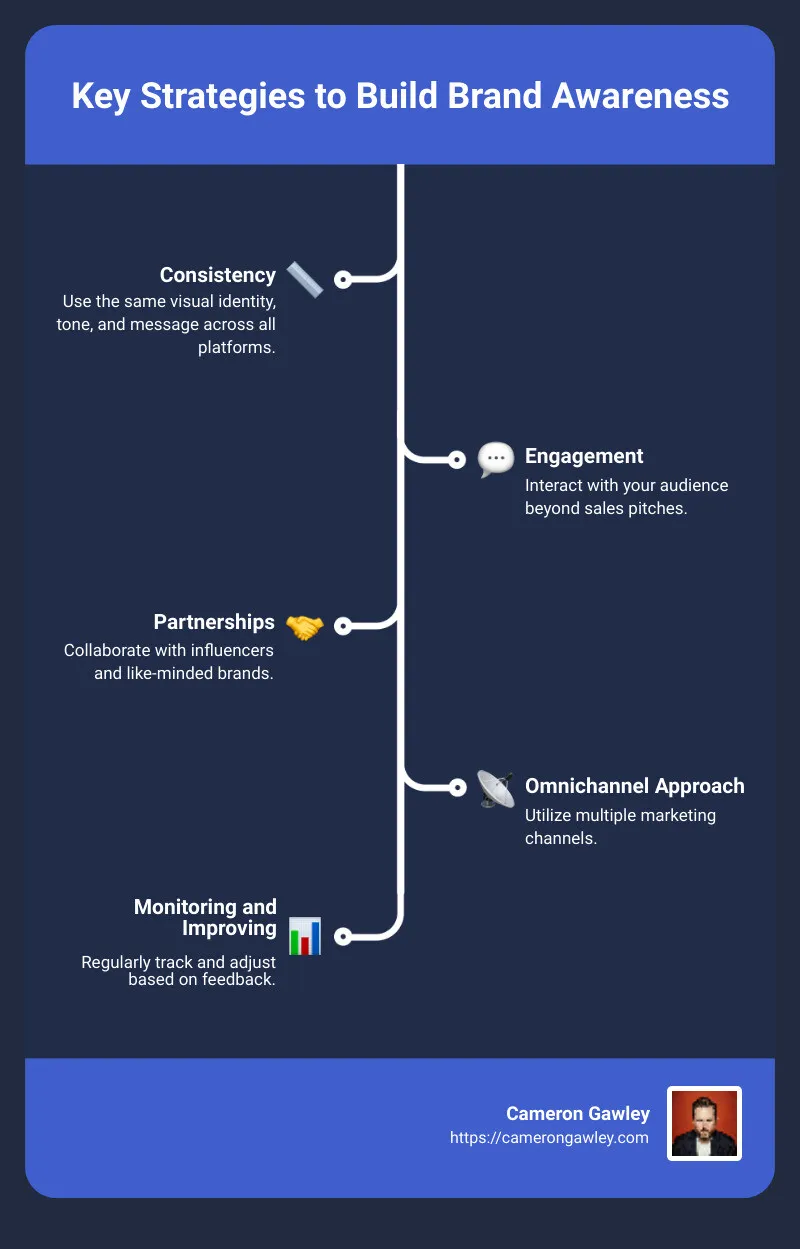
Here are a few core strategies to build brand awareness:
- Consistency: Use the same visual identity, tone, and message across all platforms.
- Engagement: Interact with your audience beyond sales pitches.
- Partnerships: Collaborate with influencers and like-minded brands.
- Omnichannel Approach: Utilize multiple marketing channels.
- Monitoring and Improving: Regularly track and adjust based on feedback.
I'm Cameron Gawley, and I've helped numerous businesses like Everlane and Oak & Eden Whiskey elevate their brand awareness. By focusing on these core strategies, I've enabled brands to grow significantly in their markets and create lasting impressions.
10 Strategies to Build Brand Awareness
Building brand awareness is crucial for any business. Here are 10 effective strategies to build brand awareness:
1. Prioritize Consistency
Consistency is key in branding. Your visual identity, tone of voice, and overall message should be uniform across all platforms. Research shows that color can boost brand recognition by up to 80%, and consumers are 81% more likely to remember your company colors than your name.
- Visual Identity: Use the same logos, colors, and fonts.
- Tone of Voice: Maintain a consistent tone in all communications.
- Customer Support: Ensure quality and consistency in customer service.
2. Be About More Than Just Your Products
Consumers today want brands that stand for something. Align your brand with values like sustainability, worker rights, or community support. This helps create a stronger emotional connection with your audience.
- Brand Values: Clearly communicate your brand’s values.
- Community Involvement: Engage in local or global initiatives.
3. Give Back
Philanthropy can significantly boost your brand's image. However, avoid greenwashing by genuinely integrating altruism into your company culture.
- Corporate Social Responsibility (CSR): Participate in or sponsor charitable events.
- Community Support: Offer donations or volunteer time.
4. Think Omnichannel
An omnichannel approach ensures you meet your audience wherever they are. This includes social media, email marketing, and in-store promotions.
- Social Media: Plan posts for all relevant channels.
- Customer Support: Be accessible across multiple touchpoints.
5. Partner with Like-Minded Influencers
Influencer marketing is a powerful tool. Partnering with influencers who share your brand values can expose you to a broader audience.
- Micro-Influencers: They can be just as effective as larger influencers.
- Affiliate Programs: Offer incentives to influencers for promoting your brand.
6. Run a Thought Leadership Program
Position your brand as an industry leader by sharing valuable insights and expertise.
- Content Marketing: Publish articles, whitepapers, and blog posts.
- Public Speaking: Participate in industry events and webinars.
7. Advertise with Intelligence
Use targeted ads to reach your ideal audience. Platforms like Facebook and Instagram offer ad formats specifically designed for brand awareness.
- A/B Testing: Experiment with different ad formats.
- Targeted Ads: Focus on demographics that align with your brand.
8. Become a Sponsor
Sponsorships can increase brand visibility. Consider sponsoring events that align with your brand values.
- Community Events: Sponsor local events or charities.
- Industry Conferences: Gain visibility by sponsoring industry-specific events.
9. Be Memorable with Your Output
Create unique and engaging content that stands out.
- Creative Campaigns: Think outside the box with your marketing efforts.
- Unique Content: Produce content that is both informative and entertaining.
10. Measure Brand Awareness to Increase It
Use analytics tools to track your brand awareness and adjust your strategies accordingly.
- Brand Tracking: Regularly measure your brand’s performance.
- Customer Surveys: Gather feedback directly from your audience.
By implementing these strategies, you can significantly enhance your brand's visibility and recognition.
1. Prioritize Consistency
Consistency is the foundation of a strong brand. It means keeping your branding uniform across all platforms, ensuring your visual identity and tone of voice are easily recognizable. Here’s how to do it:
Consistent Branding
When your branding is consistent, it builds trust and makes your brand recognizable. A study by Lucidpress found that consistent branding can increase revenue by 33%. To achieve this, use the same colors, fonts, and logos across all your materials—from your website to your business cards.
Visual Identity
Your visual identity is what people see first. It includes your logo, color scheme, and overall design. According to research, color can boost brand recognition by up to 80%. Nike's swoosh and "Just Do It" slogan are perfect examples of strong visual identity.
- Colors: Choose a color palette that reflects your brand’s personality.
- Fonts: Select fonts that are easy to read and align with your brand’s tone.
- Logo: Ensure your logo is simple yet memorable.
Tone of Voice
Your tone of voice is how you communicate with your audience. It should reflect your brand’s personality and be consistent across all channels—from social media to customer service.
- Define Your Tone: Decide if your tone is formal, casual, friendly, or authoritative.
- Maintain Consistency: Use the same tone in emails, social media posts, and customer interactions.
- Engage Your Audience: A consistent tone helps build a relationship with your audience.
Chobani does a great job of maintaining a consistent tone of voice. They engage with their audience on social media, even in conversations unrelated to their products, showing a friendly and approachable brand personality.
Create a Brand Book
A brand book can guide everyone in your company on how to use your brand elements consistently. It includes guidelines on your visual identity, tone of voice, and other branding elements. This ensures that every piece of content you produce aligns with your brand.
By prioritizing consistency in your branding, visual identity, and tone of voice, you create a cohesive and memorable brand that stands out in the marketplace.
Next, let’s explore how being about more than just your products can enhance your brand awareness.
2. Be About More Than Just Your Products
To build strong brand awareness, go beyond just what you sell. Your brand values, commitment to sustainability, and involvement in the community can set you apart and create a deeper connection with your audience.
Brand Values
Start by defining what your brand stands for. 58% of consumers buy or advocate for brands based on their beliefs and values. This means your brand values aren't just nice to have—they're crucial. Whether it's innovation, quality, or customer service, make sure these values are evident in every interaction you have.
Sustainability
Consumers are increasingly concerned about the environment. Brands that prioritize sustainability can attract eco-conscious customers. Take Patagonia, for example. They create films that align with their brand values and story, emphasizing their commitment to the planet without a hard sell. This approach not only showcases their products but also builds a loyal customer base who share their values.
Community Involvement
Being active in your community can significantly boost your brand awareness. 60% of employees choose their employers based on congruent beliefs and values (Edelman Trust Barometer). Engaging in community support and corporate social responsibility initiatives can attract both customers and potential employees who are aligned with your mission.
For example, Harley-Davidson's "The Enthusiast" magazine features rider stories and community events, creating a sense of belonging among their customers. This not only strengthens their brand but also fosters a loyal community.
Being about more than just your products means embodying your brand values, committing to sustainability, and engaging with your community. These efforts create a richer, more meaningful connection with your audience, enhancing your brand awareness significantly.
Next, let's dive into the importance of giving back to your community and how it can further enhance your brand's visibility and reputation.
3. Give Back
Giving back to the community is a powerful way to build brand awareness. When your brand engages in philanthropy and corporate social responsibility (CSR), it shows that you care about more than just profits.
Philanthropy
Philanthropy involves donating money, products, or services to support a cause. This can range from sponsoring local events to making substantial corporate donations. For example, sponsoring a major event like Vancouver’s annual fireworks competition, the Honda Celebration of Light, can put your brand in front of thousands of attendees.
Even smaller contributions can make a big impact. Donating items to a local silent auction or supporting a community fundraiser can generate goodwill and positive word-of-mouth.
Community Support
Supporting your local community can take many forms, such as volunteering or facilitating employee participation in charity work. For instance, Patagonia creates films that align with their brand values and story, showcasing their commitment to environmental causes without a hard sell. This approach not only helps the community but also builds a deeper connection with your audience.
Corporate Social Responsibility (CSR)
CSR is about integrating social and environmental concerns into your business operations. According to the Edelman Trust Barometer, 58% of consumers buy or advocate for brands based on their beliefs and values, while 60% of employees choose their employer based on these factors. This means that living your brand values authentically can significantly boost brand awareness.
Being active in CSR can also involve creating interactive experiences at sponsored events. This not only displays your logo but also engages attendees, making your brand more memorable.
In summary, giving back through philanthropy, community support, and CSR not only enhances your brand's visibility but also builds trust and loyalty. Now, let's explore how an omnichannel approach can further amplify your brand awareness.
4. Think Omnichannel
An omnichannel marketing strategy means being everywhere your audience is. This includes social media, search engines, email, and even offline events. The goal is to create a seamless experience for your audience, no matter where they interact with your brand.
Omnichannel Marketing
Omnichannel marketing is about integrating all your channels to provide a consistent and unified customer experience. Whether your audience is browsing your website, visiting your store, or scrolling through social media, they should receive the same message and feel the same brand vibe.
For example, Target has a significant presence across multiple channels. They cater to their diverse customer base by being active on social media, email, and in-store promotions. This boosts their brand visibility and ensures that they are always top-of-mind for their customers.
Social Media
Social media is a key component of any omnichannel strategy. It’s essential to be active and engaging on platforms where your audience spends their time. This means:
- Posting regularly and consistently
- Responding to comments and messages promptly
- Re-sharing user-generated content
- Engaging with relevant trending topics or hashtags
Brands like Wendy’s excel at this with their witty interactions on X (formerly Twitter). Their engaging and humorous posts have increased their visibility and made them a favorite social media account for many people.
Customer Support
Omnichannel also refers to your customer support. It’s crucial to listen to what customers are saying, where they’re saying it, and respond promptly. This means employing the right software to listen for you—at scale and with natural language processing designed to gather everything from every channel together under one roof.
For example, tools like Brand24 can help you monitor mentions across social media, blogs, forums, and more. This ensures you never miss a conversation about your brand and can respond quickly to customer inquiries or feedback.
In summary, an omnichannel approach means being present and consistent across all touchpoints, from social media to customer support. This not only increases your brand's visibility but also builds a cohesive and memorable brand experience for your audience.
Next, we'll explore how partnering with like-minded influencers can further amplify your brand awareness.
5. Partner with Like-Minded Influencers
Influencer marketing is a powerful way to amplify your brand awareness. By collaborating with social media influencers who share your brand values and target audience, you can tap into their established trust and loyalty.
Why Influencer Marketing Works
Influencers have dedicated followings. Their audiences trust their opinions and recommendations. This makes influencer endorsements highly effective for increasing brand visibility.
For example, Daniel Wellington, a watch brand, regularly collaborates with micro-influencers. These influencers talk about the watches in front of thousands of followers, making the brand more visible to a wider audience.
How to Choose the Right Influencers
- Find Influencers Aligned with Your Values: Look for influencers whose content and values match your brand. This ensures authenticity and better engagement.
- Check Engagement Rates: High follower counts are great, but engagement rates (likes, comments, shares) are more telling of an influencer's impact.
- Use Influencer Analytics Tools: Tools like Influencer Analytics help you find influencers based on factors like location, language, and audience size. This ensures you pick the right partner.
Long-Term Partnerships
Avoid one-and-done deals. Instead, adopt a 'test and learn' approach with long-term collaborations. This allows you to track performance and tweak your strategy over time.
Case Study: Daniel Wellington
Daniel Wellington's collaboration with micro-influencers led to significant brand growth. By working with influencers who genuinely liked their products, they built a loyal customer base and increased brand visibility.
Practical Steps to Get Started
- Identify Influencers: Use tools to find influencers relevant to your niche.
- Reach Out: Contact them with a clear proposal.
- Create Engaging Content: Work together to create content that resonates with both their audience and yours.
- Monitor Performance: Use analytics to track the success of your campaigns and make adjustments as needed.
Influencer marketing can significantly boost your brand awareness when done right. Partnering with like-minded influencers allows you to borrow their credibility and reach, making your brand more visible and trusted.
Next, we'll look at how running a thought leadership program can further establish your brand as an industry leader.
6. Run a Thought Leadership Program
Thought leadership is about positioning your brand as an expert in your industry. It involves sharing insights, advice, and expertise that others find valuable. When done right, it can significantly boost your brand awareness.
Share Industry Expertise
To start, identify the key areas where your brand has unique knowledge. This could be anything from cutting-edge technology to sustainable practices. Then, share this expertise through various channels:
- Blog Posts: Regularly publish articles on your website.
- LinkedIn Articles: Use LinkedIn to reach a professional audience.
- Guest Posts: Write for industry blogs and websites.
Use Content Marketing
Content marketing is a powerful tool for establishing thought leadership. Create valuable content that answers your audience's questions and solves their problems. This can include:
- Whitepapers: In-depth reports on industry trends.
- E-books: Comprehensive guides on specific topics.
- Videos: Tutorials, webinars, and interviews with experts.
For example, Fitbit doesn't just sell fitness trackers. They offer a free mobile app with workout plans, challenges, and social features. This makes them a go-to resource for fitness enthusiasts.
Engage in Public Speaking
Public speaking is another effective way to showcase your expertise. Look for opportunities to speak at:
- Conferences: Industry-specific events where you can share your knowledge.
- Webinars: Online seminars that allow you to reach a global audience.
- Panels: Discussions where you can provide insights and answer questions.
Publish Research and Reports
Publishing original research can set your brand apart as a thought leader. Conduct surveys, analyze data, and share your findings in reports. This not only builds credibility but also provides valuable information to your audience.
Participate in Podcasts
Podcasts are a growing medium for thought leadership. They allow you to reach a wide audience and share your expertise in a conversational format. Participate in existing podcasts or start your own to discuss industry trends and insights.
Consistency is Key
Consistency is crucial in thought leadership. Regularly publish content, engage with your audience, and stay active in your industry. Over time, this will establish your brand as a trusted authority.
Next, we'll explore how advertising with intelligence can further enhance your brand awareness.
7. Advertise with Intelligence
Digital Advertising
Digital advertising is a powerful way to build brand awareness. It allows you to reach a wide audience quickly and efficiently. Platforms like Facebook, Instagram, and Google offer various ad formats, from display ads to video ads, that can help you showcase your brand.
Targeted Ads
One of the biggest advantages of digital advertising is the ability to target specific audiences. You can use data like demographics, interests, and online behavior to ensure your ads reach the right people. For example, if you're selling eco-friendly products, you can target users who have shown interest in sustainability.
Mark Zuckerberg highlighted the importance of targeted content in a recent earnings call:
"Right now, about 15% of content in a person’s Facebook feed and a little more than that of their Instagram feed is recommended by our AI from people, groups, or accounts that you don’t follow. We expect these numbers to more than double by the end of next year."
A/B Testing
A/B testing is essential for optimizing your digital ads. It involves running two versions of an ad to see which performs better. This helps you understand what resonates with your audience and allows you to make data-driven decisions.
For example, you might test two different headlines or images to see which one gets more clicks. Over time, these small adjustments can lead to significant improvements in your ad performance.
Learn and Adapt
The key to intelligent advertising is to continuously learn and adapt. Use analytics tools to track the performance of your ads and make adjustments as needed. Platforms like Facebook and Google provide detailed reports that can help you understand what's working and what isn't.
By advertising with intelligence, you can maximize your reach and ensure that your brand stays top-of-mind for your target audience.
Next, we'll look at how becoming a sponsor can further enhance your brand visibility.
8. Become a Sponsor
Event sponsorship can be a powerful way to boost your brand visibility and connect with your target audience. Whether it's a local community event or a major industry conference, sponsoring the right events can make your brand more recognizable and respected.
Increase Brand Visibility
When you sponsor an event, your brand name and logo will be prominently displayed on various materials, such as banners, flyers, and even merchandise. This constant exposure helps to increase brand visibility among attendees. For instance, Red Bull has successfully associated its brand with extreme sports by consistently sponsoring events like cliff diving and motocross.
Engage with the Community
Sponsoring community events not only helps with visibility but also shows that your brand cares about the community. This can build a positive perception and foster loyalty among local customers. For example, sponsoring a local charity run or a school event can make your brand a household name in the community.
Create Interactive Experiences
Don't just stop at displaying your logo; create interactive experiences to engage attendees. Setting up a booth with fun activities, giveaways, or interactive demos can make your brand memorable. According to HubSpot, engaging directly with your audience can leave a lasting impact and make your brand stand out.
Align with Your Brand Values
Ensure the event aligns with your brand values and appeals to your target audience. For example, if your brand is focused on sustainability, sponsoring an environmental conference can reinforce your brand's commitment to eco-friendly practices. This alignment helps you connect more deeply with your audience.
Be Consistent
Consistency is key in sponsorships. By being a regular sponsor of certain events, you cement your brand in attendees' minds as a leader in the field. For example, O2 telecommunications generated impressive returns by consistently sponsoring the O2 Dome venue, using unique assets like tickets and artist access to improve customer loyalty and market share.
By sponsoring events, you not only increase your brand's visibility but also build a stronger connection with your audience. Next, we'll explore how being memorable with your output can set your brand apart.
9. Be Memorable with Your Output
In a crowded marketplace, being memorable is crucial for standing out. This means creating content and campaigns that differentiate your brand and stick in people's minds.
Creative Campaigns
Creative campaigns can make a big impact. Think of Red Bull, which is not just an energy drink but a brand synonymous with extreme sports. Their sponsorship of cliff diving and motocross events makes them memorable and aligns their brand with adventure and excitement.
The key takeaway? Don't be afraid to think outside the box. Unique and disruptive campaigns can help you stand out from the competition.
Unique Content
Content is king, but unique content is the emperor. Producing content that is different and engaging can set your brand apart. Take Typeform, for example. They offer a freemium version of their survey software that includes a thank-you page featuring their logo. This clever use of content helps spread their brand name organically.
What can you do? Create videos, infographics, or even podcasts that reflect your brand's personality and values. Guest posting and sponsored content can also help you reach new audiences.
Brand Differentiation
Lastly, brand differentiation is about making sure people know what makes you special. This could be your unique story, exceptional customer service, or innovative products. Dropbox, for instance, grew their customer base by 3,900% through a refer-a-friend program. Their growth wasn't just due to the referral program but also because they improved their product and provided excellent customer service.
How to apply this? Make sure your brand has a unique selling proposition (USP) that is clear and evident in all your marketing efforts. Whether through your tone of voice, visual identity, or customer interactions, your brand should stand out as different and better.
By being memorable with your output, you ensure that your brand is not just recognized but also remembered for the right reasons.
Next, we'll discuss the importance of measuring brand awareness to ensure your efforts are paying off.
10. Measure Brand Awareness to Increase It
To build brand awareness effectively, you must measure it. Tracking your brand's reach and recognition helps refine your strategies and ensure your efforts are paying off. Here’s how to do it:
Brand Tracking
Brand tracking involves monitoring various metrics to gauge your brand's presence and perception in the market. Key metrics include:
- Direct Traffic: Users entering your website URL directly indicate strong brand recognition. Use Google Analytics to monitor this. Navigate to Reports > Acquisition > User Acquisition to view direct traffic stats.
- Brand Mentions: Track how often your brand is mentioned online. Tools like the Brand Monitoring app can help you see where your brand appears across the web.
- Branded Search: Monitor search queries that include your brand name using Google Search Console. Go to Performance and filter queries containing your brand name.
Customer Surveys
Surveys are a direct way to measure brand awareness. Ask your audience questions like, "Have you heard of [your brand]?" or "What is the first brand that comes to mind when you think of [your industry]?"
Tools like SurveyMonkey offer ready-to-use brand awareness survey templates. Regularly conducting these surveys and comparing results over time helps track shifts in brand awareness.
Analytics Tools
Leverage analytics tools to gain deeper insights into your brand’s performance. Here are a few useful tools:
- Google Analytics: Provides comprehensive data on website traffic and user behavior.
- Semrush: Offers insights into branded search queries and social media mentions.
- Social Inbox: Tracks and manages social media interactions, helping you understand the volume and sentiment of conversations about your brand.
By consistently measuring these metrics, you can identify areas for improvement and adjust your strategies accordingly. This ensures your brand remains top-of-mind for your target audience.
Next, we'll answer some frequently asked questions about strategies to build brand awareness.
Frequently Asked Questions about Strategies to Build Brand Awareness
What are the different levels of brand awareness?
Brand awareness can be broken down into several levels:
- Zero Awareness: At this stage, consumers have no knowledge of your brand. Your goal is to introduce your brand to them.
- Brand Recognition: Here, consumers can identify your brand based on visual or auditory cues like logos or jingles. This is the first step in building a relationship with your audience.
- Brand Recall: Consumers can remember your brand when prompted by a product category. For instance, if someone thinks of "soft drinks" and immediately recalls Coca-Cola, that’s brand recall.
- Top-of-Mind: This is the highest level of brand awareness. Your brand is the first one that comes to mind when a consumer thinks about a product category. Achieving this level usually means your brand is dominant in its market.
How can you build brand awareness for a small business?
Building brand awareness for a small business can be challenging but achievable with the right strategies:
- Social Media: Use platforms like Facebook, Instagram, and Twitter to engage with your audience. Share valuable content, run promotions, and interact with followers to build a community around your brand.
- Local Partnerships: Partner with other local businesses to co-host events or offer joint promotions. This can help you tap into their customer base and increase your reach.
- Content Marketing: Create valuable content that addresses the needs and interests of your target audience. Blog posts, videos, and infographics can help you attract and engage potential customers.
What is the role of consistency in building brand awareness?
Consistency is crucial in building brand awareness. It encompasses several aspects:
- Visual Identity: Your brand's colors, logo, and overall design should be uniform across all platforms. This helps in making your brand easily recognizable.
- Tone of Voice: The way you communicate with your audience should be consistent. Whether it's a social media post or a customer service email, maintaining the same tone helps build trust and familiarity.
- Customer Experience: Every interaction a customer has with your brand should reflect your values and promises. Consistent quality and service reinforce positive perceptions and build loyalty.
By focusing on these elements, you can create a strong, cohesive brand that stands out in the minds of your audience.
Conclusion
Building brand awareness isn't just about getting your name out there. It's about creating meaningful connections with your audience and standing out in a crowded market. At Cameron Gawley, we understand the importance of a well-rounded brand strategy and offer expert guidance to help you achieve your goals.
Cameron Gawley: Your Partner in Brand Building
Cameron Gawley has a wealth of experience in brand building and entrepreneurial guidance. Our approach is holistic, focusing on both your business and the people behind it. We believe that authentic brands are built on genuine stories, consistent messaging, and strong community ties.
Why Choose Us?
- Expertise: With years of experience in the industry, we know what works and what doesn't.
- Customized Strategies: We tailor our services to meet your specific needs.
- Proven Results: Our clients have seen significant improvements in brand recognition and customer loyalty.
Ready to elevate your brand? Discover how Cameron Gawley can help you reach new heights.
By implementing these strategies to build brand awareness, you can create a lasting impact and foster a loyal customer base. It's not just about being seen; it's about being remembered.