

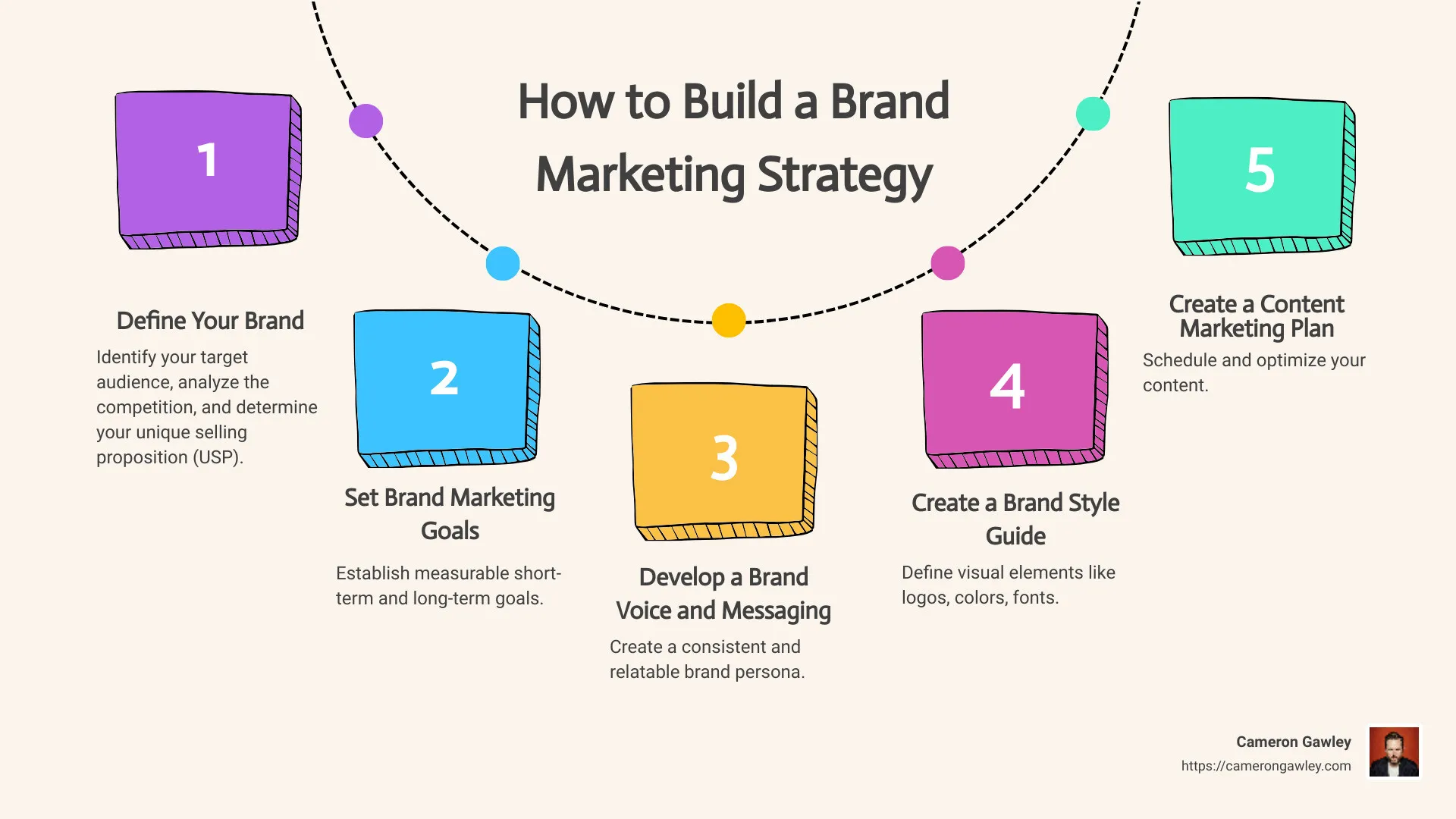
How to build a brand marketing strategy begins with understanding its core elements and planning each step meticulously. Want a quick overview? Here are the key steps:
- Define Your Brand: Identify your target audience, analyze the competition, and determine your unique selling proposition (USP).
- Set Brand Marketing Goals: Establish measurable short-term and long-term goals.
- Develop a Brand Voice and Messaging: Create a consistent and relatable brand persona.
- Create a Brand Style Guide: Define visual elements like logos, colors, fonts.
- Create a Content Marketing Plan: Schedule and optimize your content.
- Choose the Right Marketing Channels: Leverage social media, email, and paid ads.
- Measure and Analyze Your Results: Track KPIs and refine your strategy.
Brand marketing is about crafting a unique identity for your business that resonates with your audience. Think of your brand as your business's personality—a compelling brand identity that makes your company unforgettable.
I'm Cameron Gawley, and with years of experience in building successful brands, I'll guide you through each step to turn your vision into reality.
What is Brand Marketing?
Brand marketing is about crafting a unique identity for your business that resonates with your audience. Think of your brand as your business's personality—a compelling brand identity that makes your company unforgettable.
Brand Personality
Your brand personality is the human side of your business. It’s the way your brand speaks, behaves, and makes people feel. Imagine if your company were a person. Would it be serious or playful? Formal or casual?
Take Red Bull, for example. Their brand personality is adventurous and energetic. Everything they do, from their extreme sports sponsorships to their bold advertising, reflects this personality.
Developing a strong brand personality helps your business stand out and connect emotionally with your audience. People are more likely to engage with and remain loyal to brands that feel like a friend.
Brand Value
Brand value is the worth your brand adds to your business. It’s not just about the financial value but also the perceived value in the minds of your customers.
For instance, Apple’s brand value is immense. Customers don’t just buy Apple products for their functionality; they buy them because of what the brand represents—innovation, quality, and status. This perceived value allows Apple to command higher prices and foster a loyal customer base.
Building brand value involves consistently delivering on your brand promises and creating positive experiences for your customers. This can lead to increased customer trust and a stronger market position.
Customer Loyalty
Customer loyalty is the ultimate goal of brand marketing. Loyal customers are not just repeat buyers; they are brand advocates who promote your business to others.
Consider Nike. Their brand marketing strategy focuses on inspiring and empowering athletes. This message resonates deeply with their audience, creating a loyal community of customers who not only buy Nike products but also recommend them to friends and family.
To build customer loyalty, your brand needs to create a strong emotional connection with your audience. This can be achieved through consistent messaging, exceptional customer service, and by living up to your brand values.
By focusing on these elements—brand personality, brand value, and customer loyalty—you can create a brand marketing strategy that not only attracts customers but also keeps them coming back.
Next, we'll dive into the steps to Define Your Brand and how to set the foundation for a successful brand marketing strategy.
How to Build a Brand Marketing Strategy
Define Your Brand
To start, you need to define your brand. This means understanding what sets your brand apart from competitors. Think of it as creating a unique personality for your business.
Identify your target audience by creating a buyer persona. Include details like age, occupation, income, and hobbies. This helps you understand who you're talking to and what they care about.
Analyze your competition to see what they are doing well and where they fall short. This can help you identify opportunities to stand out.
Determine your Unique Selling Proposition (USP). This is the special feature or benefit that makes your brand different. For example, maybe your brand is known for exceptional customer service.
Set Brand Marketing Goals
Next, set clear brand marketing goals. These goals will guide your efforts and help you measure success.
Here are some examples:
- Raise brand awareness: Track social media mentions or customer conversions.
- Drive website traffic: Measure unique organic visitors each month.
- Strengthen your brand positioning: Use customer surveys to understand how people perceive your brand.
- Boost customer retention: Track how many customers return within a set time frame.
- Improve customer loyalty: Measure participation in a refer-a-friend program.
Develop a Brand Voice and Messaging
Your brand voice is how your brand "speaks" to the world. It's essential to keep this voice consistent across all platforms.
Start by reviewing your mission statement. What is your brand's purpose? Your voice should reflect this.
Conduct market research to see how your competitors communicate and find a niche that sets you apart.
Survey your audience to understand how they perceive your current voice and what resonates with them.
Create a Brand Style Guide
A brand style guide ensures consistency in how your brand is presented visually and verbally.
Include guidelines for:
- Visual identity: Logo usage, typography, and color palette.
- Tone of voice: How you speak to your audience. For example, are you formal or casual?
This guide is a reference for anyone creating content for your brand.
Create a Content Marketing Plan
A content marketing plan helps you raise awareness by distributing relevant content.
- Content calendar: Plan out when and what you will post.
- SEO: Optimize your content to rank higher in search engines.
- Social media: Engage with your audience on platforms they use.
- Blogs: Provide valuable information that attracts and retains customers.
Choose the Right Marketing Channels
Selecting the right marketing channels is crucial for reaching your audience effectively.
- Social media: Platforms like Facebook, Instagram, and Twitter.
- Paid advertising: Google ads, social media ads, etc.
- Email marketing: Newsletters and promotional emails.
Measure and Analyze Your Results
Finally, you need to measure and analyze your results to see what’s working and what’s not.
- KPIs: Key Performance Indicators such as social media mentions and website traffic.
- Use tools to track metrics and make data-driven decisions.
- Regularly review your strategy and refine it based on the results.
By following these steps, you'll be well on your way to building a successful brand marketing strategy.
Next, let's look at some Examples of Successful Brand Marketing Strategies.
Examples of Successful Brand Marketing Strategies
Nike – Just Do It
Nike's "Just Do It" campaign is a masterclass in brand marketing. Launched in 1988, this tagline remains one of the most iconic in advertising history. Nike connects emotionally with its audience by inspiring them to break barriers and embrace their inner athlete.
Their powerful storytelling, featuring sports legends and everyday heroes, not only boosts product sales but also cements Nike as a lifestyle brand and a symbol of empowerment. This approach has helped Nike build an enduring connection with consumers, turning them into loyal customers.
Apple – Think Different
Apple's "Think Different" campaign in the late 1990s redefined how a brand communicates its identity. By celebrating those who challenge the status quo, Apple tapped into the aspirations and values of its target audience. This campaign was pivotal in creating unparalleled brand loyalty.
The sleek and minimalist design of Apple products, combined with emotional advertising, creates a strong emotional connection with consumers. This strategy has made Apple not just a tech company, but a brand that people are proud to be associated with.
Dollar Shave Club – Shaving Reimagined
Dollar Shave Club disrupted the shaving industry with a humorous and impactful marketing strategy. Their viral launch video in 2012, featuring the company's charismatic founder, instantly grabbed attention and resonated with men tired of paying high prices for razors.
By staying true to their brand story and leveraging social media and YouTube, Dollar Shave Club quickly gained a massive following. Their ability to infuse fun into a mundane product made shaving an enjoyable experience, offering convenience and value for money. This strategy helped them build a loyal customer base and significantly grow their market share.
Next, let's dive into some Frequently Asked Questions about Building a Brand Marketing Strategy.
Frequently Asked Questions about Building a Brand Marketing Strategy
How to make a brand marketing strategy?
Creating a brand marketing strategy involves several key steps to ensure your brand stands out and connects with your audience.
- Define Your Brand: Start by identifying your target audience and understanding their needs and preferences. Conduct a competition analysis to find out what sets your brand apart. Determine your Unique Selling Proposition (USP) to highlight why customers should choose you over others.
- Set Brand Marketing Goals: Establish clear, measurable goals. These could include increasing brand awareness, boosting website traffic, or improving customer retention. Use Key Performance Indicators (KPIs) to track progress.
- Develop a Brand Voice and Messaging: Craft a consistent brand voice that aligns with your mission statement and resonates with your audience. Use market research and audience surveys to shape your messaging strategy.
- Create a Brand Style Guide: Develop a visual identity that includes logo usage, typography, and a color palette. This ensures consistency across all marketing materials.
- Create a Content Marketing Plan: Plan your content calendar, focusing on SEO, social media, and blog posts. This helps in attracting and engaging your audience.
- Choose the Right Marketing Channels: Determine the best channels for your brand, such as social media, paid advertising, or email marketing. This helps in reaching your target audience effectively.
- Measure and Analyze Your Results: Regularly track your KPIs, social media mentions, and website traffic to understand what's working and what needs improvement.
What are the key elements of a brand strategy?
A successful brand strategy includes several key elements:
- Purpose: Define why your brand exists and what it aims to achieve. This gives your brand a clear direction and helps in connecting with your audience on a deeper level.
- Brand Value: Highlight the unique benefits and value your brand offers. This helps in differentiating your brand from competitors.
- Brand Positioning: Determine your market position by understanding where your brand stands in the competitive landscape. This helps in identifying opportunities and threats.
- Brand Personality: Develop a personality for your brand that resonates with your audience. This could be fun, professional, innovative, etc.
- Brand Voice: Ensure your brand voice is consistent across all platforms. This helps in building a strong and recognizable brand identity.
- Market Analysis: Conduct regular market analysis to stay updated on industry trends and competitor strategies. This helps in making informed decisions.
What are the steps in building a brand strategy?
Building a brand strategy involves several steps:
- Understand Your Company: Start by understanding your company’s mission, values, and goals. This forms the foundation of your brand strategy.
- Learn About Your Audience: Conduct thorough research to understand your target audience's needs, preferences, and behavior. This helps in tailoring your brand strategy to meet their expectations.
- Select Your Message: Develop a clear and compelling brand message that communicates your brand’s value and resonates with your audience.
- Track Growth: Regularly measure the performance of your brand strategy using KPIs. This helps in identifying areas of improvement and optimizing your strategy for better results.
Next, let’s explore some Examples of Successful Brand Marketing Strategies.
Conclusion
Building a brand marketing strategy is a journey from vision to reality. It involves understanding your audience, defining your unique position, and creating a compelling message that resonates. At Cameron Gawley, we believe in the power of a well-crafted brand strategy to transform businesses and drive growth.
Cameron Gawley has a wealth of experience in brand building. We guide entrepreneurs through the complexities of branding, helping them develop a strong brand identity and market presence. Our approach is rooted in creativity and strategic thinking, ensuring that every brand we work with stands out in a crowded marketplace.
Entrepreneurial Guidance is at the heart of what we do. We provide actionable insights and tailored strategies that empower businesses to achieve their brand marketing goals. Whether you're a startup looking to establish your brand or an established business aiming to refine your strategy, we're here to help.
Ready to turn your vision into reality? Explore our brand building services and see how we can help you create a powerful brand marketing strategy.