

Introduction
Branding development is more than just creating a logo or a tagline—it's about building a lasting impression and fostering genuine connections with your audience. For business owners, branding development is crucial as it aligns your company's essence with customer expectations and market demands. Effective branding sets you apart from the competition and builds trust and loyalty among your clientele.
If you're in a hurry, here's a quick summary:
- Branding development is the process of creating and strengthening your brand.
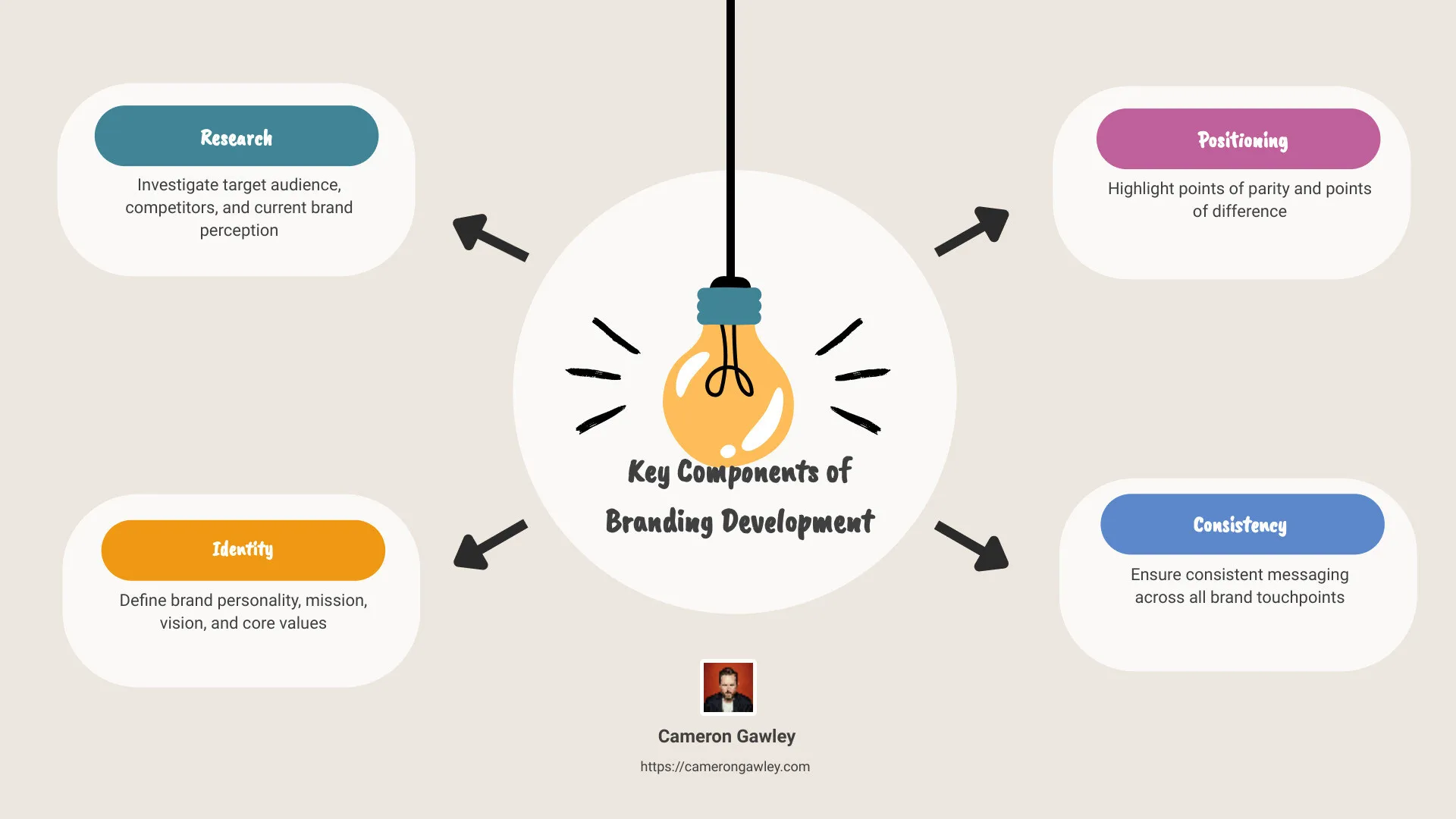
- It involves researching your target audience, competitors, and current brand perception.
- Define your brand identity through personality, mission, vision, and core values.
- Develop positioning that highlights points of parity and points of difference.
- Create a consistent messaging strategy across all brand touchpoints.
- Track and adjust your brand strategy based on market feedback and analytics.
Cameron Gawley: Entrepreneurial Visionary and Brand Builder
Cameron Gawley has always been driven by an entrepreneurial spirit, starting from his childhood days selling baseball cards. His journey has been marked by remarkable achievements and invaluable experiences. By his 30s, Cameron had founded one of Texas's fastest-growing digital strategy agencies. Now in his 40s, with multiple successful exits, he continues to push boundaries in tech-enabled product development and brand experiences.
What is Brand Development?
The Difference Between Brand Development and Branding
Brand development is the strategic process of creating and managing a brand over time. It involves defining your brand's core identity, aligning it with business objectives, and ensuring it resonates with your target audience. This process is ongoing and requires continuous fine-tuning to adapt to market changes and consumer preferences.
On the other hand, branding is the execution of the brand development strategy. It includes the tangible elements like logos, color schemes, and marketing materials that represent your brand.
Concept vs Execution
To put it simply, brand development is the concept, while branding is the execution. Brand development involves understanding your market, defining your brand's unique value proposition, and creating a strategy to communicate that value. Branding, however, is about applying that strategy through visual and verbal elements that your audience can see and interact with.
Brand Identity and Brand Strategy
Brand identity refers to the visual and verbal elements that represent your brand. This includes your logo, color palette, typography, and tone of voice. These elements should be consistent across all platforms to create a cohesive brand image.
Brand strategy is the blueprint that guides your brand development efforts. It outlines your brand's mission, vision, core values, and positioning in the market. A well-crafted brand strategy helps you make informed decisions that align with your business objectives and resonate with your audience.
Aligning with Business Objectives
A successful brand development strategy aligns with your overall business goals. For instance, if your objective is to become a market leader in eco-friendly products, your brand development efforts should focus on highlighting sustainability and environmental responsibility.
Consider the example of Nike. Their branding, including the iconic "Just Do It" slogan and the Swoosh logo, provides instant recognition. However, their brand development goes deeper, positioning them as a symbol of athletic perseverance and greatness. This alignment with their business objectives has helped them build a loyal customer base and a strong market presence.
Why It Matters
Investing in brand development is crucial for several reasons:
- Increases awareness and recognition: A strong brand helps you stand out in a crowded market.
- Supports business growth: Aligning your brand with business objectives drives growth and customer loyalty.
- Differentiates from competitors: Effective brand development highlights what makes you unique.
In summary, while branding focuses on the visual and tangible aspects, brand development is about the bigger picture. It’s about creating a brand that not only looks good but also connects emotionally with your audience and supports your business goals.
Next, let's dive into the 10-step brand development strategy to understand how to put these concepts into practice.
The 10-Step Brand Development Strategy
Step 1: Consider Your Overall Business Strategy
Your brand should align with your business strategy. This means understanding where you want your business to go and how your brand can support that journey. Think about your long-term goals and how your brand can help you achieve them.
Key Points:- Business Growth: Aligning your brand with business objectives drives growth and customer loyalty.- Differentiation: Stand out from competitors by highlighting what makes you unique.
Step 2: Identify Your Target Clients
Knowing your target audience is crucial. Who are the people most likely to benefit from your services or products? Specialize in a niche to better serve and understand your clients.
Key Points:- Specialization: Focus on a specific client group to become an expert in that area.- Client Focus: Tailor your services to meet the unique needs of your target clients.
Step 3: Research Your Target Client Group
Conduct systematic research to understand your clients' needs, preferences, and pain points. This helps you see your brand from the client's perspective and reduces marketing risks.
Key Points:- Client Perspective: Understand what your clients are looking for.- Marketing Risk: Reduce risks by basing decisions on solid data.
Step 4: Develop Your Brand Positioning
Market positioning involves defining how your brand is different from competitors. Create a positioning statement that captures your unique value.
Key Points:- Differentiators: Identify what makes your brand unique.- Positioning Statement: Summarize your brand's unique value in a few sentences.
Step 5: Develop Your Messaging Strategy
Your messaging strategy translates your brand positioning into messages tailored for different audiences. Each audience will resonate with different aspects of your brand.
Key Points:- Audience-Specific Messages: Tailor messages to different audience needs.- Messaging Architecture: Create a framework for consistent communication.
Step 6: Develop Your Name, Logo, and Tagline
Your brand identity includes your name, logo, and tagline. These elements are the visual and verbal representation of your brand and should communicate your market positioning effectively.
Key Points:- Visual Expression: Ensure your logo and tagline reflect your brand's essence.- Market Communication: These elements should speak directly to your audience.
Step 7: Develop Your Content Marketing Strategy
Content marketing uses valuable educational content to attract and nurture prospects. It increases both visibility and reputation.
Key Points:- Educational Content: Provide valuable information to your audience.- Visibility and Reputation: Boost both through consistent content efforts.
Step 8: Develop Your Website
Your website is a crucial brand development tool. It should offer a great user experience and be optimized for search engines (SEO).
Key Points:- User Experience: Make your website easy to navigate and engaging.- SEO: Optimize your site to be found easily by search engines.
Step 9: Build Your Marketing Toolkit
Your marketing toolkit includes sales sheets, pitch decks, videos, and other marketing collateral. These tools help you communicate your brand message effectively.
Key Points:- Sales Sheets and Pitch Decks: Provide concise overviews of your services.- Videos: Use videos to make your brand more engaging and relatable.
Step 10: Implement, Track, and Adjust
Finally, implement your brand strategy, track its performance, and make adjustments as needed. Use objective measures to evaluate success.
Key Points:- Implementation: Put your strategy into action.- Tracking: Measure the effectiveness of your efforts.- Adjustments: Make necessary changes based on data and feedback.
Next, let's explore the four stages of brand development to understand how to define, craft, implement, and evaluate your brand.
The Four Stages of Brand Development
Stage 1: Defining Your Brand
Defining your brand is the first and most crucial step in branding development. It sets the foundation for everything else.
Brand Mission, Vision, and Core Values
- Mission Statement: Your mission statement explains why your brand exists. For example, Starbucks' mission is "To inspire and nurture the human spirit – one person, one cup, and one neighborhood at a time."
- Vision Statement: This outlines where you want your brand to go. Nike's vision, "Bring inspiration and innovation to every athlete in the world," is a great example.
- Core Values: These are the beliefs that drive your brand. They could be integrity, sustainability, or community focus.
Stage 2: Crafting Your Brand Identity
Once you’ve defined your brand, it’s time to bring it to life visually and verbally.
Visual Identity
- Logo: Your logo is the face of your brand. It should be simple, memorable, and reflective of your brand’s personality.
- Color Palette: Colors evoke emotions. Choose a color palette that aligns with your brand’s values and tone.
- Typography: Fonts convey different feelings. Select typography that complements your brand’s voice.
Messaging
- Tone and Voice: Decide how your brand will communicate. Is it formal or casual? Friendly or authoritative?
- Tagline: A catchy and memorable tagline can make your brand stand out. Think of Nike’s "Just Do It."
Stage 3: Implementing Your Brand Strategy
Now that you have a clear brand identity, it’s time to put your strategy into action.
Marketing Campaigns
- Content Marketing: Use blogs, videos, and social media to share your brand story and engage with your audience.
- Public Relations: PR efforts help build credibility and trust. Share your brand’s milestones and success stories with the media.
- Product Launches: Ensure that your new products reflect your brand’s core values and are marketed consistently.
Stage 4: Evaluating and Evolving Your Brand
Brand development doesn’t stop once your strategy is implemented. Continuous evaluation and evolution are key.
Brand Monitoring
- Customer Feedback: Regularly collect and analyze customer feedback to understand their perception of your brand.
- Market Trends: Stay updated with industry trends to ensure your brand remains relevant.
Adjustments
- Tracking Performance: Use metrics like web traffic, social media engagement, and sales data to measure your brand’s performance.
- Making Changes: Based on your findings, make necessary adjustments to your branding strategy.
By following these stages—defining, crafting, implementing, and evaluating—you can build a strong, enduring brand. Up next, let's delve into the three C's of brand development: clarity, consistency, and constancy.
The Three C's of Brand Development
Clarity
Clarity is all about ensuring your brand's message is clear and easily understood. When your customers know exactly what you stand for, it builds trust and loyalty.
- Clear Messaging: Your brand promise should be straightforward. For example, if your brand is all about sustainability, make sure this message is evident in all your communications.
- Customer Understanding: Use simple language and visuals to convey your message. Avoid jargon that might confuse your audience.
A clear brand message helps customers quickly grasp what you offer and why it matters.
Consistency
Consistency means maintaining the same tone, style, and message across all platforms. This helps build a recognizable and reliable brand.
- Consistent Branding: From your website to your social media, everything should look and feel the same.
- Visual Identity: Use the same logo, colors, and fonts everywhere. This makes your brand easily identifiable.
- Messaging: Your core message should remain constant, even if you tailor it slightly for different audiences.
Consistency reassures your customers that they can expect the same quality and experience every time they interact with your brand.
Constancy
Constancy is about continuously evolving and adapting your brand to stay relevant in the market.
- Ongoing Development: Regularly update your branding elements to reflect current trends and customer preferences.
- Brand Evolution: Don’t be afraid to tweak your brand’s look or message as needed. This shows that your brand is dynamic and responsive.
- Market Adaptation: Pay attention to market changes and adjust your strategy accordingly. This ensures your brand remains competitive.
Constancy ensures that your brand stays fresh and relevant, keeping your customers engaged over the long term.
By focusing on clarity, consistency, and constancy, you can build a strong, enduring brand that stands out in the market. Next, let's address some frequently asked questions about brand development.
Frequently Asked Questions about Brand Development
What are the 7 steps in the brand development process?
The brand development process can be broken down into seven essential steps:
- Consider Your Overall Business Strategy: Align your brand with your business goals. This ensures your brand supports your broader business objectives.
- Identify Your Target Clients: Understand who your ideal customers are. Specialize and focus on this group to tailor your brand’s messaging and strategy.
- Research Your Target Client Group: Conduct systematic research to gain insights into your target audience's needs, preferences, and pain points.
- Develop Your Brand Positioning: Determine how you want to position your brand in the market. Identify what makes you different from your competitors.
- Develop Your Messaging Strategy: Create specific messages for different audience segments. Ensure these messages align with your core positioning.
- Develop Your Name, Logo, and Tagline: Create a visual identity that communicates your brand’s essence. This includes your name, logo, and tagline.
- Develop Your Content Marketing Strategy: Produce valuable content that educates and engages your audience. This helps build visibility and reputation.
How is branding developed?
Branding is developed through a combination of strategic planning and creative execution. Here's how:
- Define Your Brand: Outline your brand’s mission, vision, and core values. This forms the foundation of your brand.
- Craft Your Brand Identity: Design your visual elements like logos, color palettes, and typography. These should reflect your brand’s personality.
- Implement Your Brand Strategy: Launch marketing campaigns, public relations efforts, and product promotions to communicate your brand to the market.
- Evaluate and Evolve: Continuously monitor your brand’s performance. Gather customer feedback and adapt to market trends to keep your brand relevant.
What are the four stages of brand development?
The four stages of brand development are:
- Defining Your Brand: This involves setting your brand’s mission, vision, and core values. It’s about understanding who you are and what you stand for.
- Crafting Your Brand Identity: Create the visual and verbal elements of your brand. This includes your logo, color palette, typography, and brand voice.
- Implementing Your Brand Strategy: Execute your branding plan through marketing campaigns, public relations, and product launches. Ensure all touchpoints reflect your brand’s identity.
- Evaluating and Evolving Your Brand: Regularly assess your brand’s impact. Use customer feedback and market trends to refine and improve your brand.
By addressing these frequently asked questions, you can better understand the essentials of brand development and apply them to build a strong, enduring brand.
Conclusion
In summary, brand development is a strategic process that involves defining, crafting, implementing, and continuously evolving your brand to align with your business objectives and resonate with your target audience. It's not just about creating a logo or a catchy tagline; it's about building a meaningful connection with your customers and differentiating your brand in a crowded marketplace.
The importance of brand development cannot be overstated. Strong brands like Apple, Nike, and Starbucks have shown that successful branding goes beyond visual elements. It involves creating a consistent and engaging brand experience that builds trust and loyalty over time. As David Aaker aptly put it, “Branding adds spirit and a soul to what would otherwise be a robotic, automated, generic price-value proposition.”
At Cameron Gawley, we understand the intricacies of brand development. Our entrepreneurial vision and extensive expertise in brand building enable us to guide you through every step of the process. From initial research and brand identity creation to implementing and tracking your brand strategy, we are committed to helping you build a brand that not only stands out but also stands the test of time.
Our approach to branding is holistic. We start by understanding your business strategy and target clients, then move on to developing a unique brand positioning and messaging strategy. We ensure that every touchpoint, from your website to your marketing toolkit, reflects your brand’s identity and promise.
Finally, we believe in the ongoing management and evolution of your brand. By regularly tracking your progress and adapting to market trends and customer feedback, we help you maintain your brand’s relevance and effectiveness.
Ready to take your brand from concept to reality? Contact us today to discuss your brand goals and discover how our branding services can help you achieve them.
Key Takeaways:- Brand development is a continuous, strategic process.- It involves building emotional connections and competitive differentiation.- Extensive upfront research and a clear brand identity are crucial.- Ongoing management and adaptation ensure long-term relevance.
By following these principles, you can build a brand that not only attracts loyal customers but also drives business growth and cultural impact.