

For any business looking to stand out in today's crowded market, building a brand strategy template is essential. This template helps you identify your brand's identity, define your target customers, and enhance the overall customer experience. Below is a quick rundown of what a comprehensive brand strategy template should include:
- Brand Purpose: Why does your brand exist?
- Core Values: What principles guide your business?
- Target Audience: Who are your ideal customers?
- Brand Mission and Vision: What do you aim to achieve now and in the future?
- Competitor Analysis: Who are your competitors, and what makes you different?
- Value Proposition: What unique value do you offer?
- Brand Positioning: How do you want to be perceived?
- Brand Story: What's your brand's journey?
- Brand Identity: What visual and tonal elements define your brand?
By addressing these key components, you can create a clear, actionable roadmap that aligns your business goals with your brand identity.
Hello, I'm Cameron Gawley, an expert in brand building with a passion for helping businesses like yours create strong, memorable brands. With years of experience in crafting effective brand strategy templates, I've seen how a well-defined brand strategy can transform a business.
In the following sections, we'll delve deeper into each element of building a brand strategy template to ensure you have all the tools you need to succeed.
Understanding Brand Strategy
Before you dive into building a brand strategy template, it's crucial to understand the foundational elements that make up a strong brand. These elements include your brand purpose, core values, target audience, brand mission, and brand vision. Each plays a vital role in shaping how your brand is perceived and experienced by your audience.
Brand Purpose
Your brand purpose is the "why" behind your brand. It's the reason your company exists beyond making money. Think of it as your brand's North Star, guiding all your actions and decisions. For example, Patagonia's brand purpose is to "build the best product, cause no unnecessary harm, use business to inspire and implement solutions to the environmental crisis." This clear purpose not only drives their business but also resonates deeply with their target audience.
Core Values
Your core values are the principles that guide your brand's actions and decisions. They are the standards you hold yourself to and what you promise to deliver to your customers. Being transparent about your core values helps build trust and loyalty. For instance, if one of your core values is sustainability, you must ensure that all your business practices align with that value. The public will hold you accountable, so "walk the walk."
Target Audience
Knowing your target audience is crucial for developing a brand that speaks directly to the people who matter most. Your target audience should be as specific as possible. This allows you to tailor your messaging and offerings to meet their unique needs. For example, you might target "Female high school students" or "B2B marketers ages 25–40, who work at small or medium-sized businesses." The more specific you are, the better you can serve and engage your audience.
Brand Mission
Your brand mission defines what your brand aims to achieve in the present. It answers the question, "What does your brand set out to accomplish?" For example, NerdWallet's brand mission is to "provide clarity for all of life's financial decisions." This mission statement clearly articulates what the brand does and for whom, making it easier for customers to connect with their purpose.
Brand Vision
While your mission focuses on the present, your brand vision looks toward the future. It defines where you want your brand to go and what you hope to achieve in the long term. A strong vision can inspire both your team and your customers. For instance, your vision might be to "become the leading provider of eco-friendly products in the next ten years." This vision gives your team a clear goal to strive for and helps your customers understand your long-term commitment.
Understanding these key elements will provide a solid foundation for building your brand strategy template. By clearly defining your brand purpose, core values, target audience, brand mission, and brand vision, you'll be well-equipped to create a brand that resonates deeply with your audience and stands out in the market.
Next, we'll dive into the step-by-step process of crafting your brand strategy template to bring these elements to life.
Building a Brand Strategy Template
To create a successful brand, you need a detailed plan. Let's walk through each step to build your brand strategy template. Follow these steps in sequence to ensure a comprehensive approach.
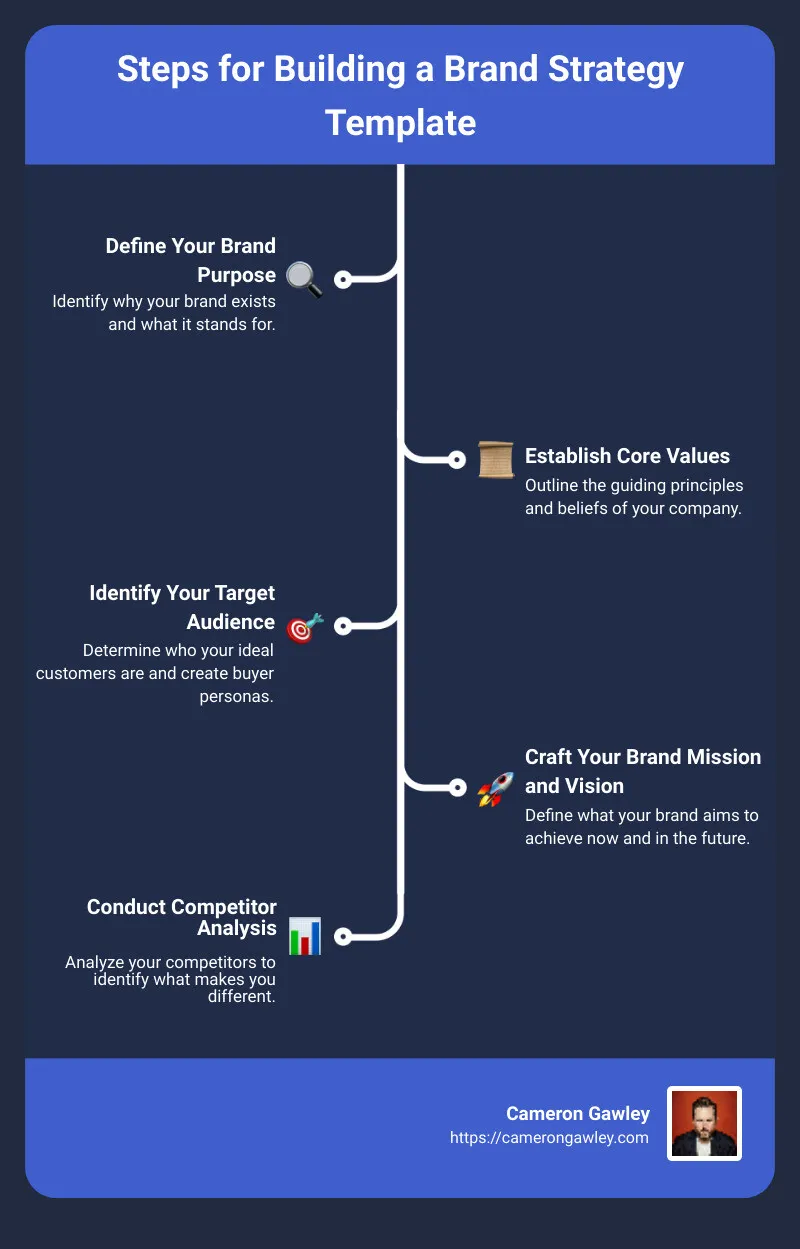
Step 1: Define Your Brand Purpose
The first step is to define your brand purpose. This is the "why" behind your brand—the reason your company exists. Think of it as your company's mission.
Example: Patagonia's brand purpose is to "build the best product, cause no unnecessary harm, use business to inspire and implement solutions to the environmental crisis."
Step 2: Establish Core Values
Your core values are the principles that guide your brand's actions. Clearly state these values and ensure your business lives up to them.
Example: Core values might include integrity, innovation, sustainability, and customer commitment.
Step 3: Identify Your Target Audience
Knowing who your ideal customers are is crucial. Create buyer personas to represent your target audience. Detail their demographics, needs, and pain points.
Example: A buyer persona might be "Female high school students interested in eco-friendly fashion."
Step 4: Craft Your Brand Mission and Vision
Your brand mission is what your brand aims to accomplish now, while your brand vision is what you aspire to achieve in the future.
Example: - Mission: "To provide affordable, high-quality education to underprivileged communities."- Vision: "A world where every child has access to quality education."
Step 5: Conduct Competitor Analysis
Analyze your competitors to understand their strengths and weaknesses. This market research helps identify what sets your brand apart.
Questions to ask:- Who are your direct competitors?- How do they market themselves?- What do they do well, and where do they fall short?
Step 6: Develop Your Value Proposition
A value proposition explains the unique benefits your brand offers. It should be clear why your brand is the best choice.
Example: "Our software saves small businesses 20% on their energy bills."
Step 7: Position Your Brand
Brand positioning is about the thoughts and feelings you want your audience to associate with your brand. Write a clear brand positioning statement.
Example: "We are the most sustainable and innovative tech company for eco-conscious consumers."
Step 8: Write Your Brand Story
Your brand story should explain how and why your company was founded. Use a three-part structure: status quo, conflict, and resolution.
Example: "We started in a small garage, faced many obstacles, and now help thousands of customers with our innovative solutions."
Step 9: Create Your Brand Identity
Finally, develop your brand identity. This includes your visual elements like logo, typography, and color scheme, as well as your brand voice and tone.
Example: - Visual Identity: Clean, modern logo with blue and green colors.- Brand Voice: Friendly, approachable, and knowledgeable.
By following these steps, you'll have a robust brand strategy template that can guide your business to success. Next, we’ll discuss how to implement this strategy effectively.
Implementing Your Brand Strategy
Ensuring Brand Consistency
To make your brand memorable, consistency is key. Use a brand style guide to maintain uniformity across all platforms. This guide should cover your logo usage, color palette, typography, and tone of voice.
Example: Wendy’s uses a snarky, humorous tone consistently across all social media channels, making them instantly recognizable.
A consistent visual identity helps build trust and recognition. Make sure every piece of content, from social media posts to packaging, follows the same design principles.
Reviewing Customer Touchpoints
Every interaction a customer has with your brand is a customer touchpoint. These can range from your website and social media to customer service and physical stores.
Evaluate these touchpoints regularly to ensure they align with your brand strategy. Ask questions like:- Is the customer experience seamless and enjoyable?- Does each touchpoint reflect our brand values and voice?
Example: Disney is known for creating magical experiences at every touchpoint, from their parks to their customer service.
Conducting Regular Brand Audits
A brand audit is essential for measuring how well your brand strategy is performing. Schedule these audits quarterly and block out 1-2 hours for a thorough review.
Use a brand audit template to cover key areas:- Visual Identity: Is your logo, color scheme, and typography consistent?- Brand Voice: Does your content reflect your brand’s tone?- Performance Benchmarks: Are you meeting your branding goals?
Regular audits help you identify areas for improvement and keep your brand strategy on track.
By ensuring brand consistency, reviewing customer touchpoints, and conducting regular brand audits, you’ll effectively implement your brand strategy. This leads to a stronger, more recognizable brand that resonates with your audience.
Frequently Asked Questions about Building a Brand Strategy Template
What are the 4 steps in building a brand strategy?
Building a brand strategy involves four key steps:
- Company Understanding: Know who you are as a company. This involves understanding your brand purpose, core values, and mission. Your purpose answers why your brand exists, your values define how you operate, and your mission outlines what you aim to achieve.
- Audience Learning: Identify and understand your target audience. Develop detailed buyer personas to know their needs, preferences, and behaviors. This helps tailor your brand message to resonate with them.
- Brand Message: Craft a clear and compelling brand message. This includes your brand story, value proposition, and positioning statement. Your message should communicate the transformation your product or service brings to your customers.
- Brand Growth: Implement strategies to grow your brand. This includes consistent communication, engaging with your audience, and monitoring your brand performance. Regularly update your brand strategy to adapt to market changes and customer feedback.
What should be in a brand strategy document?
A brand strategy document should include the following components:
- Brand Purpose: The reason your brand exists and the impact you aim to make in the world.
- Core Values: The principles and standards guiding your company's actions.
- Target Audience: Detailed descriptions of your ideal customers, including buyer personas.
- Brand Mission and Vision: Your mission outlines what you do, while your vision describes the future you aspire to create.
- Brand Positioning: How you differentiate yourself from competitors.
- Brand Story: A narrative that encapsulates your brand's history, values, and mission.
- Brand Identity: Visual elements such as logo, color palette, typography, and imagery, along with your brand voice and tone.
How to create a brand strategy roadmap?
Creating a brand strategy roadmap involves outlining your vision, brand purpose, values, and goals. Here's how to do it:
- Vision: Define the ideal outcome your brand aims to achieve. This should be a long-term goal that guides all your branding efforts.
- Brand Purpose: Explain why your vision is important. What motivates your brand? Why is it essential to the world?
- Values: Identify the core principles that guide your company's actions. These values shape your strategy and influence your decision-making process.
- Goals: Set specific, measurable objectives you want to achieve. Include metrics to track your progress and ensure your goals align with your overall brand strategy.
By following these steps, you can create a comprehensive brand strategy roadmap that provides clear direction and helps you achieve your branding goals.
Conclusion
Building a brand strategy template can seem like a daunting task, but with the right approach and tools, it becomes manageable and even exciting. We've walked you through defining your brand purpose, establishing core values, identifying your target audience, crafting your mission and vision, conducting competitor analysis, developing your value proposition, positioning your brand, writing your brand story, and creating your brand identity.
At Cameron Gawley, we understand that brand building is more than just a marketing exercise—it's about creating a lasting impression and building relationships with your audience. Our brand building services are designed to help you navigate this complex process with ease, offering expert guidance every step of the way.
Whether you're an entrepreneur just starting or an established business looking to refine your brand, our expertise in brand strategy and entrepreneurial guidance can help you achieve your goals. A strong brand is not built overnight, but with consistent effort and the right strategy, it can become one of your most valuable assets.
Feel free to reach out to us for personalized support and take the next step in your brand-building journey. We’re here to help you tell your brand story and achieve long-term success.