

Why Direct-to-Consumer (DTC) Brands are Changing the Game
DTC brands, or direct-to-consumer brands, have been revolutionizing the retail landscape by cutting out the middlemen and selling their products directly to consumers via ecommerce platforms. Here’s a quick look at some standout DTC brands:
- Warby Parker
- Bonobos
- Dollar Shave Club
- Allbirds
- Glossier
We will dive deeper into what makes these brands—and many others—so influential.
The rise of DTC brands reflects a significant shift in consumer behavior. Shoppers today prefer personalized experiences, seamless online purchases, and direct relationships with the brands they love. Fueled by robust ecommerce growth and data-driven insights, these brands have been able to offer products that resonate deeply with their customers.
I’m Cameron Gawley, with years of experience in helping DTC brands like Everlane and Oak and Eden achieve scalable growth. We’ll cover the evolution of DTC brands, highlight the top ones to watch, and explore the strategies that are fueling their success.
The Evolution of DTC Brands
Direct-to-consumer (DTC) brands have come a long way from their early days of simply selling products online. Brands like Warby Parker, Bonobos, Dollar Shave Club, Allbirds, and Glossier have revolutionized the retail landscape by leveraging ecommerce channels and customer data to create personalized experiences. Let's take a closer look at how these brands have evolved.
Warby Parker
Warby Parker started with a simple mission: to offer designer eyewear at affordable prices while cutting out the middleman. By selling directly to consumers online, they disrupted the traditional eyewear industry. Their innovative home try-on program allowed customers to choose five frames to try at home for free, making it easier than ever to find the perfect pair.
Today, Warby Parker has expanded into brick-and-mortar stores, blending online and offline shopping experiences. This omnichannel strategy has helped them build a loyal customer base and increase sales.
Bonobos
Bonobos redefined men's fashion by focusing on fit and customer service. They began as an online-only brand selling pants that fit better than anything else on the market. By using customer feedback and data, they continuously improved their products and expanded their offerings.
Bonobos eventually opened "Guideshops," physical locations where customers could try on clothes and receive personalized styling advice. This hybrid model has allowed them to provide a seamless shopping experience and strengthen their brand presence.
Dollar Shave Club
Dollar Shave Club shook up the shaving industry with their subscription-based model. They offered high-quality razors at a fraction of the cost of traditional brands, delivered straight to customers' doors. Their humorous and relatable marketing campaigns quickly gained traction, making them a household name.
In 2016, Dollar Shave Club was acquired by Unilever for $1 billion. Despite the acquisition, they have maintained their DTC roots, continuing to focus on customer satisfaction and innovation.
Allbirds
Allbirds is known for their sustainable and comfortable footwear made from natural materials. They started as an online-only brand, using ecommerce channels to reach eco-conscious consumers. Their commitment to sustainability and transparency resonated with customers, driving their rapid growth.
Allbirds has since opened physical stores and developed a mobile app to enhance their customer experience. By combining online and offline channels, they have created a cohesive brand presence and increased customer engagement.
Glossier
Glossier began as a beauty blog called Into The Gloss, where founder Emily Weiss shared beauty tips and product reviews. The blog's success led to the launch of Glossier, a DTC beauty brand focused on skincare and makeup essentials.
Glossier's minimalist packaging and user-friendly products quickly gained a cult following. They leveraged social media and customer feedback to develop new products and build a strong community. Today, Glossier has expanded into physical retail, pop-up shops, and international markets.
Leveraging Ecommerce Channels and Customer Data
These DTC brands have thrived by leveraging ecommerce channels to reach a wider audience and collect valuable customer data. By analyzing this data, they can make informed decisions about product development, marketing strategies, and customer service improvements.
For example, Allbirds found that customers who visited both their website and physical stores spent 1.5 times more than those who only visited one channel. This insight led them to invest in a hybrid model, combining online and offline experiences to maximize customer engagement.
In addition, brands like Jones Road and Drunk Elephant use quizzes and surveys to collect zero-party data, which customers intentionally share. This data helps them personalize their marketing efforts and create tailored product recommendations.
As DTC brands continue to evolve, their ability to adapt and innovate will be key to their success. By staying ahead of trends and leveraging customer data, they can continue to disrupt traditional retail and offer unique, personalized experiences.
Top 10 DTC Brands to Watch in 2024
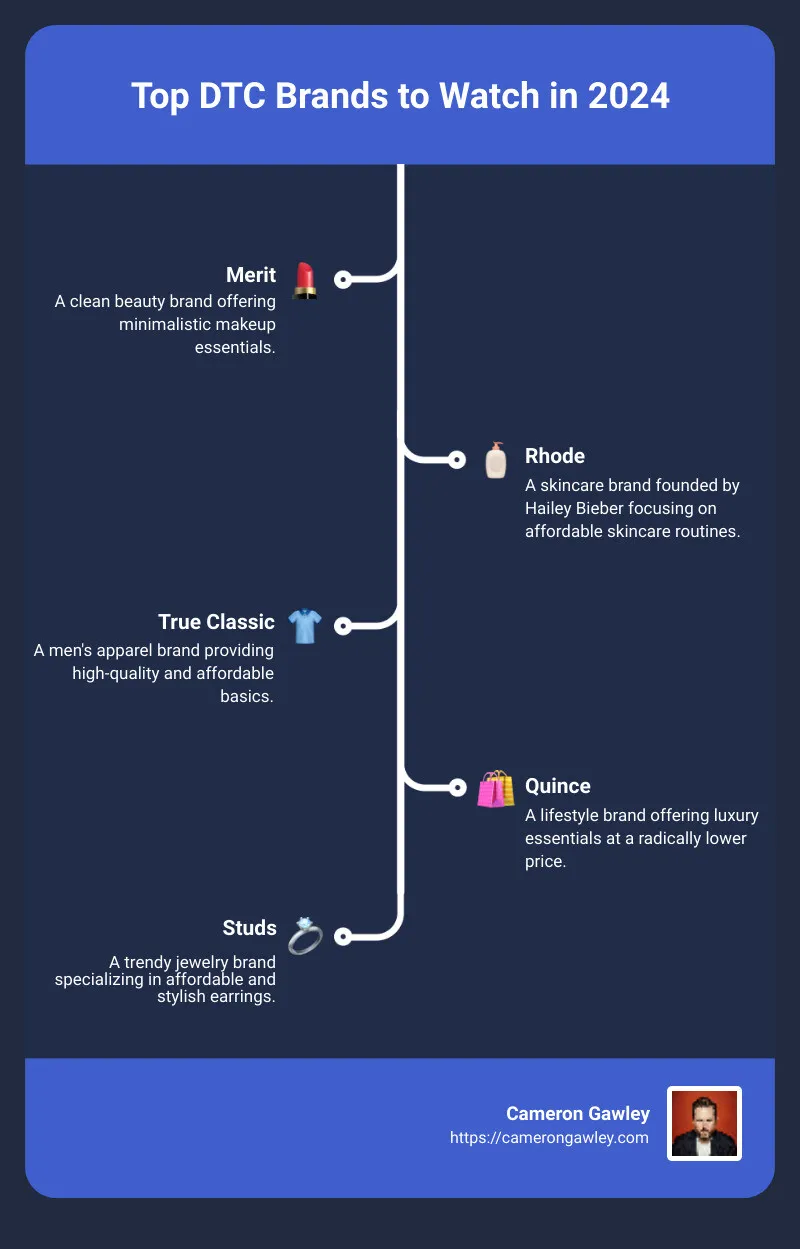
1. Merit
Merit launched in January 2021 and quickly became known for its minimalist, clean, and luxury makeup products. The brand was founded by Katherine Power, who also co-founded Avaline wine and Versed skincare. Merit’s philosophy of “five-minute makeup” has resonated with busy consumers looking for streamlined beauty routines.
Merit has successfully expanded into wholesale, partnering with Sephora just one month after launch. The brand raised $20 million in a Series A funding round led by the Growth Fund of L Catterton, with plans to use the capital for omnichannel expansion.
2. Rhode
Founded by Hailey Bieber in 2021, Rhode focuses on science-based skincare products that are accessible to everyone. The brand has gained immense popularity, boasting a growth score of 88.9 on Charm.io and a 125% year-over-year increase in website visits as of December.
Rhode’s product lineup includes the Peptide Glazing Fluid, Peptide Lip Treatment, and Barrier Restore Cream. Despite the crowded celebrity-backed beauty market, Rhode stands out due to its effective formulations and engaging social media presence.
3. True Classic
True Classic aims to provide men with well-fitting T-shirts at affordable prices. The brand has successfully tapped into a market that values both comfort and style, making it a go-to for men’s basics.
4. Quince
Quince offers high-quality essentials at radically low prices. By cutting out the middlemen, Quince provides luxury items like silk, cashmere, and leather goods directly to consumers. Their transparent pricing model has earned them a loyal customer base.
5. Studs
Studs specializes in ear piercing and earrings, offering a modern alternative to traditional piercing studios. The brand has been expanding its brick-and-mortar presence, recently opening a store in Washington, D.C.’s Georgetown neighborhood. Studs combines stylish, high-quality jewelry with a fun and accessible piercing experience.
6. Aura Bora
Launched in January 2020, Aura Bora offers sparkling water made with herbs, fruits, and flowers. The brand’s unique flavors like Cactus Rose and Lavender Cucumber, along with its eye-catching packaging, set it apart in the crowded beverage market.
Aura Bora’s collaboration with other food and beverage startups, like their partnership with Graza for a non-alcoholic olive oil martini, showcases their innovative approach to product development.
7. Made In
Founded in 2017, Made In leverages a 100-year-old family-owned restaurant supply business to offer high-quality cookware. Their products are found in Michelin-starred restaurants and home kitchens alike. Made In recently opened its first two retail locations in Austin, Texas, expanding its omnichannel presence.
8. Droplette
Droplette launched in early 2021 with a device that delivers a micro-mist of skincare products deep into the skin. Founded by two MIT-trained scientists, the brand has raised $21 million in a Series B funding round and continues to innovate with hardware updates and an improved mobile app.
9. Nowadays
Nowadays focuses on plant-based meat alternatives that are both delicious and healthy. Their mission is to create sustainable food options without compromising on taste, making them a standout in the growing plant-based market.
10. Modern Dose
Modern Dose offers personalized vitamin and supplement packs tailored to individual health needs. By using customer data to create customized solutions, Modern Dose provides a more effective and convenient approach to health and wellness.
These DTC brands are not just selling products; they’re creating unique experiences and building strong customer relationships. Keep an eye on them as they continue to innovate and shape the future of retail.
How DTC Brands Are Innovating
Direct-to-consumer (DTC) brands are making waves by continuously innovating in several key areas. Here’s how they’re changing the game:
Personalized Marketing
DTC brands are leveraging personalized marketing to create more meaningful connections with customers. By using data analytics, these brands can tailor their marketing messages to individual preferences and behaviors. For instance, Glossier uses customer data from their blog, Into the Gloss, to recommend products that align with personal beauty routines. This personalized approach not only boosts customer satisfaction but also drives higher conversion rates.
Customer Feedback
Customer feedback is gold for DTC brands. By actively seeking and acting on feedback, these brands can continuously improve their products and services. Displaying honest reviews, including negative ones, builds trust and transparency. Responding to negative reviews shows that the brand values customer input and is committed to improvement. This strategy helps in managing customer expectations and fostering loyalty.
First-Party Data
First-party data is the backbone of many successful DTC strategies. Unlike traditional retail models, DTC brands have direct access to customer data, which allows them to understand buying habits, preferences, and pain points. This data is crucial for creating personalized marketing campaigns and improving the customer experience. For example, Modern Dose uses customer data to offer personalized vitamin and supplement packs tailored to individual health needs.
Hybrid Models
While the DTC model focuses on online sales, many brands are adopting hybrid models to scale their businesses. This includes opening brick-and-mortar stores, pop-up shops, and forming partnerships with major retailers. Brands like Allbirds have expanded their reach by partnering with REI, Public Lands, and Nordstrom, and even selling on Amazon. This approach allows DTC brands to meet customers where they shop, whether online or offline.
Omnichannel Strategies
Omnichannel strategies are becoming increasingly important for DTC brands. By providing a seamless shopping experience across multiple channels, brands can enhance customer satisfaction and loyalty. This includes integrating online and offline touchpoints, offering flexible shipping options, and ensuring consistent branding across all platforms. For instance, brands like Our Place have successfully expanded their distribution by selling through Target, while also maintaining a strong online presence.
These innovations are helping DTC brands stay ahead in the competitive retail landscape. By focusing on personalized marketing, leveraging customer feedback, utilizing first-party data, adopting hybrid models, and implementing omnichannel strategies, DTC brands are not just surviving—they’re thriving.
Next, let's delve into the benefits of the DTC model and how it empowers brands to build stronger connections with their customers.
Benefits of the DTC Model
Direct-to-consumer (DTC) brands are changing the game by leveraging unique advantages that traditional retail models can’t offer. Here are some key benefits of the DTC model:
Direct Customer Relationships
DTC brands build direct relationships with their customers. This direct engagement leads to a better understanding of customer preferences, enabling brands to tailor their products, services, and marketing strategies more effectively.
"DTC brands show a true understanding of shopper pain points and consumer preferences. Many brands use discounts, loyalty programs, robust product reviews, and user-generated content to build customer relationships and drive long-term customer loyalty." — Cameron Gawley
Control Over Brand Image
By selling directly, brands have complete control over their branding and customer experience. This control is vital in maintaining consistency in messaging, presentation, and customer service quality, which can strengthen brand identity and loyalty.
Higher Profit Margins
Eliminating intermediaries in the supply chain can reduce costs and increase profit margins. Brands can save on retailer or distributor margins and invest more in product development, marketing, and customer service.
Agility
DTC brands can be more agile and responsive to market trends and consumer feedback. They can quickly implement changes in products, pricing, and marketing strategies without the need to coordinate with third-party retailers or distributors.
"DTC brands can be more agile and responsive to market trends and consumer feedback. They can quickly implement changes in products, pricing, and marketing strategies without the need to coordinate with third-party retailers or distributors." — Retail Dive
Subscriptions and Memberships
The DTC model facilitates innovative add-on models like subscriptions and memberships. DTC brands that offer these benefits are able to strengthen customer loyalty and relationships. For example, By Humankind offers monthly subscriptions for their eco-friendly personal care products.

These advantages make the DTC model a powerful strategy for brands looking to build stronger connections with their customers and achieve sustainable growth.
Next, let’s explore some key strategies for growing a DTC brand effectively.
Key Strategies for Growing a DTC Brand
Growing a DTC brand involves several key strategies that can help you stand out in a crowded market. Let's dive into some of the most effective approaches.
Influencer Collaborations
Collaborating with social media influencers is a powerful way to reach new audiences. Influencers on platforms like YouTube, TikTok, and Instagram can introduce your products to their followers, boosting visibility and credibility.
For example, when a skincare brand partners with a popular beauty influencer, they can link to customized landing pages or shops, making it easy for followers to purchase. This approach is similar to a media buy but aligns well with the DTC ethos of cutting out middlemen.
Referral Marketing
Utilizing your loyal customer base as brand evangelists can drive organic growth. A D2C referral marketing program incentivizes existing customers to spread the word about your products. This creates a powerful word-of-mouth marketing campaign.
For instance, when customers refer their friends, they might receive discounts or exclusive products. This not only brings in new customers but also enhances brand loyalty.
Flexible Shipping and Payment Options
Offering flexible shipping and payment options is crucial for customer satisfaction. Provide various shipping options, from express to standard, and consider offering free shipping where viable.
Ensure your payment system accommodates all common methods, including credit cards, ACH payments, and foreign currencies. For example, implementing buy now, pay later (BNPL) platforms like Klarna or Afterpay can increase sales by allowing customers to pay in installments.
Leveraging Customer Feedback
Transparent customer feedback and reviews build trust and authenticity. Displaying both positive and negative reviews on your ecommerce platform can set realistic expectations and guide future improvements.
Responding to negative reviews shows that you value customer feedback and are committed to improving. This approach helps manage customer expectations and fosters trust.
Staying on Top of Trends
Keeping up with the latest trends in ecommerce is essential. From data privacy and sustainability to new technologies like AI and machine learning, understanding and adapting to these trends can position your DTC brand at the forefront of the industry.
For instance, brands that prioritize sustainability by using eco-friendly materials and minimizing waste can build stronger connections with environmentally conscious customers.
By focusing on these key strategies, you can effectively grow your DTC brand and build lasting relationships with your customers.
Frequently Asked Questions about DTC Brands
What is a DTC brand?
A DTC brand (Direct-to-Consumer) is a company that sells its products directly to customers without using traditional retailers or wholesalers. This approach allows brands to have full control over their sales process, from marketing and advertising to customer support.
How do DTC brands collect customer data?
DTC brands collect customer data primarily through their own ecommerce platforms. This includes:
- Website interactions: Tracking how customers navigate their website, what products they view, and what they add to their cart.
- Purchase history: Recording what customers buy, how often they purchase, and their spending habits.
- Customer feedback: Gathering reviews, surveys, and direct feedback to understand customer preferences and pain points.
- Email and social media engagement: Monitoring how customers interact with email campaigns and social media posts.
By owning the entire customer journey, DTC brands can gather valuable first-party data to improve their products and marketing strategies.
Why are DTC brands becoming more popular?
DTC brands are gaining popularity for several reasons:
- Personalized experiences: Direct customer relationships allow brands to offer tailored experiences and products.
- Higher profit margins: Cutting out the middlemen means brands can keep a larger share of the profits.
- Agility: DTC brands can quickly adapt to changing consumer preferences and market trends.
- Transparent practices: Many DTC brands emphasize sustainability and ethical practices, which resonate with modern consumers.
- Convenience: Shopping directly from a brand's website is often more convenient for consumers, offering a seamless and personalized shopping experience.
These factors contribute to the growing appeal and success of DTC brands in today's market.
Conclusion
Building a successful direct-to-consumer (DTC) brand requires more than just a great product. It involves strategic planning, innovation, and a deep understanding of your audience. This is where Cameron Gawley comes in.
Cameron Gawley is an expert in brand building and offers invaluable entrepreneurial guidance. His approach focuses on scalable growth and mentorship, ensuring that your brand not only launches successfully but also sustains long-term success.
Brand Building
Cameron emphasizes the importance of creating a strong brand identity. This involves everything from your logo and website design to your brand's voice and messaging. A well-defined brand can set you apart in a crowded market and create a loyal customer base.
Entrepreneurial Guidance
Navigating the complexities of the DTC landscape can be challenging. With Cameron's entrepreneurial guidance, you can avoid common pitfalls and make informed decisions. His expertise can help you fine-tune your business model, optimize your marketing strategies, and manage your operations more efficiently.
Scalable Growth
A challenge for DTC brands is scaling up. Cameron provides strategies that focus on sustainable growth. This includes leveraging data analytics, optimizing supply chains, and implementing effective customer retention programs. These strategies ensure that your brand can grow without compromising on quality or customer experience.
Mentorship
Cameron believes in the power of mentorship. By providing personalized advice and sharing his wealth of knowledge, he helps entrepreneurs navigate the ups and downs of building a DTC brand. His mentorship can be the key to unlocking your brand's full potential.
In summary, building a successful DTC brand involves a combination of strategic planning, innovation, and continuous learning. With Cameron Gawley's expertise, you can navigate this journey more effectively, ensuring your brand not only survives but thrives in the competitive market.
For more insights and guidance on building a successful DTC brand, visit Cameron Gawley's DTC Ecommerce blog.