

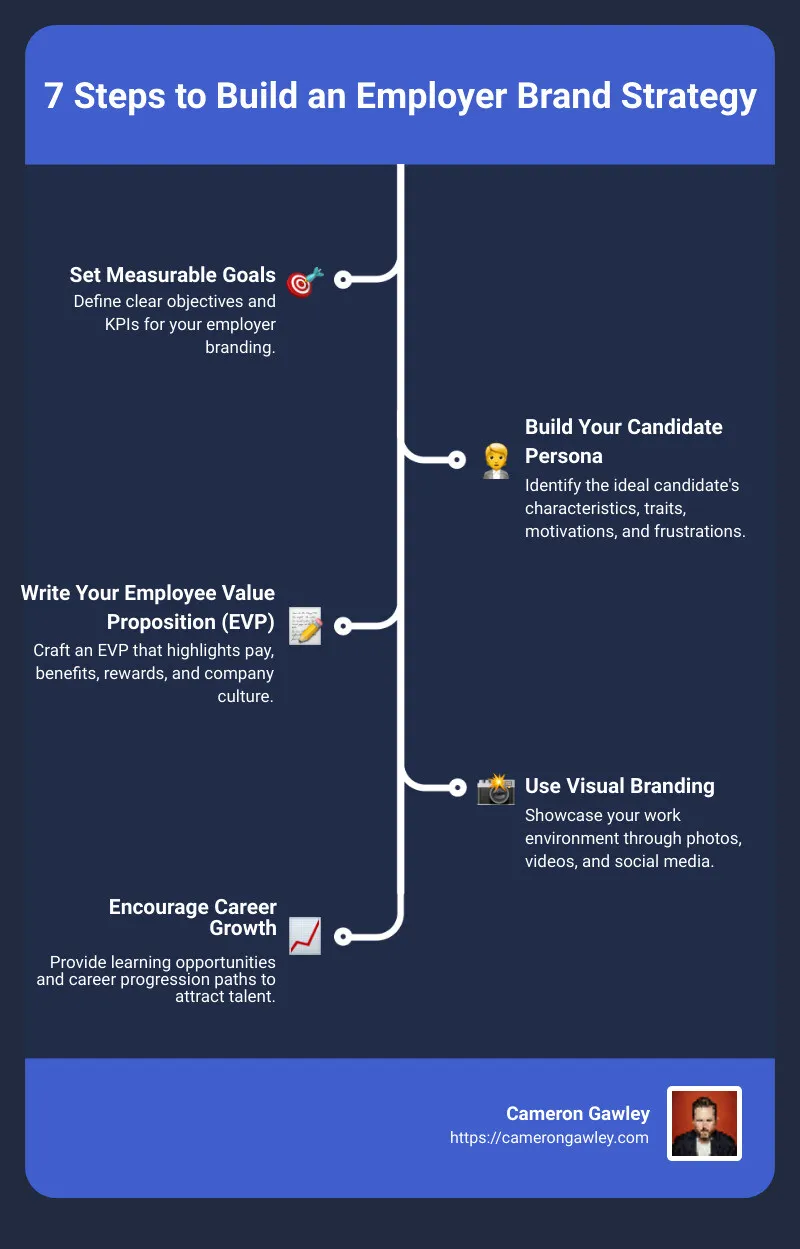
How to build an employer brand strategy is a crucial task for any business seeking to stand out and attract top talent. Here's a quick overview of the steps you'll need to take:
- Set measurable goals for your employer branding.
- Build your candidate persona to identify the ideal candidate.
- Write down your Employee Value Proposition (EVP).
- Use visual branding to showcase your work environment.
- Encourage career growth with learning opportunities.
- Utilize targeted ads like LinkedIn's “Work with Us” ads.
- Create a Showcase Page for specific employer branding content.
Creating a strong employer brand can help your organization attract top talent, reduce hiring costs, and improve retention rates.
I'm Cameron Gawley, and with years of experience in brand building, I've helped numerous businesses develop successful employer branding strategies. Throughout my career, I've led agencies, co-founded companies, and crafted effective go-to-market strategies for well-known brands.
Understanding Employer Branding
Employer branding is all about how your company is perceived as a place to work. It’s your identity, reputation, mission, values, and company culture all rolled into one. Let's break these down:
Identity
Your employer brand identity is how you present your company to potential and current employees. It’s the unique characteristics that set you apart. Think of it as your company's personality.
For example, Teach for America has a strong identity centered around providing excellent education opportunities for all children. This clear and compelling identity helps attract like-minded individuals who are passionate about education.
Reputation
Reputation is how others perceive your company. This includes job seekers, current employees, and even the general public. A good reputation can make it easier to attract top talent, while a bad reputation can drive candidates away.
Fact: According to a survey, 86% of workers would not apply for or continue to work at a company with a bad reputation among former employees or the general public.
You can monitor your reputation through platforms like Glassdoor and social media. Regularly check reviews and feedback to understand how you're perceived and where you can improve.
Mission
Your mission is the driving force behind your company. It’s what you aim to achieve and why you exist. A clear and inspiring mission can attract employees who share your vision.
For instance, Accenture prominently displays their mission on their Careers page: "Every day our People of Change are doing incredible things by working together to pursue our shared purpose–to deliver on the promise of technology and human ingenuity."
Values
Values are the principles that guide your company’s actions. They shape your culture and influence how decisions are made. Strong values can foster a sense of belonging and purpose among employees.
Teach for America, for example, emphasizes continuous learning and innovation, stating, "We operate with curiosity and embrace new ideas to innovate and constantly improve."
Company Culture
Company culture is the environment in which your employees work. It includes the day-to-day experiences, the relationships between colleagues, and the overall work atmosphere. A positive culture can boost employee satisfaction and retention.
Example: Google uses YouTube videos to highlight employee testimonials and showcase their culture. This gives potential candidates an inside look at what it’s like to work there.
Statistic: 69% of employees think it’s extremely important that their employer has a brand they’re proud to support.
Creating a strong employer brand involves aligning your identity, reputation, mission, values, and culture. This not only attracts top talent but also retains your best employees.
Next, we’ll dive into how to build an employer brand strategy step-by-step.
How to Build an Employer Brand Strategy
Step 1: Conduct a Brand Audit
Begin by understanding your current reputation in the market. Run an internal survey and gather feedback from employees across different teams. This will help you identify what’s working and what needs improvement.
Don’t overlook external resources like Glassdoor ratings. These platforms can provide candid insights into how your company is perceived by former and current employees.
Example: Conduct informal interviews and pay close attention to exit interviews. Use this feedback to create a comprehensive view of your current employer brand.
Step 2: Define Your Employer Value Proposition (EVP)
Your Employee Value Proposition (EVP) is a clear statement of what your company offers to its employees. This includes:
- Pay
- Benefits
- Rewards
- Perks
- Career progression
- Work environment
- Culture
Write down what your current and former employees value most about working at your company. This will form the foundation of your EVP.
Tip: Work with a professional copywriter to ensure your EVP is compelling and accurately reflects your company’s values.
Step 3: Build Your Candidate Persona
A candidate persona is a semi-fictional representation of your ideal candidate. Define the characteristics and traits that your perfect hire should have:
- Current experience
- Titles
- Salaries
- Location
- Qualifications
Understand their motivations and frustrations. How do they search for jobs? What kind of content do they consume?
Example: If your ideal candidate is tech-savvy and values remote work, tailor your messaging to highlight your company’s flexible work policies.
Step 4: Use Visual Branding
A picture is worth a thousand words. Use authentic photos and videos of your employees and office environment. Share these on your social media and career site to give potential candidates a real sense of your company culture.
Example: Use employee-generated content to show day-to-day activities and special events. This adds authenticity to your employer brand.
Step 5: Select Communication Channels
Choose the right channels to communicate your employer brand. These can include:
- Career site
- Social media
- Review sites
- Job advertisements
- Application process
- Interviews
Example: Make sure your career site is engaging and informative. Include sections on your mission, values, benefits, and employee testimonials.
Step 6: Create Engaging Content
Content is king. Create engaging blog posts, SlideShares, graphics, videos, and social media posts. Highlight your company’s culture, achievements, and employee stories.
Example: Share success stories and behind-the-scenes looks at your company culture. This helps candidates get a true sense of what it’s like to work at your company.
Step 7: Track and Measure Success
Finally, track and measure the success of your employer branding efforts. Use KPIs and metrics to gauge effectiveness:
- Cost per hire
- Time to fill
- Quality of hire
- Offer acceptance rate
- Retention rate
- Source of hire
- Application rate
Example: Use tools like Google Analytics and your Applicant Tracking System (ATS) to gather data. Analyze this data regularly to refine your strategy and show ROI.
By following these steps, you can build a strong employer brand that attracts and retains top talent.
Next, we’ll explore how to enhance your employer brand by aligning policies with values, acting on employee feedback, and more.
Enhancing Your Employer Brand
Align Policies with Values
To build a strong employer brand, your policies should reflect your company's core values. Family-friendly policies, such as parental leave and childcare support, show you care about employees' personal lives.
Work-life balance is crucial. Introduce flexible work schedules or hybrid work options to accommodate different lifestyles. These changes can attract candidates who prioritize flexibility.
Act on Employee Feedback
Gathering feedback is just the first step. Acting on employee feedback is critical. Use accessible feedback methods, like anonymous surveys or suggestion boxes, to gather input.
Once you have the feedback, create action plans to address recurring themes. Communicate these plans transparently to show employees that their voices matter. This will improve morale and reduce turnover.
Create a Positive Hiring Process
Your hiring process should be professional, rewarding, and transparent. Start by having a well-designed career page on your website. Include job descriptions that read like stories rather than lists of qualifications.
Communicate clearly with candidates at each stage of the hiring process. Even those who don't get the job should leave with a positive impression of your company.
Meaningful Onboarding Experience
Onboarding is a critical period for new hires. Make it meaningful by educating them about your company's core values and corporate culture.
Include team-building activities to help new employees feel connected to their colleagues. This will make them feel valued and part of a larger mission.
Leverage Social Media
Your company should have a strong presence on social media. Use these platforms for brand promotion by highlighting employee accomplishments and community engagement.
Share stories about your customers and the good work you're doing in your field. This not only promotes your brand but also shows that your company values its employees.
Employee Ambassadors
Encourage your employees to become brand ambassadors. Ask them to post about their experiences at work on their social media accounts. Use company hashtags to create a cohesive online presence.
Employee testimonials can be powerful. Real stories from your staff provide authentic insights into what it's like to work at your company. This can attract like-minded individuals who fit well with your culture.
By focusing on these areas, you can significantly enhance your employer brand and attract top talent.
Next, we'll answer some frequently asked questions about employer branding, including the 4 P's and 3 C's of employer branding.
Frequently Asked Questions about Employer Branding
What are the 4 P's of employer branding?
The 4 P's of employer branding are People, Purpose, Platform, and Performance. These pillars help shape and communicate your employer brand effectively.
- People: Your employees are your best brand ambassadors. Showcase their experiences and stories to highlight your company culture.
- Purpose: Clearly define and communicate your company’s mission and values. This helps potential candidates understand what drives your organization.
- Platform: Utilize various platforms like your career site, social media channels, and review sites to consistently communicate your employer brand.
- Performance: Highlight your company’s achievements and how employees contribute to these successes. This can make your company more attractive to top talent.
What are the three C's of employer branding?
The three C's of employer branding are Culture, Career Catalyst Opportunities, and Citizenship. These elements help create a compelling and authentic employer brand.
- Culture: Your company’s culture should be inclusive, supportive, and reflective of your core values. A strong culture attracts candidates who resonate with your company’s environment.
- Career Catalyst Opportunities: Offer growth and development opportunities. Employees value organizations that invest in their career progression.
- Citizenship: Showcase your company’s commitment to social responsibility. This includes sustainability efforts, community involvement, and ethical practices.
How to develop an employer branding strategy?
Developing an employer branding strategy involves several key steps. Here’s a simplified guide to get you started:
Align with Organizational Needs
Understand your company's short- and long-term goals. Identify the skills and talent required to achieve these objectives.
Set Actionable Objectives
Define clear, measurable goals. For example, if your goal is to reduce hiring costs by 20% in six months, outline the steps to achieve this.
Define Relevant KPIs
Select Key Performance Indicators (KPIs) that align with your objectives. Ensure these metrics are attainable and actionable. For instance, track metrics like cost-per-hire and employee retention rates.
Develop a Measurement Plan
Create a plan to collect and analyze data. Use tools like Applicant Tracking Software (ATS) to gather recruitment data. Regularly review this data to make informed decisions.
Allocate Resources
Decide whether to manage your employer branding in-house or hire external experts. Define roles and responsibilities to avoid roadblocks and ensure deadlines are met.
Create Candidate Personas
Develop semi-fictional representations of your ideal candidates. Consider factors like job title, skills, motivations, and personal goals. This helps tailor your recruitment efforts to attract the right talent.
Craft Your Employee Value Proposition (EVP)
Your EVP should clearly outline what your company offers employees in terms of pay, benefits, work environment, and career progression. This helps attract and retain top talent.
Examine Your Application Process
Review your application process from the candidate’s perspective. Gather feedback from recent hires to identify areas for improvement. Ensure the process is professional, transparent, and rewarding.
By following these steps, you can build a strong employer branding strategy that attracts and retains top talent.
Conclusion
Building an employer brand strategy is an essential step for any company looking to attract and retain top talent. At Cameron Gawley, we understand the importance of a strong employer brand and how it can set your organization apart in a competitive market.
Brand building is at the core of what we do. We help companies create a compelling narrative that resonates with both current and potential employees. Our approach is rooted in entrepreneurial guidance and practical strategies that deliver real results.
We believe in the power of mentorship to foster growth and innovation. By working closely with your leadership team, we ensure that your employer branding efforts align with your overall business goals. This holistic approach helps in crafting a brand that not only attracts talent but also retains it.
Our growth strategies are tailored to meet the unique needs of your organization. From conducting comprehensive brand audits to defining your Employee Value Proposition (EVP) and building engaging content, we cover every aspect of employer branding. We also emphasize the importance of tracking and measuring success to ensure that your strategy is effective and delivers a strong ROI.
Ready to build an employer brand that stands out? Explore our brand building services and see how we can help you achieve your goals.

By leveraging our expertise and proven techniques, you can create an employer brand that not only attracts the best talent but also keeps them engaged and committed to your organization. Let's work together to build a brand that truly reflects your values and vision.