
Searching for how to build a personal brand strategy? Here's a quick rundown to get you started:
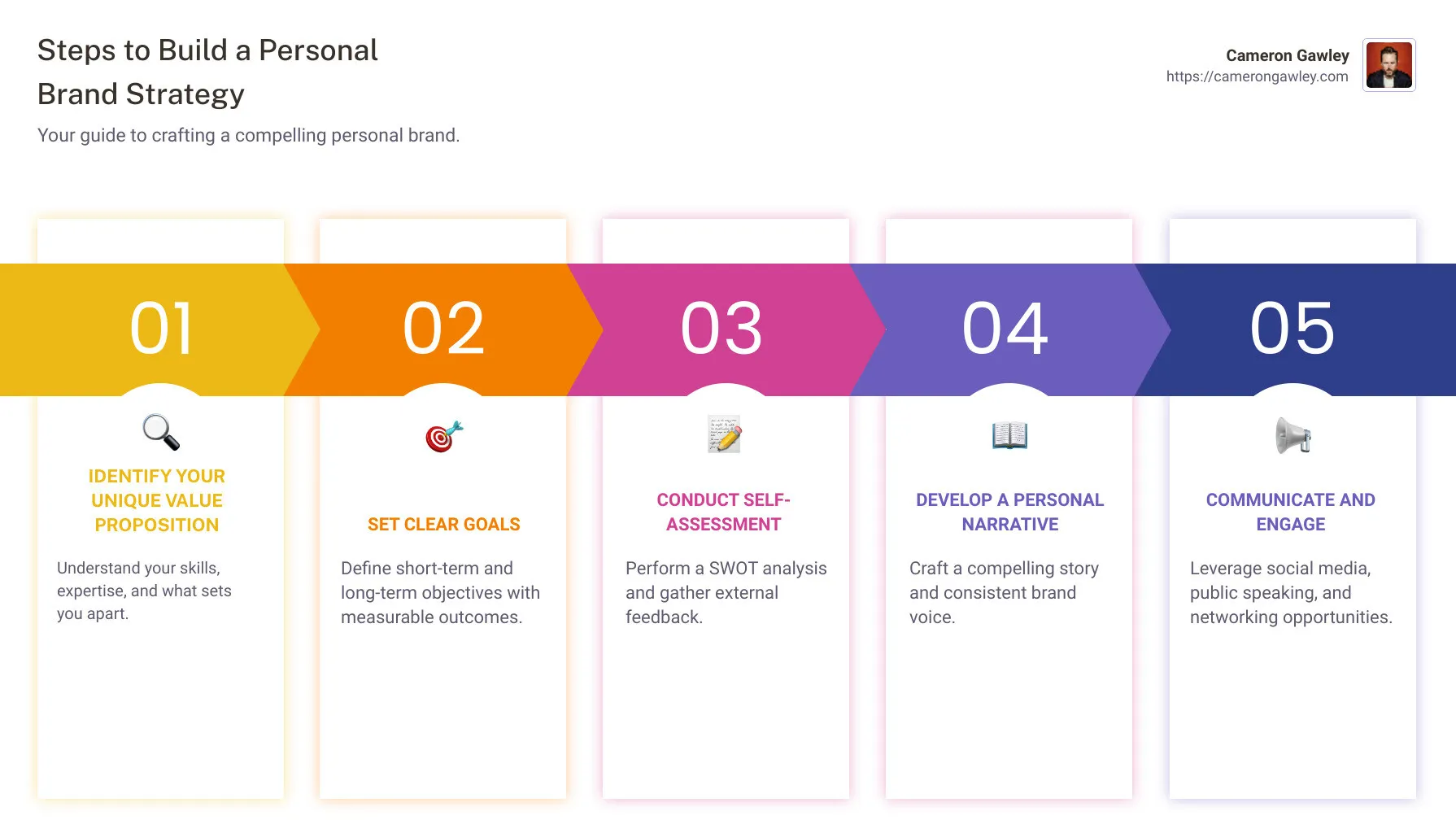
- Identify your unique value proposition
- Set clear short-term and long-term goals
- Conduct a thorough self-assessment and seek external feedback
- Develop a compelling personal narrative and consistent brand voice
- Embody and communicate your brand authentically across all platforms
- Engage with your target audience through social media and public speaking
- Regularly reevaluate and adjust your brand strategy
Building a personal brand is more important than ever in today's digital world. Your personal brand reflects who you are, what you stand for, and how you connect with your audience. A well-crafted personal brand can open doors, establish your credibility, and make you stand out in your industry.
Based in Dallas, I, Cameron Gawley, have built multiple successful brands and founded one of Texas's fastest-growing digital agencies by my 30s. With a relentless passion for brand building and growth strategies, I've guided many entrepreneurs to find their unique value proposition and succeed.
The journey of creating a brand strategy starts with understanding your purpose and defining your unique story.
Define Your Purpose
Identify Your Unique Value Proposition
To start building your personal brand strategy, you need to define what makes you unique. This is your unique value proposition (UVP). Your UVP is a combination of your skills, expertise, personal values, and motivations. It tells people why they should pay attention to you and what you bring to the table that others don’t.
Skills and Expertise
First, list out your skills and expertise. What are you exceptionally good at? What have you studied or worked on that sets you apart?
For example, if you are a digital marketer, your skills might include SEO, content creation, and social media strategy. Your expertise might be in growing small businesses or working with tech startups.
Personal Values and Motivations
Next, consider your personal values and motivations. What drives you? What principles guide your actions? Your values might include integrity, innovation, or customer focus. Your motivations could be things like helping others succeed, solving complex problems, or making a positive impact on your community.
Set Clear Goals
Once you have identified your unique value proposition, the next step is to set clear goals. These goals will guide your actions and help you measure your progress.
Short-Term and Long-Term Objectives
Start by defining your short-term and long-term objectives. Short-term goals are things you want to achieve in the next few months to a year. Long-term goals are what you aim to achieve in the next 5-10 years.
For example:- Short-Term Goal: Increase your LinkedIn followers by 20% in the next six months.- Long-Term Goal: Become a recognized thought leader in your industry within the next five years.
Measurable Outcomes
It’s important to make your goals measurable. This means you should be able to track your progress and know when you’ve achieved them.
For instance:- Instead of saying, "I want to grow my network," say, "I want to attend three industry conferences and connect with at least 50 new professionals by the end of the year."
Target Audience
Understanding your target audience is crucial. Who are you trying to reach with your personal brand? Are they potential employers, clients, or industry peers?
Knowing your audience helps you tailor your message and choose the right platforms to share your content. For example, if your target audience is young professionals, you might focus more on Instagram and LinkedIn.
Long-Term Vision
Finally, consider your long-term vision. What do you want your personal brand to achieve in the long run? This vision will keep you focused and motivated.
For example, your long-term vision might be to inspire and mentor the next generation of leaders in your industry. Or perhaps you want to start your own business and use your personal brand to attract clients and investors.
By identifying your unique value proposition and setting clear goals, you lay the foundation for a strong personal brand strategy. This clarity will guide you as you move forward and help you create a brand that truly represents who you are and what you stand for.
Next, we'll explore how to audit your personal brand equity and assess your current standing.
Audit Your Personal Brand Equity
Before you can improve your personal brand, you need to understand where you currently stand. This involves conducting a thorough self-assessment and gathering feedback from others. Let's dive into how to conduct a self-assessment and research how others view you.
Conduct a Self-Assessment
A self-assessment helps you identify your strengths, weaknesses, opportunities, and threats (SWOT analysis). This is a critical step in understanding your personal brand equity.
Strengths: What are you good at? What skills and talents set you apart? List your credentials, certifications, and any awards you've received.
Weaknesses: What areas do you need to improve? Recognizing your weaknesses can help you focus on personal development.
Opportunities: What opportunities are available to you? Are there emerging trends in your industry you can capitalize on?
Threats: What external factors could harm your personal brand? Are there industry changes or competitors that pose a risk?
By answering these questions, you can create a clear picture of where you stand and what you need to work on.
Research How Others View You
Understanding how others perceive you is just as important as knowing your own strengths and weaknesses. Here are a few ways to gather this information:
Peer Feedback: Ask colleagues, mentors, and friends for honest feedback. What do they see as your strengths and weaknesses?
Social Media Analysis: Look at how people engage with you on social media. Are there common themes in the comments or messages you receive?
Reputation Audit: Search your name online and see what comes up. Are the results positive or negative? What do they say about you?
Online Presence: Evaluate your social media profiles, personal website, and any other online platforms where you have a presence. Are they consistent with your personal brand?
By conducting a self-assessment and researching how others view you, you can identify areas for improvement and build a stronger personal brand.
Next, we'll explore how to construct your personal narrative and tell your story in a compelling way.
Construct Your Personal Narrative
Develop Your Brand Story
Storytelling is a powerful tool for building your personal brand. A well-crafted story can make you memorable and help you connect with your audience on a deeper level. Here’s how to develop your brand story:
1. Identify Key Messages: Start by pinpointing the central messages you want to convey about yourself. Are you an innovator? A problem-solver? A passionate advocate for a cause? Your key messages should reflect your values and expertise.
2. Share Personal Anecdotes: Use personal stories to illustrate your key messages. For example, if you’re an entrepreneur, share the story of how you started your first business. Personal anecdotes make your brand story relatable and engaging.
3. Highlight Memorable Experiences: Think about the experiences that have shaped you. These could be professional achievements, challenges you’ve overcome, or pivotal moments in your life. Highlighting these experiences can make your story more compelling.
4. Craft a Resonant Story: Make sure your story resonates with your audience. Understand their pain points and aspirations, and show how your journey aligns with theirs. This creates a connection that goes beyond just facts and figures.
Example: Take Alice Thorpe, a creator and designer. On her personal website, she shares a quick bio on the homepage and a longer story on the About page. Her story is not just about her professional journey but also about her personal experiences and the values that drive her work. This makes her brand relatable and authentic.
Create a Consistent Brand Voice
Once you have your brand story, it’s crucial to maintain a consistent brand voice across all communication channels. Here’s how to do it:
1. Define Your Tone and Style: Decide on the tone and style that best reflect your personality and brand. Are you casual and fun, or professional and serious? Your tone should be consistent across all platforms, from your website to your social media profiles.
2. Use the Same Language: Consistency in language helps reinforce your brand message. Use the same phrases and terminology in your speeches, articles, and social media posts. This creates a cohesive brand identity.
3. Optimize Communication Channels: Each platform has its own nuances. Tailor your content to fit the platform while maintaining your brand voice. For example, LinkedIn might require a more formal tone, while Instagram allows for a more relaxed and personal style.
4. Engage with Your Audience: Interaction is key. Respond to comments, participate in discussions, and engage with your audience in a way that reflects your brand voice. This builds trust and strengthens your brand.
Example: Avery Francis, founder of Bloom, used Twitter to engage her audience in choosing her headshot. This not only involved her audience in her brand-building process but also maintained a consistent and approachable brand voice.

By developing your brand story and maintaining a consistent brand voice, you can create a powerful and memorable personal brand. Next, we’ll explore how to embody your brand in daily interactions and maintain consistency across all platforms.
Embody Your Brand
Align Actions with Brand Values
To build a personal brand strategy that truly resonates, you need to embody your brand in everything you do. This starts with aligning your actions with your brand values.
Authenticity is key. Authenticity means being genuine and true to yourself. When your actions reflect your values, you build trust with your audience. For example, if you value transparency, be open about your processes and decisions. If you value innovation, always seek new ways to improve and share those innovations with your community.
Daily Interactions: Your everyday behavior should mirror your brand values. Whether you're at a networking event or posting on social media, consistency in your actions reinforces your brand.
Decision-Making: Every decision you make, big or small, should reflect your brand values. This includes how you handle customer feedback, choose business partners, and even how you respond to emails.
Professional Conduct: Always act professionally. This doesn't mean you can't be yourself—just be the best version of yourself. Treat everyone with respect, be punctual, and keep your promises.
Maintain Consistency Across Platforms
Consistency is crucial in building a strong personal brand. Your message should be uniform across all platforms to avoid confusing your audience.
Social Media: Each social media platform has its own vibe, but your core message should remain the same. For instance, if your brand is about empowering women in tech, every tweet, LinkedIn post, and Instagram story should align with that message.
Professional Networks: Platforms like LinkedIn are essential for professional branding. Make sure your profile is up-to-date, your posts are relevant, and your interactions are professional. Share industry insights, participate in discussions, and network with like-minded professionals.
Personal Website: Your website is your digital home. It should clearly showcase who you are, what you stand for, and what you offer. Use consistent fonts, colors, and messaging that align with your brand across all pages.
Example: Patricia Bright, a serial entrepreneur, maintains a consistent brand across her Instagram, professional website, and YouTube channel. On Instagram, she shares casual moments, while her website and YouTube channel focus on professional advice, all with an upbeat and powerful tone.
By aligning your actions with your brand values and maintaining consistency across platforms, you create a cohesive and trustworthy personal brand. Next, we’ll look at how to effectively communicate your brand to the world.
Communicate Your Brand
Leverage Social Media
Social media is a powerful tool for building your personal brand. It allows you to reach a broad audience and engage directly with your followers.
Platform Optimization: Choose platforms where your target audience is most active. Optimize your profiles with a consistent bio, professional photo, and relevant keywords. For example, LinkedIn is ideal for professional networking, while Instagram can showcase your personal side.
Content Sharing: Share a mix of content that reflects your expertise and personality. This can include blog posts, videos, infographics, and even quick polls to boost engagement.
Engagement: Respond to comments, join discussions, and engage with other users' content. Building relationships is key. According to Forbes, posting quality photos and videos from your work life can significantly increase engagement.
Example: Gary Vaynerchuk, a well-known entrepreneur, leverages multiple platforms like YouTube, LinkedIn, and Instagram to share his insights and engage with his audience. His consistent and high-quality content has made him a trusted name in the business world.
Utilize Public Speaking and Media Opportunities
Public speaking and media appearances can significantly boost your personal brand. They position you as an expert and increase your visibility.
Conferences: Attend and speak at industry conferences. This not only showcases your expertise but also allows you to network with other professionals. For instance, Visible Experts often use their speaking engagements to build long-term credibility.
Podcasts: Guest on podcasts relevant to your industry. Podcasts are a great way to share your knowledge with a dedicated audience.
Interviews: Get featured in interviews and articles. These can be in online publications, newspapers, or industry blogs.
Example: Katie Sturino, founder of Megababe, uses her platform to advocate for body acceptance. Her appearances on podcasts and interviews have helped her reach a wider audience and establish her brand.
Content Marketing: Consistently produce valuable content. This can include articles, webinars, and online courses. According to Forbes, sharing your expertise through content not only strengthens your brand but also demonstrates your commitment to helping others succeed.
By leveraging social media and utilizing public speaking and media opportunities, you can effectively communicate your brand to a wider audience. Next, we’ll explore how to socialize your brand through networking and collaborations.
Socialize Your Brand
Build a Supportive Network
Building a strong personal brand isn't just about you—it's about the people you connect with. Think of networking as planting seeds that will grow into fruitful relationships.
Mentors: A mentor can offer valuable guidance and insights. They have been through the ups and downs and can help you navigate your journey. Look for someone whose career you admire and who shares your values.
Peers: Your peers can provide support, feedback, and collaboration opportunities. Join industry groups and forums where you can engage with people at your level. According to Forbes, participating in social media discussions and attending industry events are great ways to connect with your peers.
Industry Leaders: Building relationships with industry leaders can open doors you didn’t even know existed. They can offer you opportunities, introduce you to new contacts, and provide a platform for you to showcase your skills.
Engage with Influencers
Collaborating with influencers can significantly boost your personal brand. Here’s how to do it effectively:
Collaborations: Partner with influencers for projects like guest blogging, co-hosted webinars, or joint ventures. These collaborations can help you reach a broader audience. Forbes suggests that partnering with well-respected influencers can increase your visibility and strengthen your brand.
Endorsements: An endorsement from a well-known influencer can be a game-changer. It provides social proof that you are credible and trustworthy. Make sure to seek endorsements from people who genuinely believe in your work.
Shared Content: Sharing content from influencers and tagging them can help you get on their radar. It shows that you value their insights and are willing to promote their work. This can lead to reciprocal actions and build a mutually beneficial relationship.
By building a supportive network and engaging with influencers, you can significantly amplify your personal brand. Next, we’ll discuss how to reevaluate and adjust your brand to ensure it remains relevant and impactful.
Reevaluate and Adjust Your Brand
Conduct Regular Brand Audits
To keep your personal brand strong and relevant, it's crucial to conduct regular brand audits. This means evaluating how your brand is performing and identifying areas for improvement.
Annual Audit: Every year, take a deep dive into your brand. Look at your goals, achievements, and how well your brand aligns with your mission and values. This helps you stay on track and make necessary adjustments.
Feedback Loops: Create a system to regularly gather feedback from your audience, peers, and mentors. This input is invaluable for understanding how your brand is perceived and identifying areas for growth.
Performance Metrics: Track key metrics like social media engagement, website traffic, and content performance. These numbers will give you a clear picture of what's working and what needs tweaking.
Audience Feedback: Listen to your audience. Their comments, messages, and reviews can provide insights into what they value and expect from you.
Brand Health: Assess the overall health of your brand. Are you still resonating with your audience? Is your message clear and consistent? A healthy brand is one that remains true to its core values while adapting to changes.
Adapt to Market Changes
The world is constantly evolving, and your personal brand should too. Adapt to market changes to stay relevant and ahead of the curve.
Trends: Keep an eye on industry trends. What’s new and exciting? Incorporate relevant trends into your brand strategy to show that you’re current and forward-thinking.
New Opportunities: Be open to new opportunities. This could mean exploring new platforms, collaborating with different influencers, or branching out into new areas of expertise.
Evolving Goals: Your goals will change over time, and that's okay. Regularly revisit and adjust your goals to reflect your current aspirations and market conditions.
By conducting regular brand audits and adapting to market changes, you ensure that your personal brand remains strong, relevant, and impactful. This continuous improvement process is key to long-term success in building a personal brand strategy.
Frequently Asked Questions about Personal Branding
How to create a personal branding strategy?
Creating a personal branding strategy involves a seven-step process to ensure your brand is clear, consistent, and impactful.
- Define Your Purpose: Start by understanding your mission, passion, and strengths. Think about whom you want to influence and how you can make a difference.
- Audit Your Personal Brand Equity: Conduct a self-assessment and gather feedback from peers and online presence. This helps you understand your current brand perception.
- Construct Your Personal Narrative: Develop your brand story by identifying key messages and personal anecdotes that resonate with your audience.
- Embody Your Brand: Align your actions with your brand values and maintain consistency across all platforms and interactions.
- Communicate Your Brand: Leverage social media, public speaking, and other media opportunities to share your brand message.
- Socialize Your Brand: Build a supportive network and engage with influencers to expand your reach and credibility.
- Reevaluate and Adjust Your Brand: Regularly conduct brand audits and adapt to market changes to keep your personal brand relevant and impactful.
By following these steps, you can create a robust personal brand strategy that reflects your unique value and connects with your target audience.
What are the 5 C's of personal branding?
The 5 C's of personal branding are essential elements that help you build and maintain a strong personal brand:
- Clarity: Be clear about who you are, what you stand for, and what you offer. This helps your audience understand your brand quickly and easily.
- Consistency: Maintain a consistent message, tone, and visual identity across all platforms. This builds trust and reinforces your brand.
- Content: Create valuable and relevant content that showcases your expertise and engages your audience. This positions you as a thought leader in your field.
- Connection: Build meaningful relationships with your audience and peers. Engaging with your community fosters loyalty and amplifies your brand message.
- Confidence: Believe in your brand and communicate it with confidence. Your self-assurance will inspire trust and attract followers.
What are the 4 P's of personal branding?
The 4 P's of personal branding highlight the key attributes needed to build a successful personal brand:
- Perfection: Strive for excellence in everything you do. Deliver high-quality work and continuously improve your skills.
- Passion: Be passionate about your work and your brand. Your enthusiasm will resonate with your audience and drive your success.
- Proactivity: Take initiative and be proactive in building your brand. Seek out opportunities, create content, and engage with your audience regularly.
- Perseverance: Stay committed to your brand-building efforts, even when faced with challenges. Consistent effort over time leads to long-term success.
By focusing on these attributes, you can create a personal brand that stands out and makes a lasting impact.
Conclusion
Building a personal brand is a journey that requires dedication, strategy, and continuous improvement. By defining your purpose, setting clear goals, and creating a consistent brand voice, you can establish a strong personal brand that resonates with your audience.
At Cameron Gawley, we understand the importance of personal branding in today’s competitive landscape. Our entrepreneurial vision focuses on empowering individuals to create authentic and impactful brands. We believe that a well-crafted personal brand can open doors to new opportunities, foster meaningful connections, and drive growth.
Mentorship plays a crucial role in this journey. Learning from experienced professionals can provide valuable insights and guidance. Cameron Gawley offers mentorship programs designed to help you navigate the complexities of personal branding and achieve your goals.
Growth strategies are essential to maintaining and expanding your brand’s influence. Regularly auditing your brand, adapting to market changes, and engaging with your audience can ensure that your brand remains relevant and impactful. By leveraging social media, public speaking, and collaborations, you can amplify your reach and reinforce your brand’s message.
Personal branding is not a one-time effort but a continuous process. Stay authentic, be consistent, and keep telling your story. Your brand is a reflection of who you are, and with the right strategy, you can make a lasting impact.
Ready to take your personal brand to the next level? Explore our brand building services and let us help you create a brand that stands out and drives success.
By focusing on these key elements, you can build a personal brand that not only represents your unique value but also propels your career forward.