

Mastering Your Digital Brand: Introduction
When it comes to how to build a digital brand strategy, there are several key steps to ensure success. Here’s a quick overview to get you started:
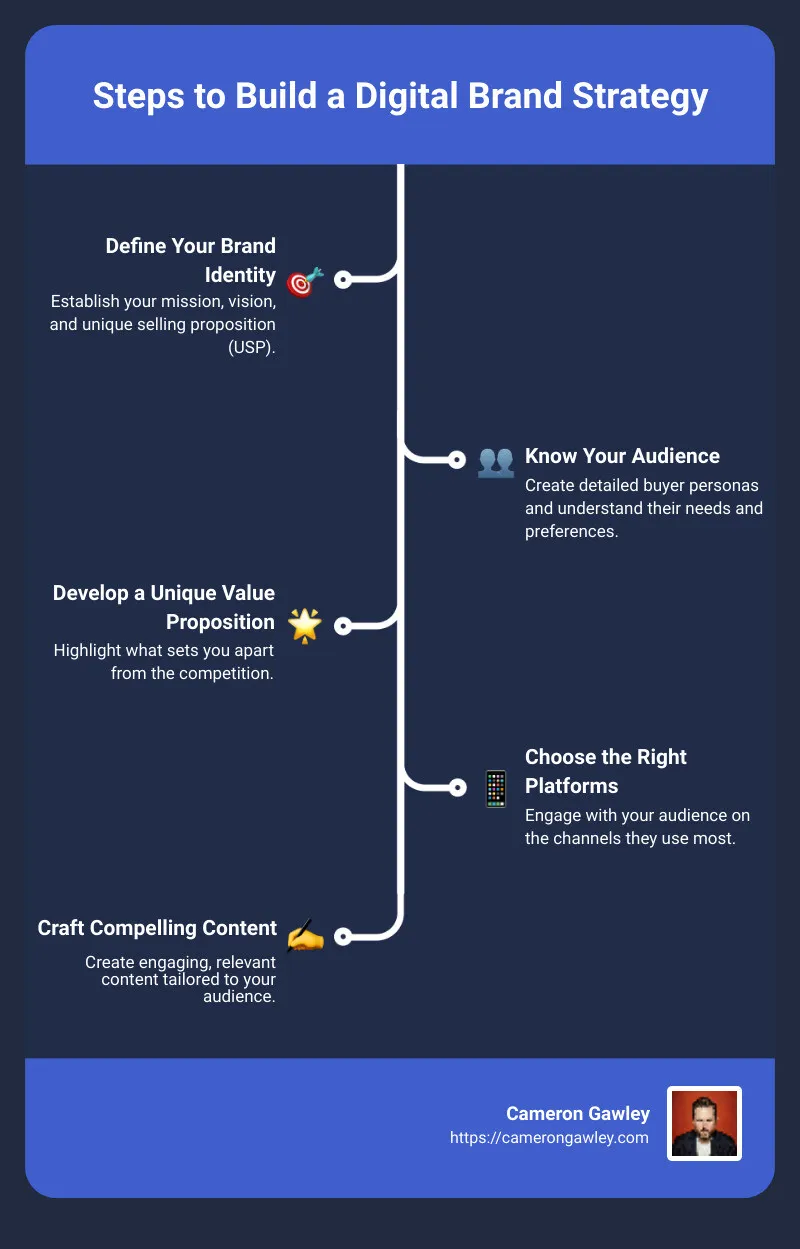
- Define Your Brand Identity: Establish your mission, vision, and unique selling proposition (USP).
- Know Your Audience: Create detailed buyer personas and understand their needs and preferences.
- Develop a Unique Value Proposition: Highlight what sets you apart from the competition.
- Choose the Right Platforms: Engage with your audience on the channels they use most.
- Craft Compelling Content: Create engaging, relevant content tailored to your audience.
- Create a Cohesive Design: Ensure your brand's visual elements are consistent and memorable.
- Monitor and Analyze Performance: Track your key metrics and refine your strategy as needed.
In the changing digital landscape, building a strong brand isn't just about having a catchy logo or a pretty website. It's about fostering customer loyalty, creating a memorable brand identity, and ultimately driving sales growth. Digital branding leverages the vast reach of the internet to communicate who you are and what you stand for, ensuring your brand resonates deeply with your audience.
As Cameron Gawley, an experienced entrepreneur and brand builder, I've had the privilege of working with numerous organizations to build effective digital brands. With my background in digital strategy, I'll guide you on the critical steps to formulating a digital brand strategy that not only improves customer loyalty but also boosts sales.
Now, let’s dive deeper into what a digital brand strategy entails and why it’s crucial for your business.
What is a Digital Brand Strategy?
A digital brand strategy is your blueprint for building a strong online presence that sets your business apart from competitors. It combines elements of brand identity, mission, vision, unique selling proposition (USP), and customer loyalty to create a cohesive and compelling digital footprint.
Brand Identity
Your brand identity is how your business presents itself to the world. It includes everything from your logo and color palette to your tone of voice and messaging. Think of it as the personality of your brand. A strong brand identity makes your business recognizable and memorable.
For example, Apple's minimalist design and innovative messaging make it instantly recognizable. Similarly, your brand identity should be unique and consistent across all digital platforms.
Mission
Your mission statement is the core of why you exist. It’s a clear and concise declaration of your business's purpose and goals. This statement should inspire both your team and your customers.
For instance, Google’s mission is "to organize the world's information and make it universally accessible and useful." This mission drives all their digital strategies and initiatives.
Vision
Your vision is a forward-looking statement that outlines where you see your business in the future. It should be aspirational and align with your mission. A strong vision helps guide your strategic decisions and inspires your team to work towards a common goal.
Tesla’s vision, "to create the most compelling car company of the 21st century by driving the world’s transition to electric vehicles," is a great example of a clear and motivating vision.
Unique Selling Proposition (USP)
Your USP is what sets you apart from the competition. It’s the unique benefit or feature that makes your product or service stand out. Identifying your USP is crucial for differentiation in a crowded market.
For example, TOMS Shoes' USP is their "One for One" model, where they donate a pair of shoes for every pair sold. This unique approach not only differentiates them but also builds customer loyalty.
Customer Loyalty
Building customer loyalty is essential for long-term success. Loyal customers are more likely to make repeat purchases and recommend your brand to others. A strong digital brand strategy includes tactics to engage and retain customers.
Consider how Amazon Prime builds loyalty through exclusive benefits like free shipping and access to streaming services. These perks keep customers coming back and create a sense of community around the brand.
By focusing on these core elements, you can create a digital brand strategy that not only attracts but also retains customers, driving long-term success for your business.
Now, let’s dive deeper into understanding your audience and how to tailor your digital brand strategy to meet their needs.
Why is a Digital Brand Strategy Important?
Building a digital brand strategy is crucial for several reasons. It helps establish brand trust, fosters customer loyalty, increases company value, boosts sales, and reduces employee turnover. Let's break these down.
Brand Trust
A company without a brand is like a person with no personality—boring and untrustworthy. Consumers are more likely to buy from brands they trust. In fact, 81% of consumers say that trust is the leading factor in their purchasing decisions. By maintaining a consistent and authentic digital presence, you can build and sustain this trust.
Customer Loyalty
When customers trust your brand, they are more likely to stay loyal. Consistency in your brand’s message and values makes customers 33% more likely to stay loyal and 27% more likely to advocate for your brand. Look at Amazon Prime, which offers exclusive benefits like free shipping and streaming services. These perks not only attract customers but also keep them coming back, creating a sense of community.
Company Value
A strong digital brand strategy can significantly increase your company’s value. Investors and stakeholders are more likely to invest in a company with a strong, recognizable brand. This is because a well-established brand often translates to customer loyalty and market stability, making the company a safer investment.
Sales Boost
A cohesive digital brand strategy can also lead to a significant boost in sales. By clearly communicating your brand’s mission, vision, and unique value proposition, you can attract more customers and convert them into buyers. For example, companies that leverage digital branding effectively often see higher engagement rates, which directly impact sales figures.
Employee Turnover
Believe it or not, a strong digital brand strategy can also reduce employee turnover. Employees are more likely to stay with a company that has a strong, positive brand image. They feel proud to be associated with a reputable brand, which boosts morale and job satisfaction. According to research, companies with strong brands have lower turnover rates, which saves on recruitment and training costs.
By focusing on these core elements, you can create a digital brand strategy that not only attracts but also retains customers, driving long-term success for your business.
Now, let’s dive deeper into understanding your audience and how to tailor your digital brand strategy to meet their needs.
How to Build a Digital Brand Strategy
Determine Your Brand’s Mission and Vision
Your brand's mission and vision are the bedrock of your digital brand strategy. They define your brand's purpose, values, and long-term goals. Think of your mission statement as a clear, concise declaration of who you are and what you do. Your vision, on the other hand, outlines why you do it and what you aim to achieve in the future.
Mission Statement: This should articulate your brand's purpose and core activities. For example, if you're an eco-friendly clothing brand, your mission might be to create sustainable fashion that reduces environmental impact.
Vision: This goes a step further, detailing your long-term aspirations. Continuing with the eco-friendly clothing brand example, your vision could be to lead the industry in sustainable practices and inspire a global shift towards eco-conscious fashion.
Example: TOMS Shoes has a straightforward mission: "For every pair of shoes sold, a pair is given to a child in need." Their vision extends this idea by aiming to improve lives through business.
Understand Your Audience
Knowing your audience is crucial for tailoring your digital brand strategy effectively. Begin by defining your target audience through detailed buyer personas. These personas should include demographics (age, gender, income) and psychographics (interests, values, pain points).
Audience Segmentation: Divide your audience into specific groups based on shared characteristics. This helps in creating personalized marketing campaigns. For instance, segmenting by age can help you tailor your social media content to different generations.
Example: A fitness brand might have segments like "young professionals," "stay-at-home parents," and "senior fitness enthusiasts."
Create a Unique Value Proposition
Your unique value proposition (USP) sets you apart from competitors by highlighting what makes your brand special. It should clearly communicate the benefits customers will get from your products or services.
Differentiation: Identify what makes your brand unique. This could be superior product quality, exceptional customer service, or innovative features.
Customer Benefits: Focus on how your brand adds value to your customers' lives. For example, if you offer a meal delivery service, your USP could be the convenience and health benefits of freshly prepared meals delivered to your door.
Choose the Right Platforms
Selecting the right digital platforms is essential for reaching your target audience effectively. Your choice should be guided by where your audience spends their time online.
Social Media: Platforms like Facebook, Instagram, Twitter, and LinkedIn each have unique audiences. Choose the ones that align with your target demographics.
Websites and Digital Channels: Your website is your digital storefront. Ensure it's user-friendly, mobile-optimized, and aligned with your brand's visual identity.
Example: A B2B company might focus on LinkedIn for professional networking, while a fashion brand might leverage Instagram for its visual appeal.
Craft Compelling Content
Content creation is a powerful tool for engaging your audience and building brand loyalty. Your content should tell your brand's story and provide value to your audience.
Storytelling: Use narratives to connect with your audience on an emotional level. Share your brand's journey, challenges, and successes.
Content Types: Diversify your content to keep your audience engaged. This can include blog posts, videos, podcasts, and infographics.
Example: A tech company could create how-to videos and blog posts that help users get the most out of their products.
Establish a Cohesive Design
Your brand's visual identity is a key component of your digital brand strategy. It should be consistent across all platforms to create a unified brand experience.
Color Palette, Logo, Font: Choose colors, fonts, and a logo that reflect your brand's personality. Consistency in these elements helps in building brand recognition.
Photography Style: Use a consistent style for images and videos to maintain a cohesive look and feel.
Example: Apple's minimalist design and consistent use of white space and clean lines are instantly recognizable.
Monitor and Analyze Performance
Tracking performance metrics is essential for understanding the effectiveness of your digital brand strategy. Use data to make informed decisions and optimize your strategy.
Performance Metrics: Key metrics include engagement rates, conversion rates, and website traffic. Tools like Google Analytics can provide valuable insights.
Data Analysis: Regularly review your data to identify trends and areas for improvement. Adjust your strategy based on what the data tells you.
Example: If you notice high engagement on video content, you might decide to invest more in video production.
By focusing on these core elements, you can create a digital brand strategy that not only attracts but also retains customers, driving long-term success for your business.
Now, let’s dive deeper into understanding your audience and how to tailor your digital brand strategy to meet their needs.

Frequently Asked Questions about Building a Digital Brand Strategy
How do I create a digital strategy?
Creating a digital strategy involves several key steps:
- Business Goals: Start by defining your business goals. What do you want to achieve? Whether it's increasing sales, boosting brand awareness, or improving customer loyalty, your goals will shape your strategy.
- Digital Presence: Establish your digital presence by creating websites, social media profiles, and other online assets. This is where your audience will interact with your brand.
- Target Audience: Understand who your target audience is. Create detailed buyer personas and segment your audience based on demographics and psychographics.
- Competitive Analysis: Analyze your competitors to understand their strengths and weaknesses. This will help you identify opportunities and threats in the market.
- SMART Goals: Set specific, measurable, attainable, relevant, and time-bound (SMART) goals. This ensures your objectives are clear and achievable.
- Digital Channels: Choose the right digital channels to reach your audience. This could include social media, email marketing, SEO, and more.
- Content Strategy: Develop a content strategy that aligns with your brand's voice and message. This includes blogs, videos, podcasts, and other content types.
How do you structure a digital strategy?
Structuring a digital strategy involves several components:
- Strategic Impact: Identify the impact you want your digital strategy to have on your business. This could range from increasing market share to enhancing customer engagement.
- Digital Ambition: Define your digital ambition. Are you looking to be a leader in your industry or a niche player? Your ambition will guide your strategy.
- Big Bets: Focus on a few big bets that can drive significant results. This could be a major marketing campaign, a new product launch, or a technology investment.
- Strategic Muscles: Develop the strategic muscles needed to execute your strategy. This includes building capabilities in areas like data analytics, content creation, and social media management.
- Transformation Management: Manage the transformation process by setting clear milestones and tracking progress. This ensures your strategy stays on track and adapts to changes in the market.
What are the 4 steps in building brand strategy?
Building a brand strategy involves four essential steps:
- Company Understanding: Gain a deep understanding of your company’s mission, vision, and values. This forms the foundation of your brand strategy.
- Audience Learning: Learn about your audience’s needs, preferences, and pain points. This helps you create a brand that resonates with them.
- Brand Message: Develop a clear and compelling brand message. This should communicate your unique value proposition and differentiate you from competitors.
- Brand Growth Tracking: Track the growth of your brand by monitoring key performance indicators (KPIs). This helps you measure success and make necessary adjustments.
By following these steps, you can create a robust digital brand strategy that drives long-term success for your business.
Conclusion
Building a digital brand strategy is crucial for any business aiming to thrive in the online world. By following the steps outlined in this article, you can create a strong digital presence that resonates with your audience and sets you apart from competitors.
At Cameron Gawley, we specialize in brand building, offering entrepreneurial guidance and growth strategies tailored to your unique needs. Our mentorship approach ensures that you not only develop a robust digital brand but also sustain long-term growth.
Key Takeaways:
- Brand Building: Establish a clear and compelling brand identity that communicates your unique value proposition.
- Entrepreneurial Guidance: Leverage expert advice to navigate the complexities of digital branding.
- Growth Strategies: Implement effective strategies that drive brand awareness, engagement, and loyalty.
- Mentorship: Benefit from personalized mentorship to continuously refine and enhance your digital brand strategy.
A well-crafted digital brand strategy is more than just a plan; it's a roadmap to achieving your business goals and creating lasting connections with your audience.
For more insights and personalized support in building your digital brand, visit our brand services page.
By focusing on these essential tips and leveraging expert guidance, you can build a digital brand strategy that not only meets but exceeds your business objectives. Let's get started on creating a brand that stands out and thrives in the digital landscape.