

The Significance of a Brand Building Strategy
Brand building strategy is essential for any business aiming for long-term success. Why? Because a strong brand makes a lasting first impression.
Here are some key points about the importance of a brand strategy:
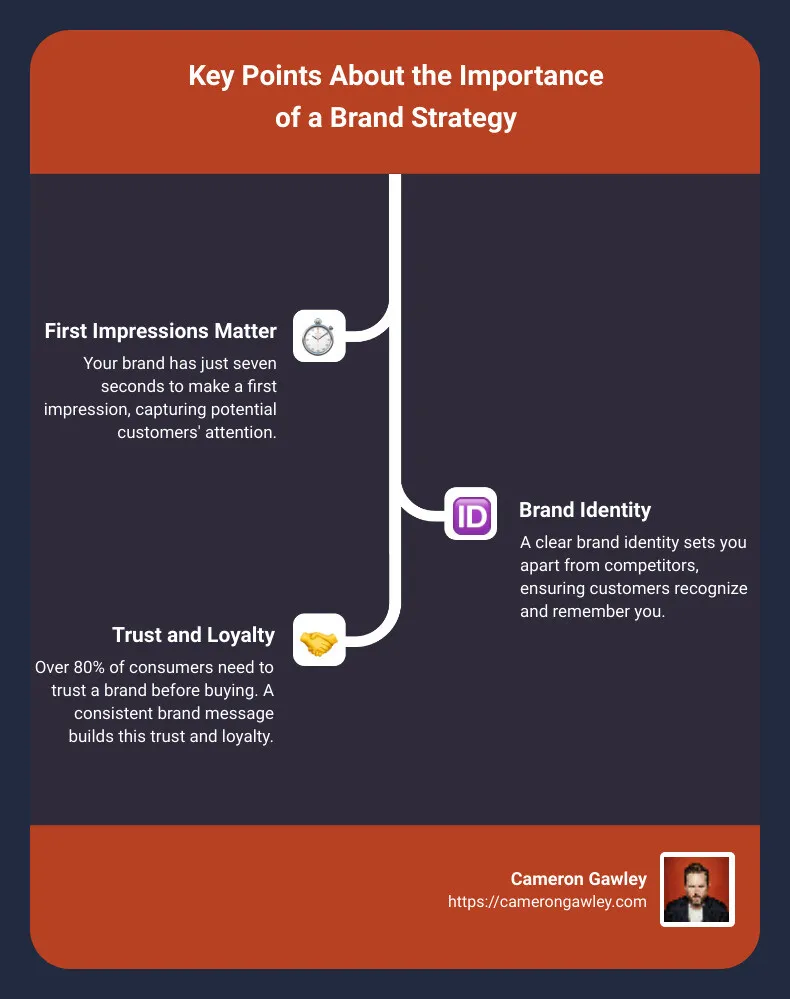
- First Impressions Matter: Your brand has just seven seconds to make a first impression, capturing potential customers' attention.
- Brand Identity: A clear brand identity sets you apart from competitors, ensuring customers recognize and remember you.
- Trust and Loyalty: Over 80% of consumers need to trust a brand before buying. A consistent brand message builds this trust and loyalty.
- Target Market: Understanding your target market is crucial for delivering the right message and positioning your brand effectively.
I'm Cameron Gawley, an expert in brand building strategy with a history of helping companies achieve scalable growth. My journey in the field includes founding one of Texas's fastest-growing digital strategy agencies and crafting successful brand strategies for top consumer brands.
Ready to dive deeper into building a powerful brand strategy? Let's explore the core elements and actionable steps to elevate your brand's visibility and credibility.
What is Brand Building Strategy?
A brand building strategy is a comprehensive plan that helps you create a unique identity for your company. It's about more than just a logo or a catchy slogan. It's about creating trust, fostering loyalty, and ensuring your brand is recognized by your target audience.
Brand Identity
Brand identity includes the visual and vocal elements that make your brand distinct. This encompasses your logo, color scheme, typography, and even the tone of voice you use in communications. A strong brand identity makes your brand memorable and easily recognizable.
Unique Identity
Your brand's unique identity sets you apart from competitors. It's what makes you different and special in the eyes of your customers. This could be a unique product feature, exceptional service, or even the story behind your brand.
For example, LEGO's mission to "inspire and develop the builders of tomorrow" has created a unique identity that goes beyond selling toys. They focus on developing creativity and skills in children, which sets them apart in the toy industry.
Trust and Loyalty
Building trust and loyalty is essential for long-term success. Over 80% of consumers say they need to trust a brand before making a purchase. Trust is built through consistent quality, transparent communication, and delivering on promises. Loyalty follows when customers feel valued and understood.
Recognition
Recognition is about making your brand easily identifiable. Think about the Nike tick or the McDonald's sign. These symbols are instantly recognizable and associated with specific values and experiences. Consistent use of your brand elements across all platforms ensures that your audience can easily identify you.
Target Audience
Knowing your target audience is crucial. You can't appeal to everyone, so focus on those who are most likely to benefit from your product or service. This involves market research, creating user personas, and understanding their needs and preferences.
For instance, imagine trying to sell a vegan steak to a group of carnivores. It just won't work. Understanding your audience ensures you deliver the right message to the right people.
Brand Message
Your brand message is the core idea you want to communicate. It should be clear, compelling, and consistent across all channels. This message should convey your brand's mission, values, and what sets you apart.
For example, KFC's slogan "It's finger lickin' good" immediately tells you what the brand is about—delicious, satisfying food.
Ready to dive deeper into building a powerful brand strategy? Let's explore the core elements and actionable steps to elevate your brand's visibility and credibility.
Key Elements of a Successful Brand Strategy
Purpose
Your brand's purpose is the "why" behind your existence. It's not just about making money; it's about making a difference. Think of it as your brand's mission. What needs are you addressing for your customers? Why does your brand exist?
For example, LEGO's mission is "to inspire and develop the builders of tomorrow." This purpose goes beyond just selling toys; it's about fostering creativity and development in children.
Brand Values
Brand values are the core principles that guide your company's actions and decisions. They shape your brand's character and the way you interact with customers. These values should be clear and resonate with your audience.
A strong value proposition is essential here. It's a statement that explains how your product or service solves a problem, delivers specific benefits, and why customers should choose you over competitors.
For instance, Telesign's value proposition focuses on security and reliability, which are critical for its multinational clients like Microsoft.
Voice and Tone
Your brand's voice is its personality. It's how you sound to your audience, whether you're speaking through a blog post, a tweet, or an email. Consistency is key. Your brand's voice should be recognizable and consistent across all channels.
Tone is more about the subtle variations in your voice depending on the context. For example, your tone might be formal in a press release but more casual on social media. The goal is to stay true to your brand personality while adapting to different situations.
Design and Visual Identity
Design and visual identity are the first things people notice about your brand. Consistent design elements like brand colors, typography, and graphics help create a cohesive look and feel. This makes your brand more memorable and recognizable.
Your logo should be simple yet distinctive. Your typography should be legible and reflect your brand's personality. Your color scheme should evoke the right emotions and align with your brand values.
For instance, the Nike swoosh and McDonald's golden arches are instantly recognizable symbols that convey strong brand identities.
Brand Story
Your brand story is a powerful tool for building an emotional connection with your audience. It's about sharing what makes your brand unique and why it matters. A compelling brand story can differentiate you from competitors and make your brand more memorable.
LEGO's story, for example, isn't just about selling toys. It's about inspiring creativity and development. This narrative has helped LEGO build a strong emotional connection with its audience over the years.
Ready to take actionable steps to elevate your brand's visibility and credibility? Let's explore the practical steps you can take to build a powerful brand strategy.
Steps to Building a Brand Strategy
Ready to take actionable steps to elevate your brand's visibility and credibility? Let's explore the practical steps you can take to build a powerful brand strategy.
1. Identify Your Target Audience
Start by knowing who you're talking to. Conduct market research to understand who your ideal customers are. Create user personas that include demographics, interests, and needs.
Example: If you're selling eco-friendly products, your target audience might be environmentally conscious millennials.
2. Establish a Unique Position in the Market
Identify what sets you apart from your competitors. This is your market position. Craft a positioning statement that clearly defines your unique value.
Example: Telesign updated their brand message to make their complex offerings easier to understand, which shortened their sales cycle and increased revenue.
3. Craft a Compelling Message
Your message should reflect your brand personality and mission. Make it emotionally engaging to connect with your audience on a deeper level.
Example: IKEA's mission to "create a better everyday life" goes beyond selling furniture and resonates with their customers' values.
4. Develop an Engaging Visual Identity
Your visual identity includes your logo, typography, and color palettes. Consistency is key. Use a style guide to keep your brand visuals uniform across all platforms.
Example: The Nike "swoosh" logo is instantly recognizable and consistent across all their marketing materials.
5. Use Technology to Reach Your Audience
Leverage social media, SEO, and digital marketing to engage your audience. Use data to refine your approach and ensure you're reaching the right people.
Example: LEGO uses social media to engage with their audience by sharing user-generated content and interactive posts.
6. Analyze and Refine Your Strategy Regularly
Track audience response, competitor analysis, and KPIs. Regularly adjust your strategy based on these insights to stay relevant and effective.
Example: Heller Consulting redefined their brand after realizing they were perceived too narrowly. This adjustment helped them better align their services with client needs.
By following these steps, you'll be well on your way to building a robust brand strategy that sets you apart and resonates with your audience. Now, let's dive deeper into how professional services can develop a brand strategy tailored to their unique needs.
1. Identify Your Target Audience
Before you can build a successful brand, you need to know who you're trying to reach. This involves thorough market research to understand your audience's demographics, needs, and preferences.
Market Research
Market research is the foundation of identifying your target audience. It involves collecting data about your potential customers to understand their behaviors, preferences, and pain points.
Steps to Conduct Market Research:1. Surveys and Questionnaires: Send out surveys to gather information directly from your audience.2. Social Media Analysis: Observe interactions and feedback on social media platforms.3. Competitor Analysis: Study your competitors to see who they are targeting and how.
User Personas
Creating user personas helps you visualize your ideal customers. These personas are detailed descriptions of fictional characters that represent different segments of your audience.
Components of a User Persona:- Name and Demographics: Give your persona a name, age, gender, and location.- Background: Include their job, education, and family life.- Goals and Challenges: What are they trying to achieve, and what obstacles do they face?- Interests and Hobbies: What do they do in their free time?
Example: If you are selling wedding dresses, one of your personas might be "Emily," a 28-year-old bride-to-be who wants a beautiful wedding on a budget.
Demographics
Understanding the demographics of your audience is crucial for tailoring your brand message.
Key Demographic Factors:- Age: Different age groups have different needs and preferences.- Gender: Some products may appeal more to one gender than the other.- Location: Knowing where your audience lives can help you tailor your marketing efforts.- Income Level: This affects purchasing power and influences buying decisions.
Customer Needs
To connect with your audience, you must understand their needs and how your product or service can meet them.
Identifying Customer Needs:- Pain Points: What problems are they facing that your product can solve?- Desires: What do they hope to achieve or experience?- Expectations: What do they expect from a product or service like yours?
Example: If you find that many of your first-time buyers never return, you might need to implement a loyalty program to encourage repeat business.
By thoroughly understanding your target audience through market research, user personas, demographics, and customer needs, you can craft a brand strategy that resonates and drives engagement.
Next, let's explore how to establish a unique position in the market.
2. Establish a Unique Position in the Market
Creating a unique market position is crucial for standing out in a crowded marketplace. This involves understanding your market position, identifying your differentiators, and crafting a compelling positioning statement.
Market Position
Your market position is how your brand is perceived relative to competitors. To determine this, conduct a competitive analysis. Understand what competitors offer, their strengths and weaknesses, and how they engage with customers.
For example, when Biohm probiotics entered the market, they didn't have the resources to create a new market. Instead, they positioned themselves within the existing probiotic space and focused on educating customers about their unique benefits. This strategy helped them sell out of inventory three times in the opening months.
Differentiation
Differentiation is about identifying what makes your brand unique. Ask yourself:
- What unique benefits do you offer?
- How does your product or service solve problems differently?
- What values and missions set you apart?
Take IKEA, for instance. Their vision isn't just to sell furniture but to "create a better everyday life." This purpose-driven approach differentiates them from other furniture retailers by emphasizing their commitment to improving customer’s lives.
Positioning Statement
A positioning statement succinctly captures your brand's unique value. It's typically 4-6 sentences long and should be:
- Clear: Easily understood by your target audience.
- Unique: Highlight what sets you apart.
- Relevant: Address the needs and desires of your audience.
- Aspirational: Reflect where you want your brand to go.
Here's a simple formula to help create your positioning statement:
For [target audience], [brand] is the [category] that [unique benefit] because [reason to believe].
Example: For health-conscious individuals, Biohm is the probiotic that balances both bacteria and fungi because it is scientifically formulated to support digestive health.
Case Study Example
Nike's evolution is a great example of strategic brand positioning. Initially targeting top athletes, they broadened their scope to include anyone who values health and fitness. This shift helped them become a household name, with a brand strategy that appeals to a wider audience.
By establishing a unique position in the market, you can differentiate your brand, attract your target audience, and build a loyal customer base.
Next, let's dive into crafting a compelling message.
3. Craft a Compelling Message
Crafting a compelling message is crucial for building a strong brand. Your message should reflect your brand personality, clearly state your mission, and create an emotional connection with your audience.
Brand Personality
Your brand personality is the human characteristics associated with your brand. It shapes how people perceive your brand and interacts with it. Think of it as the way your brand "speaks" and "behaves."
- Friendly and Approachable: Brands like Coca-Cola use a warm, inclusive tone that makes them feel like a friend.
- Innovative and Cutting-Edge: Apple’s sleek, modern design and forward-thinking language position it as a leader in innovation.
Define your brand personality by considering how you want your audience to feel when they interact with your brand.
Mission Statement
A mission statement is a concise explanation of your brand's purpose. It should answer why your brand exists and what it aims to achieve.
For example, IKEA's mission is "to create a better everyday life for the many people." This statement goes beyond selling furniture; it promises to improve daily living.
Your mission statement should be:
- Clear and Concise: Avoid jargon and keep it simple.
- Inspirational: It should motivate both your team and your customers.
- Aligned with Values: Ensure it reflects your core values and long-term goals.
Emotional Connection
Creating an emotional connection with your audience is about making them feel something when they think of your brand. Emotional connections drive loyalty and repeat business.
How to Create an Emotional Connection:
- Tell a Story: Share your brand's journey, challenges, and successes. People remember stories more than facts.
- Solve Problems: Show how your product or service can make your customers' lives better.
- Use Visuals: Consistent and appealing visuals can evoke emotions. For instance, the use of color can influence mood—blue for trust, red for excitement.
Case Study Example
Consider the success of Dove’s "Real Beauty" campaign. Dove shifted its messaging to focus on real women and self-esteem, creating a deep emotional connection with its audience. This approach not only boosted sales but also strengthened brand loyalty.
Practical Tips
- Consistency is Key: Ensure your message is consistent across all platforms—social media, website, emails, and advertisements.
- Know Your Audience: Tailor your message to resonate with your specific target audience.
- Be Authentic: Authenticity builds trust. Be genuine in your messaging and avoid over-promising.
By crafting a compelling message that reflects your brand personality, clearly states your mission, and creates an emotional connection, you can build a strong brand that resonates with your audience.
Next, let’s explore how to develop an engaging visual identity.
4. Develop an Engaging Visual Identity
Your visual identity is the face of your brand. It’s how people recognize you at a glance. A strong visual identity includes your logo, typography, color palettes, and style guide. Let’s break these down:
Logo
Your logo is the most recognizable part of your brand. Think of the Nike swoosh or the McDonald's golden arches. A great logo should be:
- Simple: Easy to recognize and remember.
- Versatile: Looks good in different sizes and formats.
- Relevant: Reflects your brand’s personality and values.

Typography
Typography is more than just picking a font. It’s about creating a visual hierarchy and ensuring readability. Your typography should:
- Match Your Brand Personality: A playful brand might use rounded, friendly fonts, while a professional brand might go for sleek, modern typefaces.
- Be Consistent: Use the same fonts across all platforms for a unified look.
- Ensure Readability: Choose fonts that are easy to read, especially for body text.

Color Palettes
Colors evoke emotions and can significantly impact how people perceive your brand. Your color palette should:
- Reflect Your Brand Values: For example, green can symbolize growth and health, while blue can convey trust and professionalism.
- Be Consistent: Use the same colors in your logo, website, social media, and marketing materials.
- Create Visual Harmony: Choose colors that complement each other and create a cohesive look.

Style Guide
A style guide is a document that outlines how to use your visual elements. It ensures consistency and helps anyone working with your brand to stay on the same page. Your style guide should include:
- Logo Usage: How and where to use your logo, including variations.
- Typography Guidelines: Which fonts to use and when.
- Color Specifications: Exact color codes for print and digital use.
- Imagery and Graphics: Guidelines for photos, icons, and other visual elements.

By developing an engaging visual identity, you create a cohesive and memorable brand presence. This visual consistency helps build recognition and trust with your audience.
Next, let’s look at how to use technology to reach your audience.
5. Use Technology to Reach Your Audience
Technology is a powerful tool for connecting with your audience. Here are some key ways to leverage it:
Social Media
Social media is essential for brand awareness. Over 90% of marketers use it to connect with their target audience. Platforms like Instagram, Twitter, and Facebook allow you to share your brand story, engage with customers, and build a loyal following.
- Content Creation: Share valuable content that resonates with your audience.
- Engagement: Use hashtags, respond to comments, and run interactive polls.
- Ads: Run targeted ads to reach specific demographics.
SEO (Search Engine Optimization)
SEO helps your website rank higher on search engines, making it easier for potential customers to find you.
- Keywords: Use relevant keywords in your content.
- Quality Content: Create high-quality content that answers your audience's questions.
- Backlinks: Get other reputable sites to link to your content.
Digital Marketing
Digital marketing encompasses various tactics to reach your audience online. This includes email marketing, pay-per-click (PPC) ads, and content marketing.
- Email Marketing: Send personalized emails to your subscribers.
- PPC Ads: Run ads on platforms like Google Ads to drive traffic to your site.
- Content Marketing: Create blogs, videos, and infographics that provide value to your audience.
Customer Engagement
Engaging with your customers builds trust and loyalty. Use technology to keep the conversation going.
- Mobile Apps: Develop an app to provide a seamless customer experience.
- Automated Emails: Send welcome emails, reminders, and follow-ups.
- Chatbots: Use chatbots on your website to answer customer queries instantly.
By using technology effectively, you can reach a larger audience and build stronger connections.
Next, let's explore how to analyze and refine your strategy regularly.
6. Analyze and Refine Your Strategy Regularly
A brand building strategy isn’t a set-it-and-forget-it deal. You need to analyze and refine it regularly to stay relevant and effective.
Audience Response
Understanding how your audience reacts to your brand is crucial. Track metrics like website visits, social media engagement, and email open rates.
- Surveys and Feedback: Ask your customers what they think. Use surveys and feedback forms to get direct insights.
- Social Media Analytics: Platforms like Instagram and Twitter offer analytics to see which posts get the most engagement.
- Website Analytics: Tools like Google Analytics can show you which pages are most popular and how long visitors stay.
Competitor Analysis
Keep an eye on your competitors to see what they’re doing right (or wrong).
- SWOT Analysis: Identify your competitors' strengths, weaknesses, opportunities, and threats.
- Social Monitoring: Use tools to track competitors’ social media mentions and campaigns.
- Market Trends: Stay updated with market trends to see how competitors are adapting.
Key Performance Indicators (KPIs)
Set clear KPIs to measure the success of your brand strategy.
- Brand Awareness: Track metrics like social media followers, website traffic, and media mentions.
- Customer Retention: Measure repeat purchase rates and customer loyalty.
- Sales Performance: Look at sales growth, average order value, and conversion rates.
Strategy Adjustments
If something isn’t working, don’t be afraid to change it.
- A/B Testing: Test different versions of your messaging or visuals to see what resonates best.
- Content Updates: Refresh old content to keep it relevant and engaging.
- New Channels: Experiment with new marketing channels like podcasts or webinars.
Regularly analyzing and refining your strategy ensures you stay ahead of the competition and continue to meet your audience’s needs.
Next, let's explore brand development strategy for professional services.
Brand Development Strategy for Professional Services
Consider Your Overall Business Strategy
Start by aligning your brand with your business objectives. What are your growth plans? Are you aiming to expand organically or through acquisitions? Clearly define what you will and won’t do, and who you will and won’t serve. This clarity will guide your brand building strategy.
Identify Your Target Clients
Knowing your target audience is crucial. High-growth firms often have a narrow focus. This specialization not only helps with differentiation but also allows you to command higher fees. Define your target clients by industry, role, or other specific criteria.
Research Your Target Client Group
Conduct systematic research to understand your clients' perspectives, priorities, and needs. This will help you create messaging that resonates. Research also helps you understand how clients perceive your brand, revealing both strengths and weaknesses.
Develop Your Brand Positioning
Use the insights from your research to determine your market positioning. What makes your firm different? Why should clients choose you? Craft a positioning statement that captures the essence of your brand. If your differentiators overlap with competitors, add aspirational language that reflects your future goals.
Develop Your Messaging Strategy
Next, translate your brand positioning into specific messages for different audiences. While your core positioning remains the same, each audience—whether potential clients, employees, or partners—will have different concerns and needs. Tailor your messages to address these and provide proof points to support your claims.
Develop Your Name, Logo, and Tagline
These elements are crucial for your brand identity. They should communicate your brand’s essence to your audience. If necessary, consider a name change, especially if your current name no longer aligns with your positioning. A new logo and tagline can also help reinforce your brand identity.
Develop Your Content Marketing Strategy
Content marketing is vital in the Internet age. It uses valuable educational content to attract and nurture prospects. This strategy increases both visibility and reputation, making your brand more relevant to your target audiences. Focus on creating content that addresses client needs and showcases your expertise.
Develop Your Website
Your website is your most important brand development tool. It should convey who you are, what you do, and who you serve. Ensure it’s optimized for SEO to attract prospects and serves as a hub for your valuable content. Aim for a High Performance Website that not only tells your story but also generates leads.
Build Your Marketing Toolkit
Create a comprehensive marketing toolkit. This might include sales sheets, pitch decks, and brochures. Increasingly, videos—like firm overviews and case studies—are essential. These tools should support both business development and brand enhancement.
Implement, Track, and Adjust
Implementation is key. Track both the implementation and results of your strategy. Monitor metrics like search traffic, web visitors, and new leads. Regular tracking helps you make necessary adjustments and ensures your strategy remains effective.
By following these steps, you can develop a strong, engaging brand that drives growth and profitability for your firm.
Frequently Asked Questions about Brand Building Strategy
What are the 7 key elements of brand strategy?
1. Purpose:
Your brand's purpose is its reason for existing. It should align with your customers' needs and aspirations. For example, LEGO's mission is "to inspire and develop the builders of tomorrow."
2. Brand Values:
These are the core principles that guide your brand's actions and decisions. They should reflect what is important to your target audience. Think of brand values as the moral compass of your brand.
3. Brand Positioning:
This defines how your brand is different from competitors and why customers should choose you. A clear positioning statement helps you communicate your unique value proposition.
4. Brand Personality:
Your brand's personality is the set of human traits associated with it. This can be friendly, professional, innovative, etc. It helps customers relate to your brand on an emotional level.
5. Brand Voice:
This is the tone and style in which your brand communicates. It should be consistent across all channels, making it easy for customers to recognize your brand. For instance, Nike's voice is inspirational and empowering.
6. Market Analysis:
Understanding your market is crucial. This involves researching your competitors and identifying trends that can affect your brand. It helps you stay relevant and competitive.
7. Design and Visual Identity:
This includes your logo, color scheme, typography, and other visual elements. A consistent visual identity makes your brand more recognizable and memorable.
What are the four types of branding strategies?
1. Line Extension:
This involves adding new products to an existing product line. For example, a toothpaste brand might introduce new flavors or formulas.
2. Brand Extension:
Here, a brand uses its established name to launch products in a new category. Think of how Apple expanded from computers to smartphones and tablets.
3. New Brand Strategy:
This is creating a completely new brand for a new product line. It’s often used when entering a different market segment.
4. Flanker/Fight Brand Strategy:
This involves launching a new brand to compete with existing brands in the same market. It helps capture a larger market share without diluting the main brand.
What are the 4 steps to building a successful brand?
1. Identify Your Target Audience:
Conduct market research to understand who your customers are. Create user personas to visualize their needs and preferences. This ensures your brand message resonates with the right people.
2. Establish a Unique Position in the Market:
Differentiate your brand by highlighting what makes it unique. Develop a clear positioning statement that defines your brand's niche.
3. Craft a Compelling Message:
Your brand message should reflect your brand's personality and mission. It should create an emotional connection with your audience. A strong message can turn prospects into loyal customers.
4. Develop an Engaging Visual Identity:
Create a logo, choose a color palette, and select typography that reflects your brand's personality. Consistency in visual elements helps reinforce your brand's identity across all touchpoints.
By understanding and implementing these elements and strategies, you can build a strong, recognizable brand that stands the test of time.
Conclusion
Building a strong brand is essential for long-term success. As we've discussed, a brand building strategy involves understanding your audience, defining your brand's purpose, and creating a compelling message that resonates with your customers.
At Cameron Gawley, we specialize in guiding entrepreneurs through this complex process. Our goal is to help you craft a brand that not only stands out but also builds trust and loyalty among your customers.
Why is this important? A well-built brand can command higher prices, attract top talent, and create a lasting emotional connection with your audience. This isn't just about making more revenue—it's about creating a legacy.
By following the steps and strategies we've outlined, you can position your brand for long-term success. The strongest brands are those that tell a compelling story, maintain consistency, and continually adapt to meet the needs of their audience.
If you need expert guidance in building your brand, don't hesitate to reach out. We're here to help you navigate the complexities of brand building and ensure your brand stands the test of time.