

Why Brand Strategy is Crucial for Your Business
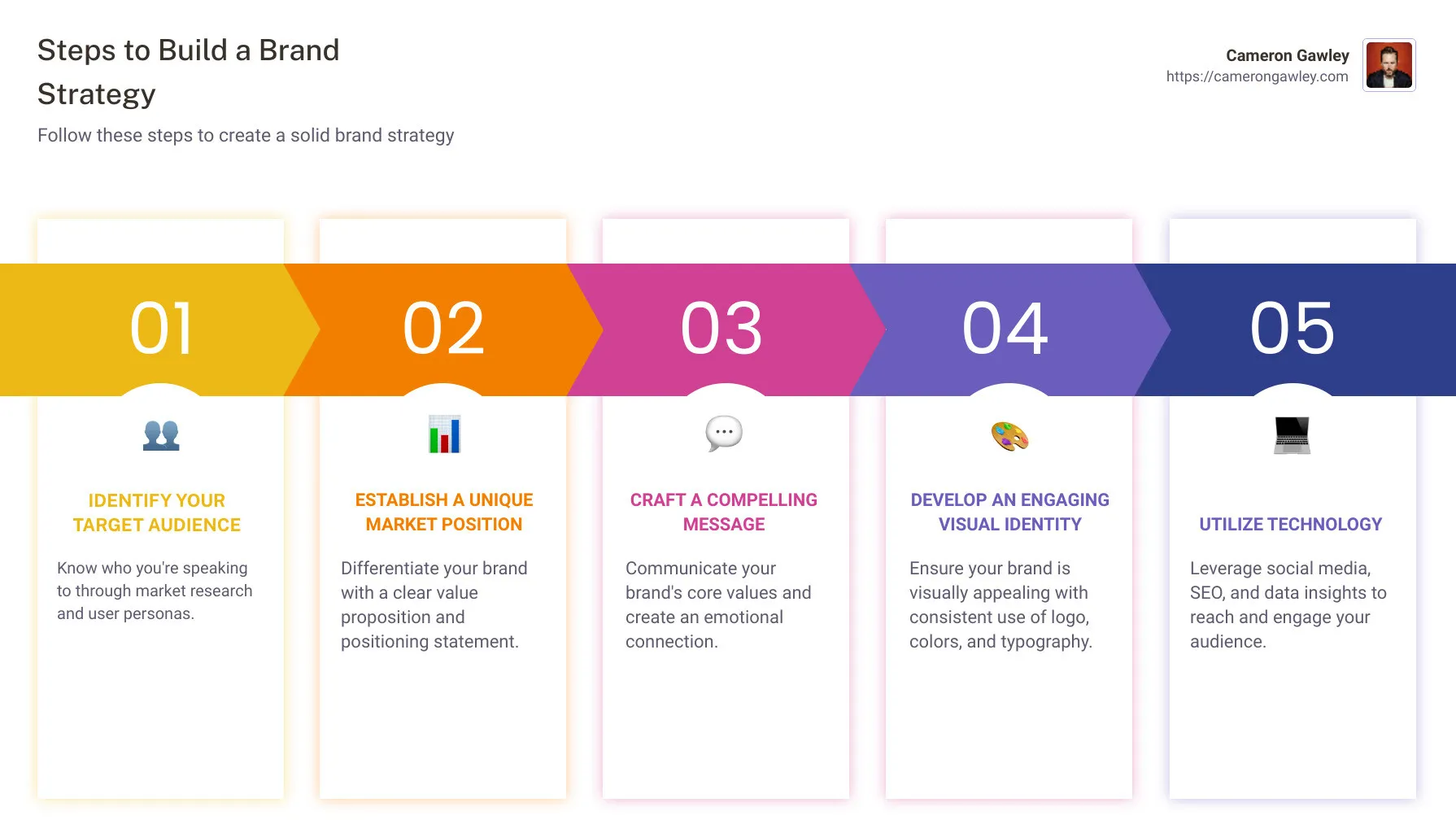
How to build a brand strategy is a must-know for any business owner looking to thrive. Here are the basic steps to get started:
- Identify Your Target Audience: Know who you're speaking to.
- Establish a Unique Market Position: Differentiate your brand clearly.
- Craft a Compelling Message: Communicate your value.
- Develop an Engaging Visual Identity: Make your brand visually appealing.
- Utilize Technology: Leverage social media and SEO.
- Analyze and Refine Regularly: Keep improving your strategy.
A well-crafted brand strategy is crucial because it shapes the first impression you make on potential customers. Your brand identity sets you apart in a crowded marketplace. It builds trust, fosters loyalty, and drives growth.
I'm Cameron Gawley, a seasoned expert in brand building, with a proven track record in crafting successful brand strategies. My journey includes founding one of Texas's fastest-growing digital strategy agencies and guiding numerous well-known brands to greater heights.
What is Brand Strategy?
A brand strategy is a comprehensive plan that defines how your brand will be perceived in the market. It encompasses your brand identity, marketing plan, and the unique elements that distinguish your brand from competitors. Let’s break down these components to understand how they contribute to a successful brand strategy.
Brand Identity
Your brand identity is the visual and emotional representation of your brand. It includes your logo, colors, typography, and overall design. But it goes beyond visuals—it’s about the feelings and experiences your brand evokes in customers. Think of it as the personality of your brand.
Marketing Plan
A marketing plan outlines the tactics and strategies you will use to promote your brand. It includes market research, target audience identification, and the channels you will use to reach them. A well-thought-out marketing plan ensures that your brand message is consistent across all platforms.
Unique Identity
In a crowded market, having a unique identity is crucial. This means defining what makes your brand different from others. It could be your product quality, customer service, or even your brand story. A unique identity helps you stand out and attract your target audience.
Trust and Loyalty
According to research, over 80% of consumers need to trust a brand before making a purchase. Building trust involves consistent messaging and delivering on your promises. Loyalty follows trust; once customers believe in your brand, they are more likely to become repeat buyers and advocates.
Recognition
Brand recognition is the ability of consumers to identify your brand from its attributes. This includes your logo, tagline, and even your brand colors. High brand recognition means your brand is easily identifiable and memorable, which is essential for long-term success.
Target Market
Understanding your target market is the foundation of any brand strategy. It involves identifying who your potential customers are, what they need, and how your brand can meet those needs. Market research and user personas are tools that can help you define your target market effectively.
Brand Positioning
Brand positioning is about how you want your brand to be perceived in the marketplace. It’s the space your brand occupies in the minds of consumers relative to your competitors. A strong positioning statement clearly communicates your brand’s unique value proposition and why customers should choose you.
Execution
Execution is where all the planning comes to life. It involves implementing your brand strategy across all touchpoints—social media, advertising, customer service, and more. Effective execution ensures that your brand message is consistent and resonates with your target audience.
By understanding and integrating these elements, you can create a robust brand strategy that not only attracts customers but also builds long-term loyalty and recognition.

Next, we will explore the importance of strategic branding and how it can benefit your business.
The Importance of Strategic Branding
Strategic branding is more than just a buzzword; it's a necessity in today's competitive market. Here’s why it’s crucial for your business:
Differentiation
In a crowded market, standing out is vital. Strategic branding helps you create a unique identity that sets you apart from competitors. Think of brands like Nike or McDonald's—instantly recognizable because of their strong brand strategies. Your brand needs to be distinct to capture attention and make a lasting impression.
Trust and Loyalty
Over 80% of consumers say they need to trust a brand before making a purchase. Trust is built through consistent and reliable brand messaging. When customers trust your brand, they are more likely to become loyal, repeat buyers. This loyalty often leads to word-of-mouth marketing, which is invaluable.
Value Communication
Your brand strategy should clearly communicate the value of your product or service. This involves showing how your offering solves a problem or meets a need. Effective value communication can also improve your pricing strategy, as customers are willing to pay more for brands they perceive as valuable.
Streamlined Marketing Efforts
A well-defined brand strategy makes your marketing efforts more efficient. By having a clear understanding of your brand’s identity and message, you can create targeted campaigns that resonate with your audience. This focus helps you expand and scale your business more easily.
Agility and Adaptability
In today’s business environment, agility is key. A strong brand strategy helps you stay flexible and adapt to changing market conditions and consumer preferences. It provides a framework that guides your decisions while allowing room for innovation and growth.
Competitive Edge
Running a competitive analysis helps you stay ahead of your rivals. Tools like social listening and analytics suites can provide insights into what your competitors are doing and what your customers are saying. This information allows you to spot opportunities and adjust your strategy accordingly.
Long-Term Perspective
Building a brand is a marathon, not a sprint. A well-executed brand strategy should have both short-term and long-term goals. Regularly reviewing and adjusting your strategy ensures it remains effective and aligned with your business objectives.
Key Elements of a Brand Strategy
Purpose
Your brand’s purpose is the reason it exists beyond making a profit. It's your core mission. Why does your brand matter? What customer needs are you addressing? Having a clear purpose helps guide your decisions and actions.
Brand Values
Brand values are the principles that guide your brand’s actions and decisions. These values should align with your customers' values and be evident in everything you do.
Value Proposition: This is a clear statement that explains how your product solves customers' problems or improves their situation. It’s the promise of what your customer will receive if they buy from you.
Positioning Statement: This is a concise description of how your product or service fills a need in a way that competitors don’t. It’s your brand’s unique place in the market.
Voice and Tone
Your brand’s voice is its overall personality, style, and character. It's how you communicate with your audience consistently. Tone, on the other hand, varies with context. For instance, your tone might be more serious in a blog post but humorous on social media.
Consistency: Ensure your voice and tone are consistent across all platforms. This builds trust and recognition.
Context Variations: Adapt your tone to suit different contexts while maintaining your brand’s core personality.
Design and Visual Identity
A cohesive design is crucial for brand recognition. Your visual identity includes your logo, brand colors, typography, and graphics. These elements should reflect your brand’s purpose and values.
Logo: A good logo is simple and memorable. Research shows that simple logos are more easily recognized and recalled.
Brand Colors: Choose colors that resonate with your audience and reflect your brand’s personality.
Typography: Use fonts that are legible and align with your brand’s style.
Graphics and Imagery: Ensure all visual elements are consistent and complement each other to create a unified look.
Brand Story
Your brand story is a unique narrative that sets you apart from competitors. It should express what makes your brand unlike any other and establish an emotional connection with your audience.
Brand Equity: This is how customers perceive your brand. A strong brand story can enhance your brand equity.
Emotional Connection: Engage customers through storytelling to build a lasting relationship.
Differentiation: A compelling brand story helps you stand out in the crowded marketplace.
How to Build a Brand Strategy
Identify Your Target Audience
Understanding your target audience is the cornerstone of a successful brand strategy. Nearly 60% of consumers feel businesses need to understand their needs better. To achieve this, you need to dig deep into market research.
Market Research: Conduct surveys, focus groups, and analyze data to uncover user personas, demographics, and customer insights. This will help you understand what motivates your customers.
User Personas: Develop detailed profiles of your ideal customers, including their needs, goals, and pain points. This will allow you to tailor your messaging and products to meet their specific needs.
Demographics: Identify key characteristics such as age, gender, income level, and education. This information helps in crafting targeted marketing campaigns.
Establish a Unique Position in the Market
To stand out, you need to establish a unique market position. A study revealed that consumers wouldn't care if 77% of brands disappeared. Don't be part of that statistic.
Marketplace Differentiation: Define how your product or service is perceived compared to competitors. What makes you unique?
Value Proposition: Create a clear statement that explains the benefits of your product and why customers should choose you.
Positioning Statement: Summarize your market position in one sentence. This should capture your brand's essence and unique value.
Craft a Compelling Message
A compelling brand message resonates with your audience and builds loyalty. In fact, 77% of customers prefer to buy from brands that share their values.
Consistent Messaging: Ensure your message is consistent across all channels. This builds trust and recognition.
Core Values: Highlight the values that your brand stands for. This creates an emotional connection with your audience.
Problem-Solving: Focus on how your product or service solves customer problems. This makes your message more relatable and impactful.
Develop an Engaging Visual Identity
Your visual identity should reflect your brand's personality and values. This includes your logo, typography, and color palettes.
Visual Recognition: A strong visual identity enhances brand recognition.
Logo: Design a memorable and simple logo that represents your brand.
Typography and Color Palettes: Choose fonts and colors that align with your brand's message and appeal to your target audience.
Style Guide: Create a style guide to ensure consistency across all visual elements.
Use Technology to Reach Your Audience
Technology is a powerful tool for reaching and engaging your audience. Over 90% of marketers use social media for brand awareness.
Social Media: Utilize platforms like Instagram, Twitter, and LinkedIn to connect with your audience. Use hashtags and targeted ads to increase engagement.
Marketing Campaigns: Launch digital marketing campaigns to promote your brand and products.
SEO: Optimize your website for search engines to increase visibility.
Customer Engagement: Use mobile apps, automated emails, and other tools to engage with customers.
Data Insights: Analyze data to understand customer preferences and refine your strategy.
Analyze and Refine Your Strategy Regularly
Building a brand strategy is an ongoing process. Regular analysis and refinement are crucial for success.
Audience Response: Monitor how your audience responds to your messaging and visuals. Adjust based on feedback.
Competitor Analysis: Keep an eye on your competitors and adjust your strategy to stay ahead.
Strategy Adjustments: If something isn't working, change it. Test different approaches until you find what works best.
KPIs: Establish key performance indicators to measure success. Regularly review your progress and make necessary adjustments.
Next, we will address some frequently asked questions about how to build a brand strategy.
Frequently Asked Questions about How to Build a Brand Strategy
What are the 4 steps in building brand strategy?
- Company Understanding: Start by deeply understanding your own company. Know your strengths, weaknesses, and what sets you apart from competitors. This self-awareness is crucial.
- Audience Learning: Research your target audience. Understanding their demographics, needs, and pain points will help you tailor your brand message effectively.
- Brand Message Selection: Craft a compelling and consistent brand message that resonates with your audience. This should reflect your core values and the unique solutions you offer.
- Brand Growth Tracking: Regularly monitor and analyze your brand’s performance. Use key performance indicators (KPIs) to track growth and make necessary adjustments to your strategy.
What are the four types of branding strategies?
- Product/Range Extension: This involves adding new products to an existing product line. For example, a company that sells shampoos might introduce a line of conditioners under the same brand name.
- Brand Extension: This strategy uses an established brand name for new products in different categories. Think of how Apple extended its brand from computers to phones and watches.
- Co-branding: This strategy involves partnering with another brand to create a product that features both brand names. An example is the collaboration between Nike and Apple for fitness tracking products.
- Brand Licensing: This allows other companies to use your brand name on their products. Disney, for example, licenses its characters for use on various merchandise.
What are the 7 key elements of brand strategy?
- Purpose: Define the core mission of your brand. Why does your brand exist, and what problem does it aim to solve for your customers?
- Brand Values: Align your brand with the values that matter to your customers. Consistently communicate these values in your messaging.
- Brand Positioning: Determine how your brand is different from competitors. Create a positioning statement that clearly articulates this differentiation.
- Brand Personality: Establish the human traits associated with your brand. This helps in creating a relatable and consistent brand image.
- Brand Voice: Develop a distinct voice and tone for your brand communications. This should be consistent across all channels and touchpoints.
- Market Analysis: Conduct thorough market research to understand the competitive landscape and identify opportunities for differentiation.
- Visual Identity: Create a cohesive visual identity, including your logo, color palettes, typography, and overall design style. This helps in building strong brand recognition.
Next, we will delve into the conclusion, summarizing the key points and emphasizing the importance of a well-crafted brand strategy.
Conclusion
Building a strong brand strategy is essential for any business aiming for long-term success. From identifying your target audience to crafting a compelling message and developing a cohesive visual identity, each step plays a crucial role in shaping how your brand is perceived.
At Cameron Gawley, we understand the complexities involved in creating a robust brand strategy. Our expertise in brand building, coupled with our entrepreneurial guidance, equips businesses with the tools they need to stand out in a crowded marketplace.
Growth Strategies: We offer tailored strategies to help your brand grow and adapt to changing market conditions. Our approach ensures your brand remains relevant and engaging, driving customer loyalty and business growth.
Mentorship: Our mentorship programs provide you with the insights and support needed to navigate the challenges of brand building. With our guidance, you can make informed decisions that align with your brand's core values and objectives.
Ready to take your brand to the next level? Connect with Cameron Gawley and let's build a brand strategy that sets you apart.