

Why Brand Strategy Matters: A Quick Guide
Brand strategy is the framework your business uses to create a unique identity in the market. It helps you stand out, build trust, and foster loyalty among your customers. A strong brand strategy turns your company into more than just a business—it makes it a trusted part of your customers' lives.
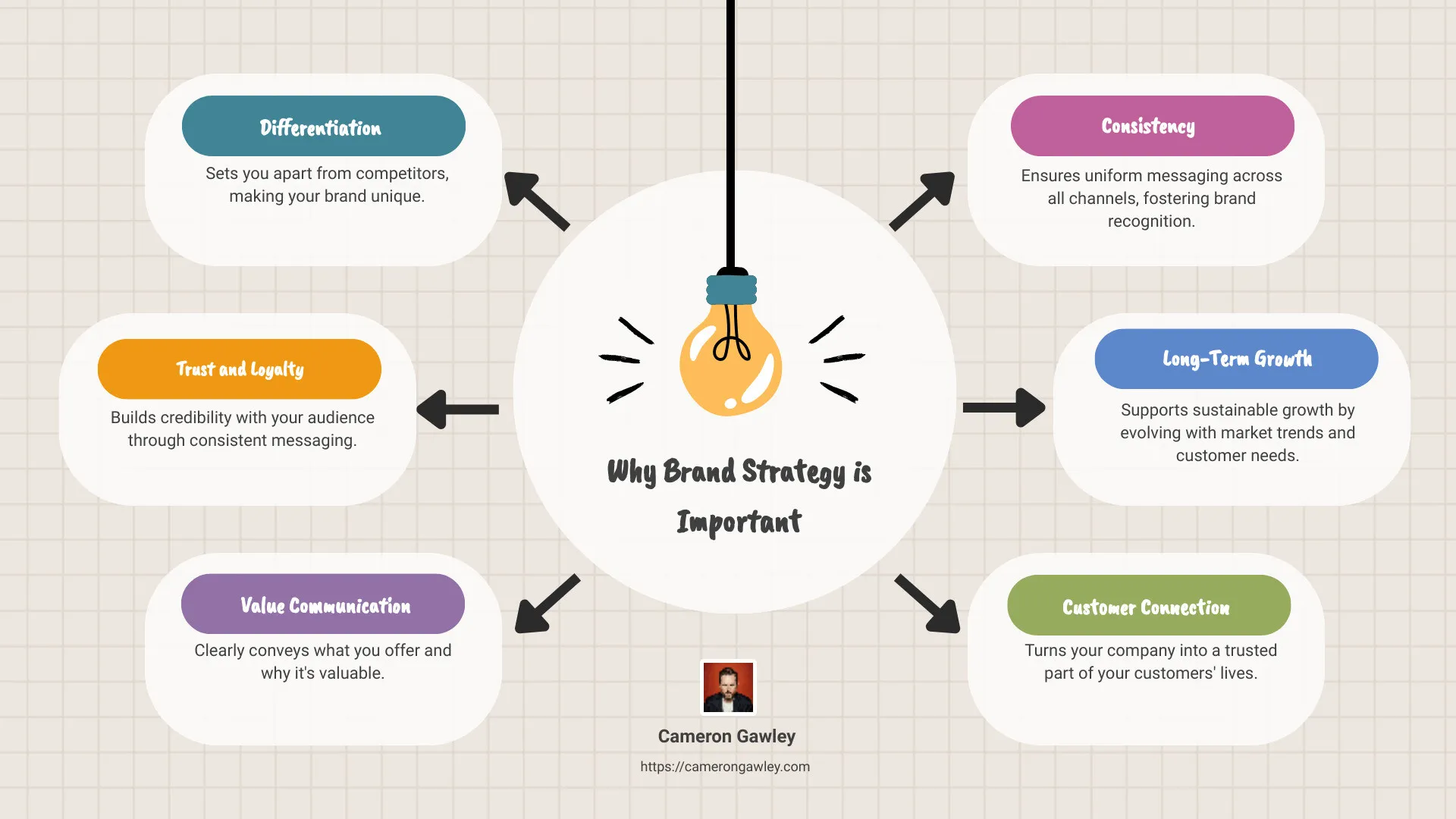
Here's a quick look at why brand strategy is crucial:
- Differentiation: Sets you apart from competitors.
- Trust and Loyalty: Builds credibility with your audience.
- Value Communication: Clearly conveys what you offer.
- Consistency: Ensures uniformity in messaging across all channels.
An effective brand strategy not only boosts recognition but also supports long-term growth by evolving with market trends and customer needs.
I'm Cameron Gawley, an expert in brand strategy with years of experience helping businesses like yours succeed. I've co-founded several companies, including one of Texas’s fastest-growing digital strategy agencies and Oak & Eden Whiskey, guiding them to scalable growth. Let my expertise in brand strategy guide you to build a strong and lasting brand.
Let's dive deeper into how you can craft an impactful brand strategy.
What is Brand Strategy?
A brand strategy is a long-term plan designed to achieve a series of goals that result in the identification and preference of your brand by consumers. It encompasses your brand's mission, promises, and how these elements are communicated. Unlike logos or color palettes, a brand strategy includes intangible factors that build brand awareness, equity, and sentiment over time.
Key Elements of Brand Strategy
Definition
A brand strategy is a comprehensive plan that outlines how your brand will be perceived in the market. It includes your brand's mission, values, and promises to your customers. This strategy aims to create a unique identity that differentiates you from competitors and resonates with your target audience.
Long-Term Goals
A successful brand strategy sets long-term goals that guide all marketing and operational efforts. These goals help in maintaining consistency and focus, ensuring that every action taken aligns with the broader vision of the brand.
Brand Mission
Your brand mission is the core purpose of your brand. It answers the question: Why does your brand exist? For example, Airbnb's mission is to make people feel like they belong anywhere in the world. This mission shapes their entire brand strategy.
Brand Promises
These are the commitments you make to your customers. They should be clear, realistic, and consistently upheld. For instance, Apple's promise of innovation and quality is evident in every product they release.
Consumer Identification
Understanding who your customers are is crucial. Identify your target audience by researching their needs, preferences, and behaviors. This helps in creating a brand strategy that appeals directly to them.
Purpose
Your brand's purpose should align with your customers' needs and aspirations. It should clearly communicate why your brand exists and what problem it aims to solve. This creates a strong emotional connection with your audience.
Consistency
Consistency in messaging, visuals, and customer experience is vital. It builds trust and recognition. For example, Coca-Cola maintains a consistent brand message of happiness and togetherness across all its campaigns.
Emotion
A compelling brand strategy taps into the emotions of your audience. Emotional connections foster loyalty and make your brand memorable. Think of Nike's "Just Do It" campaign, which inspires and motivates people globally.
Flexibility
While consistency is essential, flexibility allows your brand to adapt to market changes and evolving customer needs. Being agile helps you stay relevant and seize new opportunities.
Employee Involvement
Your employees are brand ambassadors. Ensure they understand and embody your brand values. This creates a unified brand experience for customers.
Loyalty
Building customer loyalty is a key goal of any brand strategy. Loyal customers are more likely to make repeat purchases and recommend your brand to others. Brands like Starbucks achieve this through loyalty programs and personalized experiences.
Competitive Awareness
Understanding your competitors helps you identify what makes your brand unique. Conduct competitive analysis to find gaps in the market and opportunities for differentiation.
A well-crafted brand strategy not only defines your brand but also guides your business decisions, ensuring that every action taken aligns with your long-term goals. By focusing on these key elements, you can create a brand that stands out, builds trust, and fosters loyalty.

Next, we'll explore the different types of branding strategies and how to choose the right one for your business.
Types of Branding Strategies
When it comes to branding strategies, there are several methods businesses can use to make their brand stand out. Each method has its own strengths and is suitable for different types of businesses. Let's dive into some of the most common branding methods:
Line Extension
Line extension involves adding new products to an existing product line under the same brand name. This strategy leverages the existing brand's reputation to introduce new items. For example, a beverage company might use line extension to introduce new flavors or varieties under its well-known brand.
Brand Extension
Brand extension is when a company uses its established brand name to launch products in a different category. This method aims to capitalize on the brand's existing equity. A famous electronics company, for instance, might extend its brand from personal computers to smart home devices.
Multi-Brands
In a multi-brand strategy, a company offers multiple brands in the same product category. This approach helps capture a larger market share. A global consumer goods company, for example, might market several different brands of household cleaners, each targeting different consumer needs and preferences.
New Brands
Creating a new brand involves launching a product or service under a completely new brand name. This is often done to target a different market segment or to innovate without constraints from the existing brand associations. A car manufacturer might create a new brand to enter the electric vehicle market with a fresh identity.
Attitude Branding
Attitude branding focuses on the feelings or attitudes that customers associate with the brand. A sports apparel brand might use this strategy to promote a lifestyle of health, achievement, and perseverance.
Individual Branding
Individual branding assigns a unique brand identity to each product or service. A multinational corporation might use this strategy for its range of consumer electronics, ensuring each product appeals to different customer segments.
Product Branding
Product branding ties a logo, name, color, and design to a specific product, making it easily recognizable. A tech company might use product branding for its line of smartphones to ensure instant brand recognition.
Co-Branding
Co-branding involves two or more brands collaborating to create a product that features elements of each brand. A famous example could be a luxury car brand partnering with a high-end watchmaker to create a special edition car that includes branded interior details.
Minimalist Branding
Minimalist branding uses simple design elements to create a strong brand identity. A financial services company might use minimalist branding to convey simplicity and ease of use, appealing to young adults entering the financial world.
Brand Extension
Brand extension, as mentioned earlier, involves using an existing brand name to launch new products in different categories. This strategy leverages the brand's existing reputation to gain customer trust quickly.
Each of these branding methods offers unique advantages and can be tailored to fit your business goals and market conditions. Understanding these methods will help you choose the right strategy to build a strong and memorable brand.
Steps to Create an Effective Brand Strategy
Creating an effective brand strategy involves several key steps. Each step builds upon the previous one to ensure a cohesive and impactful brand presence. Let's break down these essential steps.
Identify Your Target Audience
Understanding who your customers are is the foundation of any successful brand strategy. Nearly 60% of consumers believe businesses need to better understand and address their needs.
Market research is your first step. Conduct surveys, interviews, and analyze data to uncover user personas. These personas should include demographics (age, gender, income) and consumer needs (pain points, desires, goals).
Example: A toy company might discover that their target audience includes parents aged 25-40 who value educational and safe toys for their children.
Establish a Unique Position in the Market
To stand out, you need to establish a unique market position. This involves defining how your product or service is perceived compared to competitors.
Create a positioning statement that captures your brand's essence in a single sentence. Focus on what makes your brand different and valuable.
Example: "We provide eco-friendly cleaning products that are safe for children and pets, unlike traditional chemical-based cleaners."
Craft a Compelling Message
Your message should resonate with your target audience and reflect your core values. Consistency is key across all touchpoints.
Develop a brand personality and a clear mission statement. This helps create an emotional connection with your audience.
Example: Patagonia’s mission statement, "We're in business to save our home planet," resonates deeply with environmentally-conscious consumers.
Develop an Engaging Visual Identity
Visual elements are often the first thing customers notice about your brand. A strong visual identity enhances brand recognition.
Your visual identity includes your logo, color palette, typography, and overall cohesive design. Make sure these elements reflect your brand’s values and appeal to your target audience.
Example: Apple's minimalist design and clean typography convey simplicity and innovation.
Use Technology to Reach Your Audience
Leveraging technology is crucial for brand success. Over 90% of marketers use social media for brand awareness.
Utilize social media, digital marketing, SEO, and automated tools to engage with your audience. Platforms like Instagram and Twitter can help increase visibility and engagement.
Example: Nike uses social media campaigns and personalized email marketing to connect with their audience and promote new products.
Analyze and Refine Your Strategy Regularly
A brand strategy is not static; it requires regular analysis and refinement. Set clear KPIs to measure your success and identify areas for improvement.
Conduct competitor analysis and stay updated on market trends. Adjust your strategy based on what works and what doesn’t.
Example: A retail brand might track social media engagement and sales data to refine their marketing tactics and improve ROI.
By following these steps, you can create a brand strategy that not only resonates with your audience but also stands the test of time. Each element, from identifying your target audience to refining your strategy, plays a crucial role in building a strong and memorable brand.
Examples of Successful Brand Strategies
Airbnb
Airbnb stands out with its unique brand strategy. Instead of traditional hotels, they offer a "home away from home" experience, letting guests stay in local homes. Their mission is simple: make people feel like they belong anywhere in the world.
Airbnb's success comes from storytelling. They share real stories from hosts and guests on YouTube, Instagram, and their blog. By doing this, they create an emotional connection with their audience. People crave authentic experiences, and these stories build trust and transparency.
Their visual identity also plays a big role. Airbnb uses a recognizable red and white color scheme. This evokes feelings of comfort and security. Their simple design reinforces relaxation and sanctuary during a stay.
Apple
Apple is another great example. Their brand strategy is built on four key principles:
- Offering a carefully curated selection of products
- Focusing on the high-end market
- Prioritizing profits over market share
- Creating a ‘halo effect’ that makes people crave new Apple products
Apple's brand revolves around emotions. They focus on creativity, freedom, innovation, and passion. Their user-centric design creates a strong connection with customers.
Apple's content marketing is also top-notch. They produce high-quality, informative content that highlights their products' features and benefits. Their website offers detailed product descriptions, user guides, and video tutorials.
On social media, Apple shares stunning images and videos. They collaborate with influencers and celebrities to expand their reach. This helps them create a strong brand identity and a loyal customer base.
Brand Storytelling
Both Airbnb and Apple excel in brand storytelling. A compelling brand story communicates your business's origin, beliefs, values, and purpose. It sparks a connection between your business and your customers.
For example, Fly by Jing shares its origin story, core beliefs, and values on its website. Founder Jing Gao started the company inspired by the flavors of Chengdu, her hometown. This narrative intertwines with the product experience, enticing new customers and showing the care put into each product.
Emotional Connection
Creating an emotional connection is crucial for a successful brand strategy. By sharing authentic stories and focusing on emotions, brands can build trust and loyalty.
Visual Identity
A strong visual identity helps expand overall brand recognition. Consistent elements like logos, color palettes, and typography reflect your brand's unique message.
For example, Adobe Express can help you create a strong visual identity. It allows you to make a logo and pick colors, fonts, and graphics that best reflect your brand.
By studying these examples, you can learn how to build a strong and memorable brand. Identify what makes your brand unique, have a clear mission statement, and use design elements to reinforce your brand's values and personality.
Frequently Asked Questions about Brand Strategy
What are the four types of branding strategies?
Understanding the different branding strategies can help you decide which approach best fits your business goals and market needs. Here are the four main types:
- Line Extension: This involves adding new products to an existing product line. For instance, a company that sells soft drinks might introduce new flavors under the same brand name. This strategy leverages the existing brand's reputation to attract customers to the new products.
- Brand Extension: This strategy uses an existing brand name for new product categories. For example, a well-known fashion brand might start selling perfumes. The aim is to use the established brand equity to boost the new products' success.
- Multi-Brands: In this approach, a company creates multiple brands within the same product category. Think of a company like Procter & Gamble, which owns several different laundry detergent brands. This strategy targets different market segments and maximizes market share.
- New Brands: This involves creating a completely new brand for a new product line. Companies often use this strategy when entering a new market or launching a product that doesn't fit under any existing brand. It allows for a fresh identity and positioning.
What is the best branding strategy?
The "best" branding strategy depends on your business goals, market conditions, and resources. However, successful strategies often share common elements:
- Target Audience: Know who your customers are. Use market research and create user personas to understand their needs, preferences, and behaviors.
- Unique Market Position: Differentiate your brand from competitors. Develop a clear positioning statement that highlights what makes your brand unique.
- Compelling Message: Craft a brand message that resonates with your audience. This should reflect your brand's personality, mission, and values, creating an emotional connection with consumers.
- Engaging Visual Identity: Your logo, color palette, and typography should be consistent and visually appealing. Tools like Adobe Express can help you create a cohesive design that reflects your brand's essence.
- Technology Use: Leverage digital marketing, social media, SEO, and automated tools to reach and engage your audience effectively.
- Regular Analysis: Continuously monitor your brand strategy's performance. Use KPIs, competitor analysis, and market trends to refine and adjust your strategy as needed.
What are the key elements of brand strategy?
A successful brand strategy includes several key elements:
- Vision: Your brand's long-term goal. It describes what you aim to achieve and the impact you want to make. For example, "To create a more connected world."
- Values: The fundamental beliefs that guide your brand's behavior. These should align with your target audience's values. Examples include empathy, passion, and integrity.
- Target Audience: Clearly define who your ideal customers are. Understand their demographics, needs, and preferences to tailor your brand strategy accordingly.
- Competitive Analysis: Study your competitors to identify your market position. Understand their strengths and weaknesses to differentiate your brand effectively.
- Personality: Define your brand's character. How would your brand speak and behave if it were a person? This helps create a consistent tone of voice and fosters a deeper connection with your audience.
- Tagline: A short, memorable phrase that encapsulates your brand's essence. It should be easy to remember and convey your brand's unique selling proposition.
By focusing on these elements, you can build a strong, cohesive, and effective brand strategy that resonates with your audience and stands out in the market.
Conclusion
Building a brand strategy is no small feat, but it can be the difference between a forgettable business and a household name. At Cameron Gawley, we specialize in helping brands navigate this complex process with expert guidance and proven strategies.
Our approach to brand building isn't just about creating a logo or a catchy tagline. It's about crafting a comprehensive strategy that aligns with your business goals and resonates with your target audience. From defining your brand's purpose to ensuring consistency and emotional connection, we cover all the essential elements to help your brand stand out.
We also offer entrepreneurial guidance and mentorship to help you make informed decisions at every step of your brand journey. Whether you're a startup looking to make a mark or an established business aiming for a rebrand, our expertise can help you achieve your goals.
Our brand growth strategies are designed to be flexible and adaptive, allowing your brand to stay relevant in a fast-changing market. We use data-driven insights to continually refine your strategy, ensuring it evolves with your audience and industry trends.
Ready to elevate your brand? Explore our brand building services and see how we can help you create a brand that not only stands the test of time but also drives business success. Let's build something memorable together.