

Why Branding Strategically is Crucial
The Brand Mapping Strategy: Design, Build, and Accelerate Your Brand is a powerful approach to revamp how your business or personal brand is perceived. If you're searching for a quick summary, here are the essential steps:
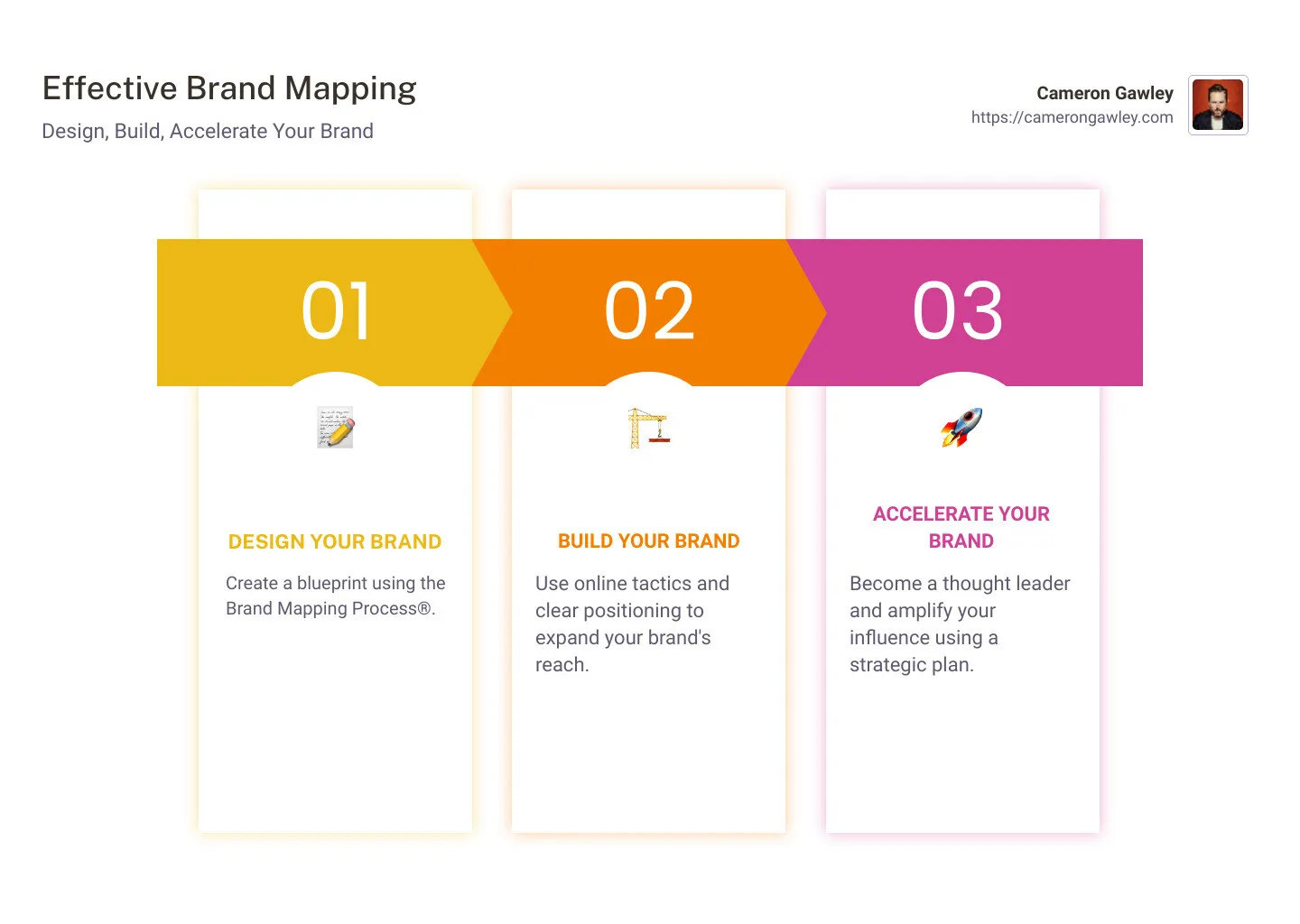
- Design Your Brand: Create a blueprint using the Brand Mapping Process®.
- Build Your Brand: Use online tactics and clear positioning to expand your brand's reach.
- Accelerate Your Brand: Become a thought leader and amplify your influence using a strategic plan.
A strategic brand is no accident; it's a well-crafted narrative that aligns with your goals and values. Whether you're an entrepreneur carving a niche or a business owner aiming for better customer engagement, strategic branding is indispensable.
Karen Tiber Leland, an expert on brand and marketing strategy, emphasizes the importance of consciously defining your brand. As she puts it, "If you don’t define your brand, someone else will define it for you." Her insights serve as the cornerstone for designing, building, and accelerating a powerful brand.
I'm Cameron Gawley, and I’ve spent my career helping brands ascend to new heights. From leading one of Texas's fastest-growing digital agencies to spearheading growth strategies for renowned brands, I've seen the impact a well-mapped brand strategy can have.
Now, let’s delve into how you can strategically design, build, and accelerate your brand for ultimate success.
The New Branding and Marketing Mindset
In today's world, the way we think about branding and marketing has undergone a paradigm shift. The old model of short-term campaigns and sporadic efforts is outdated. Instead, successful brands now focus on building a long-term platform. This platform supports ongoing efforts that keep the brand alive and thriving.
Long-Term Platform Over Short-Term Strategy
Karen Tiber Leland emphasizes that branding and marketing are no longer about big, one-time pushes. Instead, they are about a steady stream of small, consistent efforts. This new mindset is about creating a lasting impact rather than just a temporary buzz.
The Power of Ongoing Efforts
Social media, blogging, and other business development activities are essential in this new approach. These tools help in building a platform, creating credibility, and increasing the number of potential clients and network connections. The goal is to keep your pipeline full of potential clients or fans, even if converting them takes time.
"You need to start a bunch of small fires to keep your brand burning hot," says Karen Tiber Leland.
Leveraging Social Media
Social media is a powerful tool in this new branding mindset. It allows for regular engagement with your audience, building a community around your brand. The key is to maintain a consistent tone of voice and message across all platforms.

Blogging for Business Development
Blogging is another crucial element. It helps in establishing thought leadership and provides valuable content that can attract and retain an audience. Regular blog posts can drive traffic to your website and improve your search engine rankings.
Persistent Business Development
Business development activities, both online and offline, should be persistent and ongoing. These efforts help in creating a brand that is not only recognized but also trusted. Networking events, speaking engagements, and media interviews are excellent ways to build credibility and influence.
The Ultimate Goal
The ultimate goal is to create a brand that is authentic and resonates with your audience. This involves understanding your core values and making sure they are reflected in every aspect of your branding efforts.
By adopting this new mindset, you can strategically design, build, and accelerate your brand for long-term success. Next, we will explore the Brand Mapping Strategy and how it can help you achieve these goals.
The Brand Mapping Strategy: Design, Build, and Accelerate Your Brand
Seven Core Elements of a Powerful Brand
Karen Tiber Leland, a renowned brand and marketing strategist, emphasizes that building a brand by design is crucial for success. Her approach, known as the Brand Mapping Process, provides a clear blueprint for creating a powerful brand. This method involves seven core elements that are essential for both business and personal branding.
- Anchor Statement: This is your brand's foundation. It's a clear, concise statement that defines what your brand stands for.
- Unique Branding Proposition: What sets your brand apart? This element focuses on your unique value and differentiators.
- Brand Tone and Temperament: This defines the personality and emotional tone of your brand, ensuring consistency across all channels.
- Brand Energy: This is the vibe or feeling your brand exudes. It’s about creating an emotional connection with your audience.
- Signature Story: Every brand needs a compelling narrative. This is your brand’s story, which should be authentic and engaging.
- Signature Services: These are the key services or products that define your brand in the market.
- Brand Enhancers and Reducers: Identify what strengthens and weakens your brand, and create a plan to enhance the former and reduce the latter.
These elements work together to create a cohesive and powerful brand narrative. By focusing on these core elements, you can build a brand that stands out and resonates with your audience.
Creating Your Branding Plan
Creating a branding plan involves more than just having a catchy logo or slogan. It’s about strategically designing your brand to achieve long-term success. Here’s how you can do it:
- Develop a Blueprint: Start with the Brand Mapping Process. This will serve as your roadmap, guiding you through each step of building your brand.
- Focus on Business and Personal Branding: Both are crucial. Your business brand represents your company, while your personal brand represents you as an individual. Both should align and complement each other.
- Craft a Unique Proposition: This is what makes your brand unique. It should be clear and compelling, setting you apart from competitors.
- Build a Brand Narrative: Your story should be authentic and informative. It’s not just about what you do, but why you do it.
- Enhance Your Brand: Identify areas where your brand can improve. Use feedback to make necessary adjustments and enhancements.
- Fulfill Your Brand Promise: Make sure you deliver on what you promise. Consistency is key in building trust and credibility.
By following these steps, you can create a branding plan that not only builds your brand but also accelerates its growth and influence.
Next, we will explore how to sync up your online presence to further enhance your brand strategy.
Syncing Up Your Online Presence
Leveraging Content Effectively
Having a strong online presence is essential for any brand. Whether you're a CEO, entrepreneur, or business owner, your online footprint can significantly impact your brand's reach and credibility. Here's how to leverage content effectively to sync up your online presence.
1. Develop a Social Media Strategy
Social media is a powerful tool for brand outreach and audience expansion. Create a consistent posting schedule and maintain a unified tone of voice across all platforms. Use a mix of content types—such as articles, videos, and infographics—to keep your audience engaged.
"Social media is a great tool to inspire others and to engage a broad audience," says Karen Tiber Leland. Plan a regular cadence of posts with a consistent tone of voice and message, and add a visual aesthetic to help build personal brand equity.
2. Positioning Strategy
Your online presence should reflect your brand's unique value proposition. This involves carefully crafting your profiles and content to align with your brand's mission and goals. Make sure your bio, profile picture, and cover photos are professional and consistent across all platforms.
3. Optimize for the Digital Age
Your content needs to be optimized for search engines and social media algorithms. Use relevant keywords, hashtags, and SEO best practices to increase your content's visibility. Tools like Google Analytics can help you track performance and make data-driven adjustments.
4. Content Strategy
Your content strategy should be comprehensive and well-planned. Identify the types of content that resonate most with your audience and focus on creating high-quality, valuable posts. This could include blog articles, how-to guides, case studies, and user-generated content.
5. Expand Your Audience
To expand your audience, consider collaborations and partnerships. Guest blogging, influencer partnerships, and co-hosting webinars can introduce your brand to new audiences.
6. Marketing Strategy
Your marketing strategy should integrate both online and offline tactics. Use email marketing, social media ads, and content marketing to drive traffic to your website and convert visitors into loyal customers.
7. Utilize Multiple Social Media Platforms
Different platforms serve different purposes. LinkedIn is great for professional networking, while Instagram and Facebook are ideal for visual content. Twitter can be used for real-time updates and engaging with your audience. Choose the platforms that best fit your brand and focus your efforts there.
By leveraging content effectively, you can create a powerful online presence that not only enhances your brand but also accelerates its growth and influence.
Next, we will explore how to define and refine your brand expressions to create a cohesive brand identity.
Defining and Refining Your Brand Expressions
Building a Parallel Brand for CEOs and Executives
A strong CEO brand can have a significant impact on a company's success. It establishes executive presence, thought leadership, and reputation management. Let's break down how to build and refine these key elements.
Visual Capital
Visual capital is about how you present yourself and your brand visually. This includes everything from your profile picture to the design of your website.
- Consistency: Use the same colors, fonts, and styles across all platforms to create a unified look.
- Professional Photos: Invest in high-quality, professional photos. A good headshot can make a big difference.
- Branded Content: Use visuals that align with your brand's message and tone. This can include infographics, videos, and branded images.
Intellectual Capital
Intellectual capital is the knowledge and expertise you share with your audience. It establishes you as a thought leader in your industry.
- Content Creation: Write articles, blog posts, and whitepapers on topics related to your industry. Share your insights and expertise.
- Speaking Engagements: Participate in conferences, webinars, and podcasts. This not only showcases your knowledge but also expands your reach.
- Media Features: Get featured in reputable publications. This adds credibility and enhances your reputation.
Emotional Capital
Emotional capital is about connecting with your audience on a personal level. It involves sharing your values, passions, and experiences.
- Authenticity: Be genuine in your communication. Share personal stories and experiences that resonate with your audience.
- Engagement: Respond to comments and messages. Show that you value your audience's input.
- Personal Touches: Occasionally share personal interests or hobbies that can be linked to business insights. This humanizes your brand.
Becoming a Brand-Centric Company
A brand-centric company aligns its culture and operations with its brand promise. This involves several key elements:
- Customer Experience: Ensure every interaction with your brand is positive and consistent.
- Management Commitment: Leadership should embody the brand values and lead by example.
- Employee Engagement: Employees should be ambassadors of the brand. Provide training and resources to help them understand and live the brand values.
- Processes and Systems: Implement processes and systems that support the brand promise. This could include customer service protocols, quality control measures, and more.
CEO Brand and Executive Presence
A strong CEO brand enhances executive presence and thought leadership. This involves:
- Reputation Management: Regularly monitor and manage your online reputation. Address any negative feedback promptly and professionally.
- Content Marketing: Engage in content marketing to showcase your expertise and insights. This includes writing articles, creating videos, and sharing industry news.
- Networking: Build and maintain a strong professional network. Attend industry events, join professional groups, and connect with other leaders in your field.
Career Management
Proactive career management is crucial for long-term success. This includes:
- Digital Footprint: Ensure your digital footprint is professional and aligns with your brand. This includes social media profiles, personal websites, and online publications.
- Privacy: Protect your privacy by being mindful of what you share online. Use privacy settings to control who can see your personal information.
- Continuous Learning: Stay updated on industry trends and continuously improve your skills. This shows your commitment to growth and development.
By defining and refining your brand expressions, you can create a cohesive and powerful brand identity that enhances your influence and success.
Next, we will address frequently asked questions about the Brand Mapping Strategy: Design, Build, and Accelerate Your Brand.
Frequently Asked Questions about The Brand Mapping Strategy: Design, Build, and Accelerate Your Brand
What is the Brand Mapping Process?
The Brand Mapping Process® is a structured method developed by Karen Tiber Leland to help individuals and businesses design, build, and accelerate their brand. This process involves seven core elements that work together to create a strong brand identity. By following these steps, you can ensure your brand is consistent, authentic, and impactful across all channels.
How can I create a unique branding proposition?
Creating a unique branding proposition involves identifying what sets your brand apart from the competition. Here are some steps to help you:
- Identify Your Strengths: What do you do better than anyone else?
- Understand Your Audience: What are their needs and pain points?
- Combine Insights: Merge your strengths with audience needs to create a unique value proposition.
- Communicate Clearly: Ensure your message is simple and easy to understand.
Karen Tiber Leland emphasizes the importance of a Unique Branding Proposition as one of the core elements in the Brand Mapping Process®.
What are the core elements of a powerful brand?
According to Karen Tiber Leland, a powerful brand consists of seven core elements:
- Anchor Statement: A clear and concise statement that defines your brand's purpose.
- Unique Branding Proposition: What sets your brand apart.
- Brand Tone and Temperament: The personality and style of your brand.
- Brand Energy: The vibe and feel your brand gives off.
- Signature Story: A compelling narrative that encapsulates your brand's journey and values.
- Signature Services: The key offerings that define your brand.
- Brand Enhancers and Reducers: Factors that can either strengthen or weaken your brand.
By focusing on these elements, you can build a brand that is not only strong but also adaptable to various market conditions.
Next, we will dive into the practical steps for syncing up your online presence to maximize your brand's impact.
Conclusion
Brand building is a journey, not a destination. At Cameron Gawley, we understand the importance of creating a brand by design, not by default. Our goal is to help you design, build, and accelerate your brand using proven strategies and actionable insights.
Cameron Gawley is a wealth of knowledge on brand building. With years of experience and a track record of success, we guide entrepreneurs, business owners, and executives through the complex world of branding. Our approach is customer-centric, focusing on understanding your unique needs and aligning them with your brand's goals.
Our entrepreneurial guidance ensures that you are not just following trends but setting them. We help you develop a long-term platform that supports your brand's vision and values. This involves ongoing efforts in social media, blogging, and other business development activities to keep your brand relevant and engaging.
In terms of growth strategies, we emphasize the importance of small, consistent efforts. As Karen Tiber Leland mentions, branding is about a steady stream of small efforts, not just big pushes. This mindset helps in building credibility and increasing your reach over time.
Our mentorship program is designed to provide you with the support and expertise you need to navigate the challenges of brand building. Whether you're looking to enhance your personal brand or elevate your business brand, we are here to help.
By focusing on the core elements of a powerful brand and syncing up your online presence, you can create a brand that not only stands out but also resonates with your audience.
For more information on how we can help you design, build, and accelerate your brand, visit our Brands page.
With the right strategies and guidance, your brand can achieve new heights. Let's build something great together.