CAC only goes up. The brands that win accept that and make the second order the business. Subscriptions are the most direct way to do it.
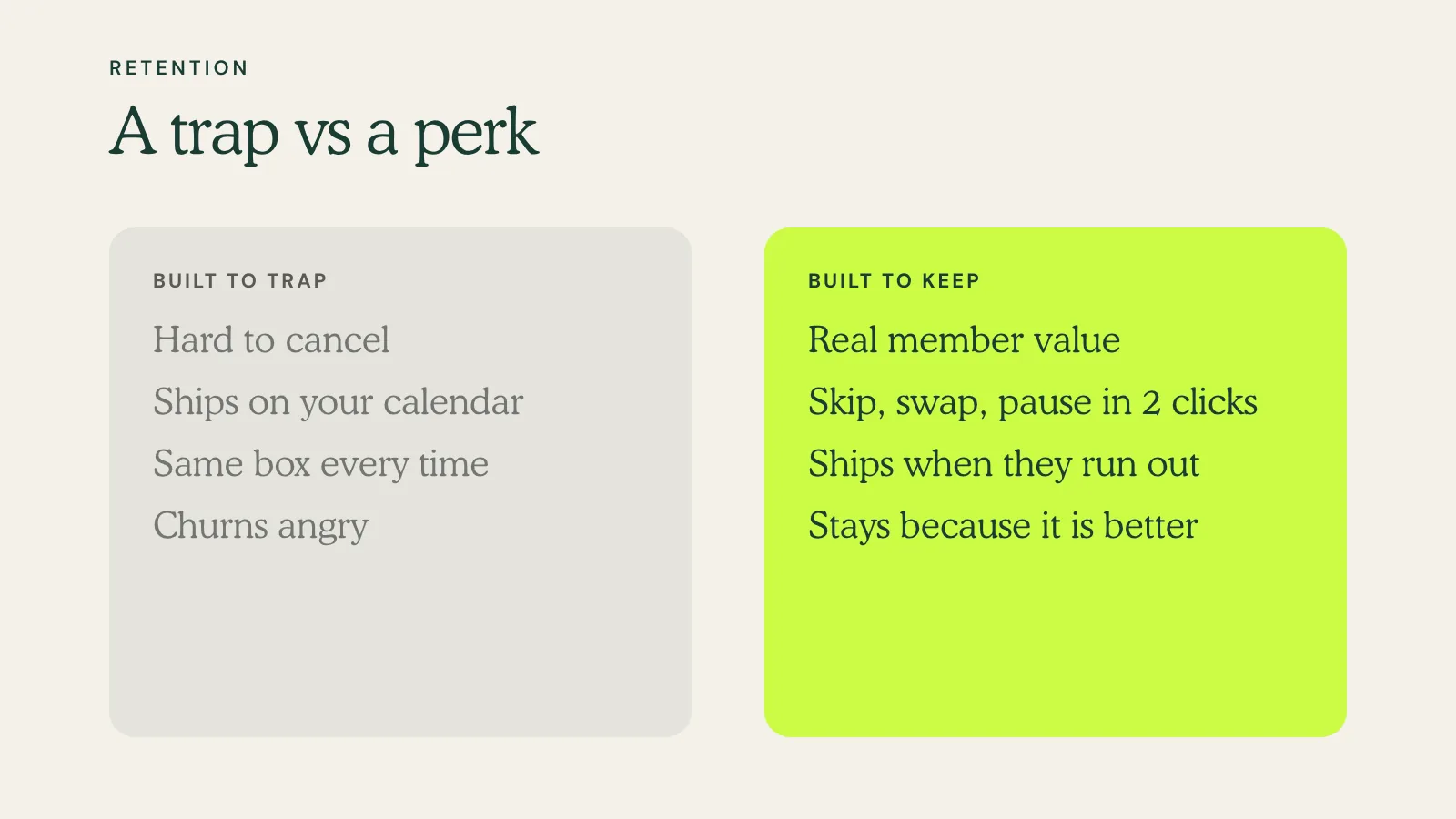
But most subscription programs are built backward. They're designed to make canceling hard, not to make staying obvious. Customers feel trapped, churn anyway and leave angry.
Build it like a perk
A good subscription feels like a better deal and a better experience, not a contract. That means:
- Real value. A meaningful price break, early access, a member-only product. Something they'd notice losing.
- Easy control. Skip, swap, pause and change frequency in two clicks. People cancel when they feel stuck. They stay when they feel in charge.
- The right rhythm. Ship when they run out, not on a calendar that suits you. Too early and it piles up. Too late and they buy elsewhere.
Win the first 30 days
Most churn happens early. The post-purchase experience matters more than your launch ad: the unboxing, the first email after delivery, how to get the most out of the product, the reminder right before they run low.
If the first month feels good, the subscription mostly takes care of itself.
Pick products people use daily
Subscriptions work best for habit-forming products: things people use every day and run out of on a schedule. That's why I love daily-use consumables. Repeat purchase is built into the behavior.
If your product isn't used regularly, forcing a subscription won't create the habit. Bundles and reorder reminders may serve you better.
The math
A customer who buys three times is worth roughly three times as much as one who buys once, which means you can afford to pay more to win them. Retention isn't a nice-to-have. It's what makes your acquisition affordable.
Want this on your brand? Every engagement I take starts with the Growth Audit: I review your whole growth engine, rank the three things costing you the most, and hand you a 30-day plan in 72 hours.
More field notes: How DTC brands improve retention, The weekly scorecard, Brand before growth.