
Case study · Spirits · DTC
Oak & Eden
Zero to 8 figures in under 18 months, in the hardest category to sell online
My role
Go-to-market in 2017, then fractional CMO
Product
Whiskey finished in the bottle with a patented oak spire
Constraint
Three-tier alcohol law
Levers
Compliant DTC, personalization, retention
The brief
A great idea in a category that hates change.
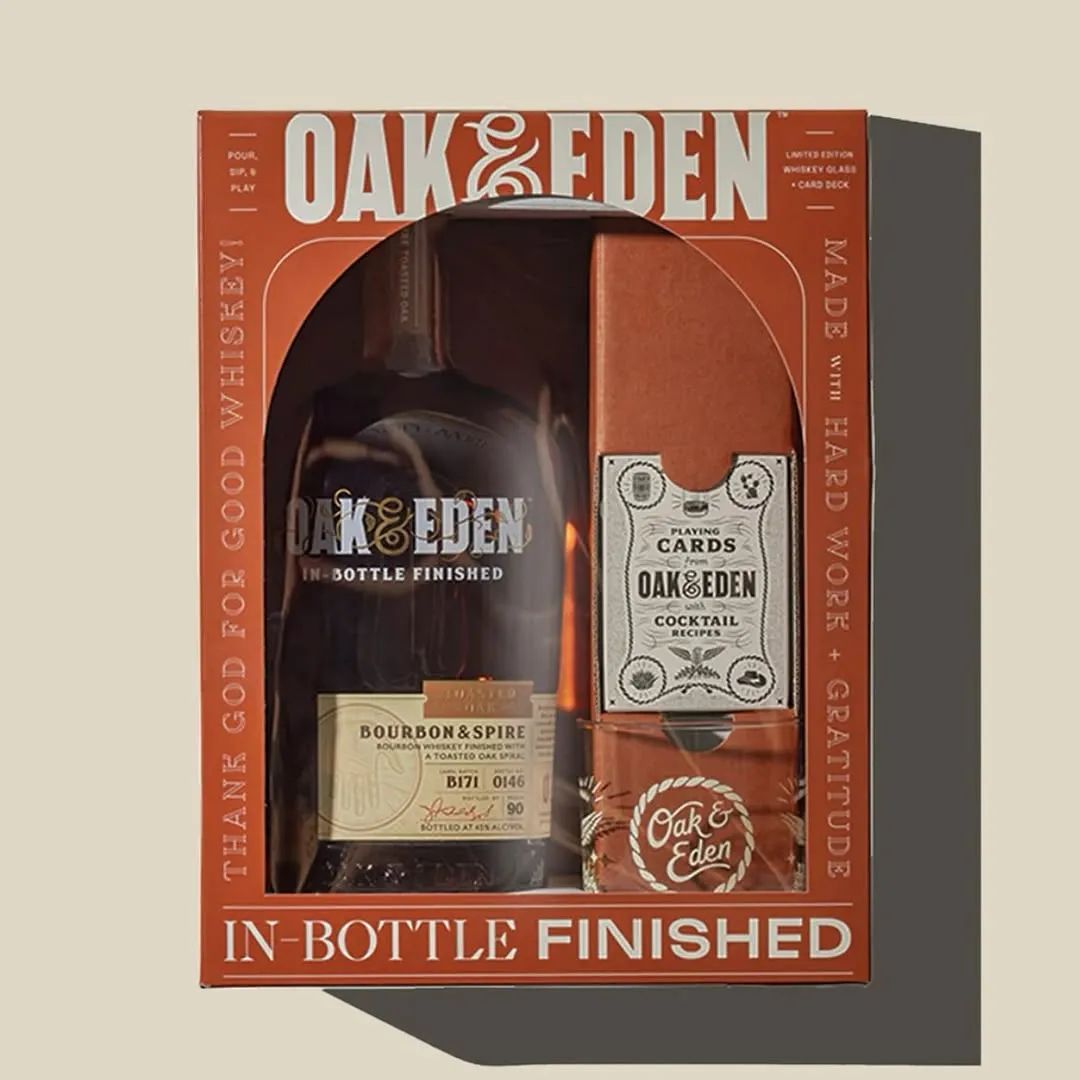
Oak & Eden started with a patented idea: finish the whiskey inside the bottle, with a spiral of wood called a spire. Different spire, different whiskey. In 2017, before selling spirits online was a real channel, I worked with the founders on the go-to-market strategy.
After I exited my agency in 2021, I came back as fractional CMO to scale it, working alongside the co-founders.
Fast Company · 2024
No. 9
Most Innovative Companies in North America. Cited for making every whiskey drinker a master distiller.
The real problem
You can’t sell whiskey online the way you sell anything else.
Alcohol runs on a three-tier system. The distillery sells to a distributor, the distributor sells to a retailer, and only then does the bottle reach the customer.
Most spirits brands treated their website like a brochure. The opportunity was a direct channel that stayed legally compliant and still felt like a modern brand: fast, personal and built for the reorder.
Key decisions · In the order we made them
Four calls that compounded.
01
Brand before channel
The identity and the story of the spire came first. A channel only scales a brand people already want to talk about.
02
A compliant DTC engine
A Shopify stack paired with a three-tier-compliant fulfillment partner, in place before compliant spirits DTC was common. One of the first to scale direct at real volume.
03
Personalization as the product
The Whiskey Customizer, launched in 2023: pick the base, the proof and the spire infusion, then put your name on the label. I helped build it.
04
Retention as the margin
Paid on Meta and Google found the customer. Email, SMS, loyalty and limited drops brought them back.
The outcome
In under 18 months, with DTC as the fastest-growing and highest-margin channel. Then No. 9 on Fast Company’s Most Innovative Companies in North America in 2024.
The lesson
Personalization should be an expectation, not a privilege.
In a regulated category, the hard channel is the moat. Most brands decided direct was impossible. Building it right, early, is what made the brand.
Want this kind of partner on your brand?
Next case study
Gardencup: $0 to a $29M run rate in 18 months